
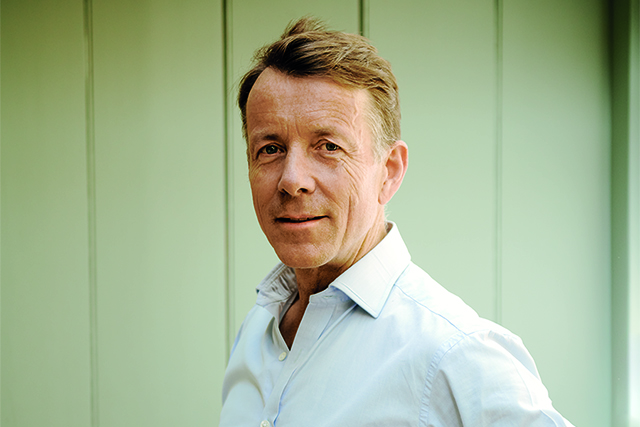
kbbreview Interview: John Sims-Hilditch, Neptune
Neptune has grown from a humble start in the 1990s to become one of the UK’s most distinctive premium home and kitchen brands. With around 30 of its own showrooms and 80 more retail partners it has become one of the largest independent kitchen retail networks in the UK with little fanfare. “We’re building Neptune to last 100 years,” says co-founder John Sims-Hilditch…
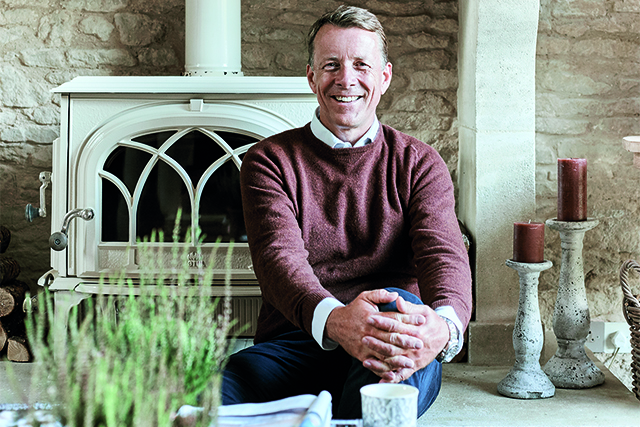
Listen to the full interview in a special episode of The kbbreview Podcast using the player above or go straight to this episode in Apple Podcasts, Spotify or YouTube.
“We are on an industrial estate just outside Swindon – it doesn’t sound very exciting does it?” John Sims-Hilditch is, very accurately, describing the location of Neptune’s head office and showroom as he sits with kbbreview.
“But it’s a building like no other. It’s the heart of Neptune.”
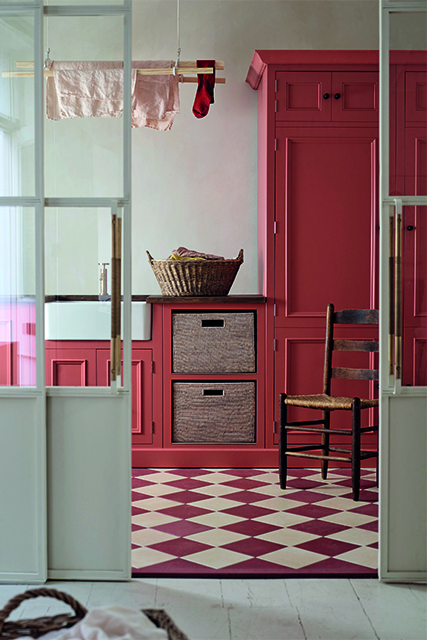
And he’s right, the geographical location belies what is a beautiful and expansive facility that showcases one of the most distinctive brands in the sector. Displays of kitchens dominate, of course, but also bedrooms, living rooms, utility rooms and more. Each display is propped to perfection and – underlining its true USP – everything is Neptune-branded from cushions and carpets to candles and crockery and you can buy the lot.
“Customers often walk in and say, ‘I want to live here,’” he laughs.
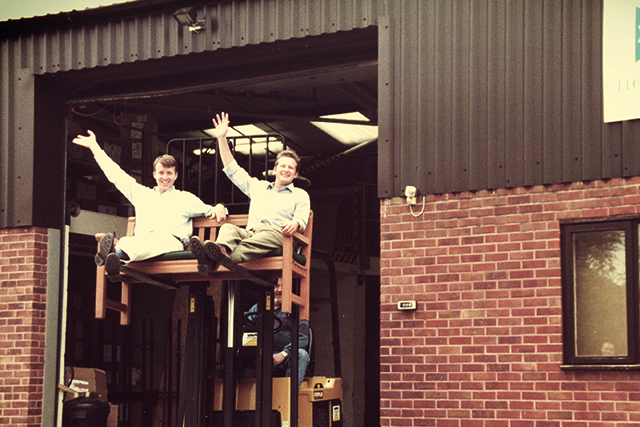
Started in 1996 by Sims-Hilditch and business partner Giles Redman as a small enterprise selling, at first, hammocks and then garden furniture, it quickly built up a network of over 400 retailers. A natural sidestep into indoor tables and chairs followed in 2002 and then, in 2007, a kitchen range was produced – the first one is still in Sims-Hilditch’s family home.
After customers regularly enquired about the props in Neptune’s photography they began to roll out upholstery, lighting and other accessories – slowly building the full-home brand it is today.
And ‘brand’ is the most important word. Neptune, as far as Sims-Hilditch is concerned, means something more than just a logo or a name. It’s a philosophy that permeates every aspect of the business.
And its potency, he believes, is what has led to not just the company’s growth but also shields it from the turbulent market so many others are currently weathering.
“People don’t work for me, they work for the brand” he says. “Every decision we make reflects what the brand stands for.”
John Sims-Hilditch
Can you give us a sense of the current scale of the Neptune business?
Neptune began in very modest circumstances – we were essentially two people making hammocks out of a sitting room – but today, we operate 30 Neptune stores in the UK and around 80 partner locations. In Europe, we have a further eight Neptune partner stores and about 20 ‘Neptune by…’ stores.
Behind the scenes, we have two distribution centres in the UK and employ around 450 people across retail, design, distribution and operations. Our manufacturing side is roughly the same again.
You started with hammocks – what led to that?
It was a classic case of entrepreneurial experimentation. We didn’t set out to become furniture makers. My business partner Giles had sold hammocks during university, and we revisited the concept. But from the outset, we applied a design mindset. We reimagined the hammock – adding safety features, building a freestanding A-frame – and that turned into a viable product.
A few months later, we exhibited at the Garden Leisure exhibition. That introduced us to the garden furniture market, and we quickly pivoted to developing products for it. The business began to scale from there.
Unlike many kitchen entrepreneurs, you didn’t have a background in furniture or cabinetry. Did that affect your approach?
Definitely – but in a positive way. Not coming from a traditional joinery background meant we weren’t constrained by convention. From the beginning, I didn’t want to use chipboard or MDF. I wanted solid timber furniture that would last, with proper joinery – mortise and tenon joints, dovetails – the kind of construction that stands up to decades of use. We brought that same philosophy into kitchens.
How did the transition from garden furniture to kitchens happen?
We were very successful in garden centres – at one point supplying over 400 of them – but we realised the seasonality was difficult to manage. So we began making a small interior collection: dressers, tables, and a freestanding island. All kitchen-adjacent products.
Solid timber, strong joinery, authentic construction – these weren’t marketing points, they were non-negotiables
John Sims-HilditchWe quickly found that customers were asking for more: “What about a sink cabinet? A bin unit?” I’d recently installed a standard kitchen in my own home and was frustrated by its limitations. So we asked a simple question: why can’t a kitchen just be well-designed furniture pieces joined together?
That led to our first modular kitchen range – 16 cabinet types designed to be mixed and matched. It felt like a natural extension of what we were already doing, just more technical.
You mentioned not using MDF or chipboard. Was that a commercial decision or a philosophical one?
Very much philosophical. I wouldn’t put MDF in my own home, so I didn’t want customers to either. Solid timber, strong joinery, authentic construction – these weren’t marketing points, they were non-negotiables.
We also looked at standard kitchen ideas and challenged them. For example, we used zigzag shelving, which is incredibly robust and avoids the weaknesses of peg-based systems. We wanted everything engineered for longevity – even things customers don’t see.
You also challenged the concept of standard sizes
One of the clearest indicators of a volume production kitchen is the repetition of 600mm wide units. Visually, it reads as modular and standardised. We wanted Neptune kitchens to look bespoke, even if they weren’t, so we used varied cabinet sizes.
The result is a kitchen that appears entirely custom-made. Often, we include a genuinely bespoke piece, but you wouldn’t be able to tell it apart from our standard cabinetry. It’s a key part of the brand’s aesthetic and proposition.
How do you define what the Neptune brand is?
Neptune is not just a product, it’s a brand with a strong set of values. Early on, we asked ourselves what kind of business we wanted to build and we settled on a 100-year vision. That means we have to put in place principles that will outlast any individual. The brand must be at the centre, not the founders.
We defined four guiding principles: do the right thing; aim high; do it together and keep it real. These aren’t slogans – they inform every decision, from product design to customer service.
You operate your own stores but also work with retail partners. What does that model look like?
We have a mix of company-owned and partner-operated stores. About two-thirds of the Neptune-branded showrooms are owned by us. The rest are run by carefully selected partners.
We also work with independent retailers in a slightly different way – what we call ‘Neptune by…’ stores. These are businesses that each carry a dedicated Neptune display in-store. In some cases, they go on to become full Neptune stores over time. The key to all of this is alignment. We don’t just want transactional relationships, we want genuine partnerships based on shared values and mutual respect.
How is the market for you right now? Many are finding conditions challenging.
We’re in a strong position. We’ve seen consistent demand and are growing, even in a difficult economic climate. I think the reason is that we’ve stayed focused on who we are and what we offer. We don’t aim for rapid expansion or mass-market appeal.
We aim to win customers slowly and keep them. Our product is a considered purchase as we’re not the cheapest, but we believe we offer the best value in terms of quality, longevity and service.
In that case, what is the biggest challenge you’re facing?
Brand awareness. Not just recognition, but true understanding. I’ve had people tell me they bought a kitchen elsewhere and later discovered Neptune and wished they’d known about us earlier.
That’s hard to hear. Our task is to communicate our values and our point of difference more clearly in a crowded market. There are many options out there that look similar on the surface but aren’t made to the same standard.
Recruitment is a challenge for many in this industry. How do you attract talent?
It’s not always easy – especially for skilled roles – but as our brand has grown, so has our appeal as an employer. People want to work for businesses with purpose. We offer meaningful work, strong leadership, and a values-driven culture. That makes a difference. Leadership at every level – in stores, manufacturing, head office – is essential. We’re fortunate to have built a very capable team.
Let’s finish with a look ahead. Where do you see Neptune in 10 years?
We don’t have a fixed growth target. For me, size isn’t the goal – sustainability is. We want to be a happy, high-performing business that customers trust and staff are proud to work for.
That said, the potential is significant. We’re expanding in Europe and regularly receive interest from the US. Neptune has the DNA of a global brand and we’ll grow in line with demand and our ability to deliver quality. Our 100-year vision remains central.
If I were to step back tomorrow, Neptune would continue. That’s the goal – a business that endures beyond its founders.