
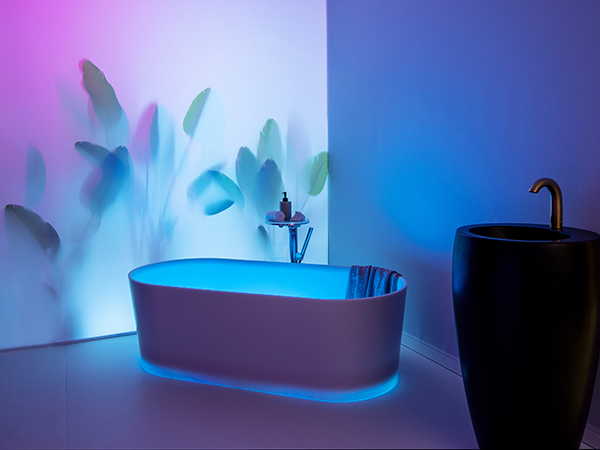
Porcelain perfection: Exploring today’s sanitaryware trends
This month we take a look at what’s trending in the sanitaryware market – exploring the latest trends and technological developments, as well as looking ahead for the rest of the year.
Words: Francesca Seden
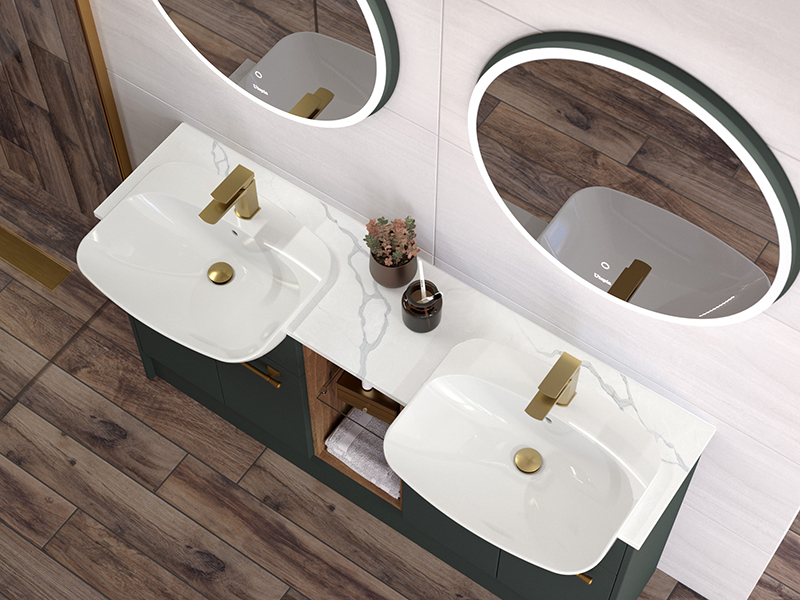
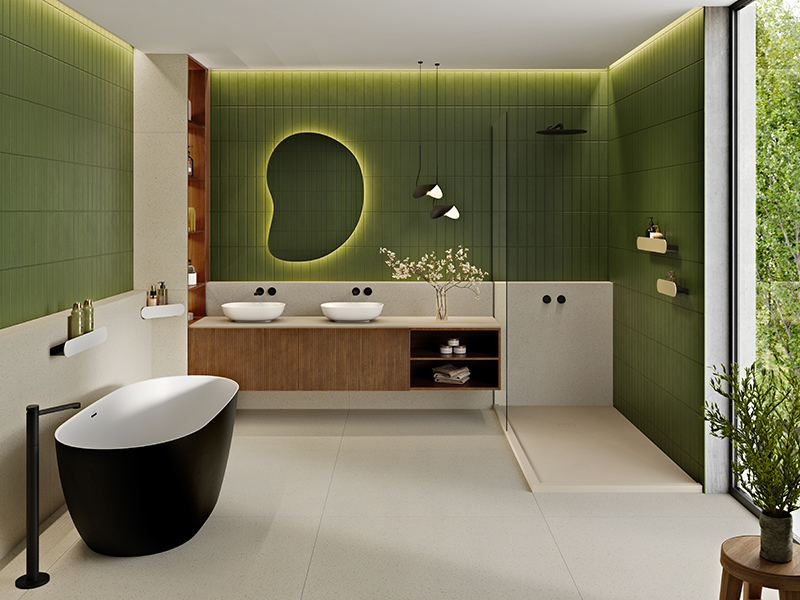
Organic forms, soft, earthy tones, and off-whites replacing stark, clinical whites will be more prevalent across sanitaryware design for 2026 – products that promote a feeling of serenity and calm, while offering homeowners the opportunity to personalise their spaces.
Wall-hung and compact designs will also continue to prove popular, ever practical as these are for making the most of the UK’s typically bijou bathrooms.
Colour has been making a comeback for a while now too – a more sophisticated and updated take on the 70’s avocado suites, but not always less bold. We’ve seen this expressed in the form of painted baths for some time, but a number of our contributors mention this, and are offering sanitaryware in a range of different coloured finishes.
Duravit is one of these brands, demonstrated by its Balcoon range by Patricia Urquiola, which is available in a range of shades, including the earthy terracotta. “Clay Terra Matt is the central colour of the new collection. A shade that makes the ceramics look more authentic and handmade,” says Urquiola.
A recent collaboration between CP Hart and Kast is another to promote colour, this time brighter, bolder and unafraid to make a statement. The Monroe basin reimagines CP Hart’s iconic London basin in Kast’s signature concrete, which is offered in a palette of 24 distinctive colours. Retaining its classical character through elegantly fluted detailing, the Monroe basin is available as a wall-mounted unit, or paired with a standout pedestal or refined metal stand.
Whirlpool baths
Meanwhile, Roca and Laufen’s brand manager, Natalie Bird says they are seeing strong demand for design-led products that also enhance the bathing experience, like the VAL Luminex bath, which adds a sensory layer through softly translucent material and integrated lighting moods.
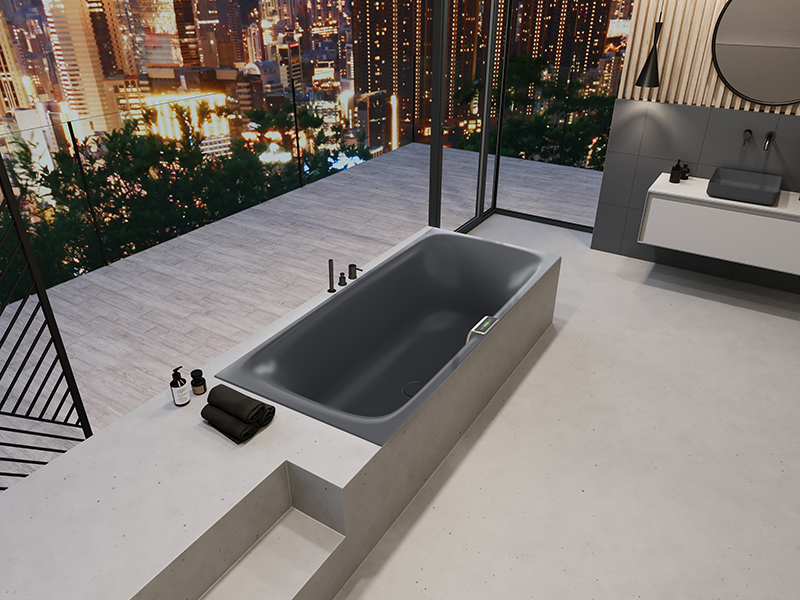
This mention of bathing segways us nicely into the area of another retro trend which is seeing a slight uptick – that for spa or whirlpool baths. We asked our contributors how big a trend they anticipate this to be, and whether more manufacturers might follow.
It’s worth noting that Kaldewei’s above-mentioned Nuio Duo Bath is available in a ‘Zen’ edition, complete with “Heat Wave, Sound Wave, various lighting moods with a wide colour spectrum and other practical functions”, and so is a more sophisticated version of the 1980’s whirlpool tubs.
Duravit says its Whirl systems are particularly popular and provide a relaxing home spa experience by delivering a bubbling mixture of water and air. There are five different whirl systems available to suit a variety of Duravit baths, which also offer integrated LED lights to create atmospheric and relaxing lighting options.
Although there are a few brands offering these sorts of products, our contributors largely agree that they are a bit niche. They are “particularly well-suited to the premium segment, single-family homes, extensions and hotel projects, where the bathroom is conceived as an experiential space that adds value,” Shane Piggott, Acquabella UK and Ireland sales manager, explains.
Shaun Corcoran, commercial director at Harrison Bathrooms adds that while some brands have begun offering spa and whirlpool baths, most customers don’t actually use them daily, making it difficult to justify the higher investment during renovations.
“In contrast, the shower area is a key focus for upgrades,” he says. “Features such as rainfall showerheads, filtration systems, various valve operations, and decorative glass can create a luxurious feel without incurring high costs or maintenance requirements. For this reason, our wellness
strategy is centred on enhancing the shower experience instead of expanding into spa baths.”
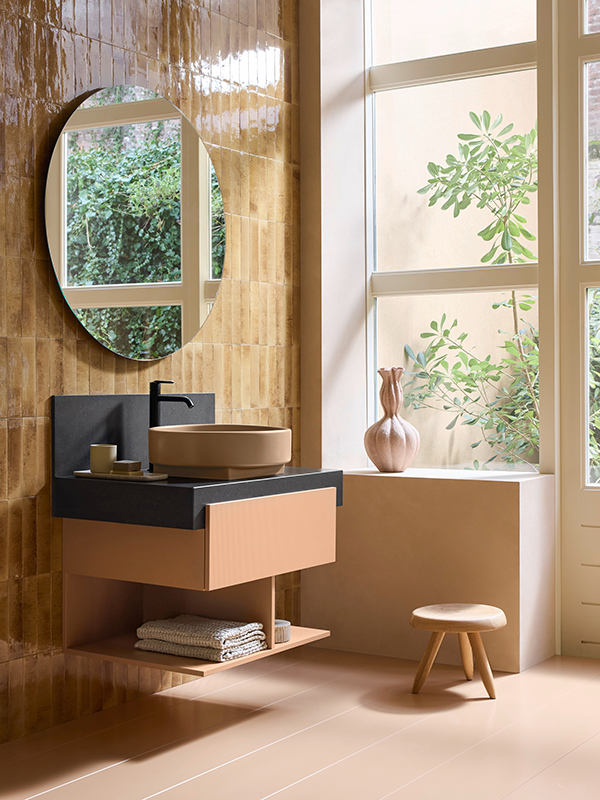
Rather than spa baths with fancy jets and in-built technology, something that does seem to be increasingly popular are deep, Japanese-style plunge tubs, such as Victoria + Albert’s Kerid Bath and Step, and Roca’s Ohtake bath.
Innovation and creation
Technology in the materials and manufacturing side of sanitaryware is focused in a few ways – the ability to shape materials for ultimate design flexibility, which we see in the seamless, moulded designs from many manufacturers.
“Across the sector,” says Roca and Laufen’s brand manager Natalie Bird, “next-generation ceramics and smarter processes are enabling lighter, more mouldable forms without compromising durability.”
Most manufacturers have their own, proprietary materials, such as Laufen’s Fineceramic and Saphirkeramik, Duravit’s DuroCast Nature, Acquabella’s Akron, Dolotek and Solid Surface, and more.
As well as offering more flexibility, these materials are increasingly sustainable, including recycled content, and durable. They often also retain heat much better, and clever moulding techniques mean the interior of baths can be shaped in such a way to hug the body, while using less water to fill the tub.
Innovation is also functional and more obvious where other products are concerned, such as shower loos, which continue to grow in popularity as increasing numbers of people recognise the benefits.
A few of our respondents mention shower loos, including Duravit, whose ME by Starck Hero Edition “features an exceptionally quiet flush thanks to optimized bowl geometry, efficient flushing flow, and the special ceramic glaze. This saves significant quantities of water and cleaning products over the long term, add to that a lifetime guarantee and the Hero Edition is a truly sustainable choice.”
Grohe’s Sensia Pro Shower Toilet, meanwhile, promises “luxurious, restorative experiences that support wellbeing while combining functionality, hygiene and sustainability”.
Hansgrohe is also doing some particularly innovative things with its sanitaryware. For WCs, rimless design has become the norm and there is growth in vortex/twist flush technology which is now being offered more broadly across price points, including hansgrohe’s AquaHelix flush, while its Xuniva Evo “transforms a WashPlace into a magnificent infinite water experience, seamlessly integrating a hidden drain – a unique feature you won’t find anywhere else.”
Finally, the Avalegra AquaUnit delivers an “impressive interplay of washbasin and tap in one unit. The most obvious innovation is not the combination of two products, but the way in which Avalegra presents the element of water, with two variations – flowing classically from top to bottom, like a waterfall; and taking the opposite route – bubbling up from below like a crystal-clear spring. In addition to a curved, slim and swivelling spout, Avalegra has an integrated shower spray.”
Looking ahead, Lewis Neathey, leader of marketing & product management at Grohe UK, believes the sanitaryware market is one that is only going to keep growing as technology continues to advance and evolve.
“We anticipate there to be a continued focused on bespoke solutions, as the demand for personalisation reaches new heights and technology continues to advance,” he forecasts.
“We expect to see technology and wellness at the forefront with products such as Bluetooth connected showers and smart toilets growing in popularity across the industry. We expect more households to also future-proof their bathrooms with shower toilets, particularly as their associated hygiene benefits begin to be recognised within the market.”