
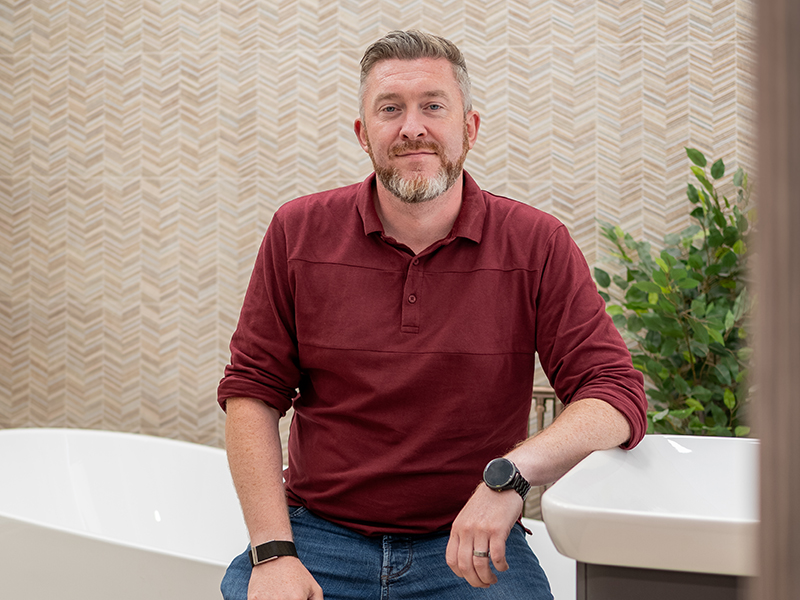
The kbbreview Interview: Peter Dunlop, Bathshack founder
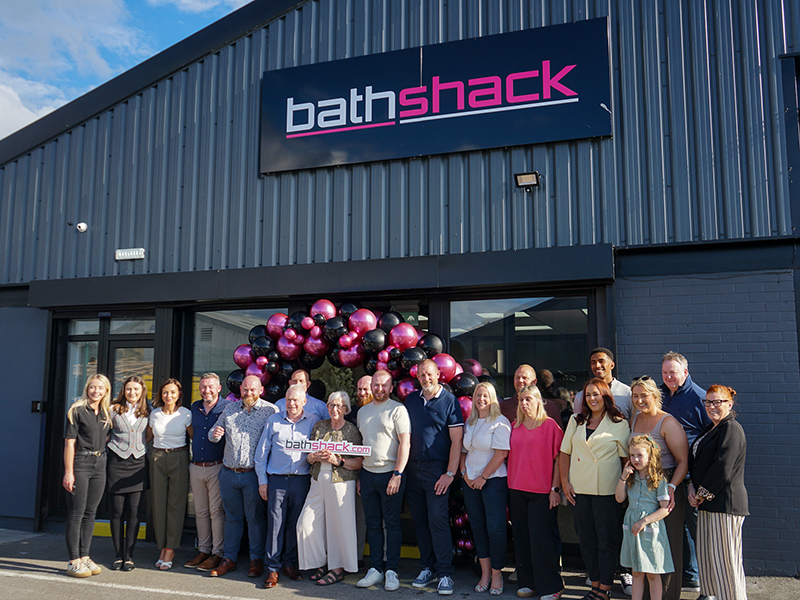
Before Bathshack arrived in Cheshire this summer, it had already rapidly built one of the largest independent bathroom retail businesses in Ireland with a dozen showrooms in around the same number of years. So why England, and why now?
Listen to the full interview with Peter Dunlop on a special episode of The kbbreview Podcast. Listen NOW using the player above or go straight to this episode on Apple Podcasts, Spotify or YouTube. Alternatively, simply search ‘kbbreview’ wherever you get your podcasts.
The convention that there is a distinct battle line drawn between independent showroom retailers and companies that sell online is a well established one. What we do is very different to what they do and whatever a twain is, they definitely won’t meet.
But conventional wisdoms are there to be challenged and, in business at least, that challenge is where new ideas and entrepreneurship often thrive.
Bathshack was founded by Peter Dunlop in 2009 as an online-only bathroom retailer operating from a warehouse in Northern Ireland. It was an obvious step for an ambitious young businessman keen to apply himself to an obviously growing market, especially as his dad was also in the sector.
But just three years later in Belfast, Dunlop opened his first physical showroom and in the dozen years that followed a dozen showrooms appeared in both Northern Ireland and Ireland.
“It became obvious we’d found a proposition people liked, but they still wanted to experience it in person,” he says.
Bathshack is a rare beast in this industry – a retailer who combines online and showrooms in a mutually beneficial way. In fact, Dunlop says, every time Bathshack opens a showroom, online sales in that region grow as well.
“The showroom and the website don’t compete with each other,” he explains. “They reinforce each other.”
That doesn’t stop him having some very interesting views on the conflict between brands that sell online and in showrooms however…
Now, with its first English showroom opening in Cheshire, Bathshack is taking on a market that is bigger, more competitive and, by almost everyone’s admission, tougher than it has been for years.
“You can spend your time complaining about online retail or suppliers, but it won’t change anything,” he says. “What you can control is making your own business genuinely different…”
Bathshack has become a well-known name in Ireland but perhaps less so in the UK. How did it all begin?
It all started with my dad. He had a furniture manufacturing business and, almost by accident, got into bathrooms after buying some ex-display sanitaryware from an exhibition. He sold it to a few of his kitchen customers and gradually built up the bathroom side of the business. I left school after my GCSEs and went to work with him. I’d always enjoyed sales, but I also had a passion for technology and, alongside working in the business, I became fascinated by websites. I taught myself web development and started wondering whether bathrooms could be sold online. Kitchens felt too complicated because every project is bespoke, but bathrooms are made up of individual products that can be boxed and shipped.
So I built the first Bathshack website myself and launched it in 2009. Financially, the world wasn’t in a great place after the recession, so people were actively looking for ways to save money. We felt we’d hit the market at exactly the right moment.
Bathshack started life online, yet today it’s built around a network of showrooms. When did you realise customers still wanted a physical retail experience?
Pretty quickly actually. Customers loved the products and they loved the prices, but they didn’t necessarily want to buy a bathroom online. People would discover us at self-build shows around Ireland, then we’d spend hours selling over the phone using the website as our sales tool. Eventually customers started saying they were happy to travel to see us.
The problem was there wasn’t actually anything to see. We just had a warehouse and we’d literally be opening boxes to show people products before closing the sale. That was when it became obvious we’d found a proposition people liked, but they still wanted to experience it in person.
Our first showroom opened in Belfast in 2012 and the difference was immediate. The business accelerated and we opened our second showroom less than a year later. What’s really interesting is that every time we’ve opened a showroom, our online sales in that region have grown as well. The showroom and the website don’t compete with each other, they reinforce each other.
At the time everyone was talking about retail moving online. You ended up doing almost the opposite.
We probably didn’t recognise it as unusual because we were simply listening to customers. I think that’s even more relevant today with AI becoming part of everyday life. Businesses often say they’re making changes in the customer’s interests but sometimes it’s really about reducing costs or cutting headcount. Whether it’s self-checkouts or self-service hotel check-ins, you have to be careful you’re solving the customer’s problem rather than your own.
Our customers were telling us they wanted to see the products. When they saw them, they bought them. It really was that simple. At the end of the day we’re all here to make money. If customers are telling you what helps them buy, it’s your job to listen rather than trying to force them into a buying journey that suits your business better.
Bathshack now has 13 showrooms, but was building a sizeable retail business always the ambition?
I think it’s just in my DNA. I admire businesses that have started with an idea and grown into something substantial, and I’ve always believed in what we’re offering. I’m very confident in our proposition. I believe we’ve got products people want, at prices that represent excellent value, backed up by a really good customer experience. Because of that, expansion has never felt particularly risky to me.
That doesn’t mean growth is easy. I’d argue that growing from 20 employees to 40 is probably harder than opening another showroom. Suddenly you need management structures, HR and proper systems. You can’t run everything on spreadsheets anymore. You have to bring talented people into the business and give them the confidence to make decisions and, importantly, to make mistakes. If you jump in every time something goes wrong, nobody develops. One of the best things about growing is discovering there are plenty of people much cleverer than you.
Why was now the right time to bring Bathshack to England?
We’ve actually been selling into the rest of the UK since the business started. The original website was even a .co.uk domain before we moved to .com, so we’ve always had customers here. Today’s buying journey almost always starts online. Customers arrive in the showroom already knowing the products they want to see because they’ve done their research beforehand. The showroom then gives them the confidence, inspiration and reassurance to complete the purchase. We’ve also now got the infrastructure to support expansion. There’s still huge growth potential in Ireland, but opening in Cheadle gives us our first physical foothold in England and allows us to build on the UK business we’ve already established online.
Where do you see Bathshack sitting price-wise?
I’d describe us as mid to upper market. We’re certainly not trying to compete at the luxury end, but equally we’re not trying to be the cheapest. The customer we’re targeting is someone who’s been inspired by Instagram or Pinterest and dreams of having a £20,000 or £30,000 bathroom but perhaps has £10,000 to £15,000 to spend. We fill that gap between aspiration and affordability. Anyone can buy products online if they know exactly what they’re looking for, but what they can’t buy is advice, inspiration and confidence. That’s where the showroom experience becomes valuable. We’ll never be the cheapest because that’s not what we’re trying to achieve, but we want to offer great value while helping customers create bathrooms they’re genuinely proud to show their friends.
You’re large enough to compete with the national retailers but still operate with an independent mindset. How do you see your place in the market?
Everyone has their own lane. We can’t offer exactly the same level of personal service as a traditional independent retailer that manages every installation from start to finish. Equally, those businesses often can’t offer the breadth of product or buying power that we have. At our scale, offering a full installation service isn’t something I think we’d do well enough, so instead we recommend trusted local contractors. I’d much rather do that than try to be everything to everyone.
You’re in an interesting position with one foot in showroom retail and another on the website. How do you see the debate around brands selling online?
I’d say my views have softened over the years. Historically I’d probably have been quite stubborn and said, ‘This is our business model. If you want to work with us, you have to accept that.’ Now I recognise there’s room for different approaches. The important thing is having a clear strategy and sticking to it. Too often suppliers genuinely want to support bricks-and-mortar retailers, but then a major online player offers huge volumes and suddenly that strategy changes. If you’re going to commit to showroom exclusivity, you have to stay the course. We’ve also protected ourselves by rebranding many products. If we’re investing time in consultations and using our showroom to inspire customers, we don’t necessarily want them going home and finding exactly the same product online five minutes later.
Finally, you’re expanding at a time when plenty of retailers are sitting on their hands. What gives you the confidence?
Honestly, I can’t remember many times since 2009 when people have said the market was fantastic. If we’d waited for perfect conditions, we probably wouldn’t even have opened the first showroom. We’re confident because we’ve continued to grow. The online business keeps growing, our margins continue to improve and every year we’ve become stronger. Scale creates opportunities and improves profitability, but only if it’s sustainable.
The unknown is how quickly Cheadle becomes profitable because we’re essentially a new brand in England. That’s where our marketing team has to work hard to build awareness. We’re absolutely committed to making Cheadle work, but it would be arrogant to assume we could immediately roll out another four or five stores before we’ve really understood how customers respond. Success isn’t about opening the biggest number of showrooms. It’s about sustainable growth. If, in five years’ time, we’ve opened another handful of successful UK locations, it’ll only be because Cheadle proved the model works. Ultimately our culture is about continual improvement. Whether it’s stockholding, delivery times, reducing damages or customer service, there’s no part of the business where I think we’ve cracked it and can stop improving. If we keep getting better year after year, the growth will take care of itself.
Listen to the full interview with Peter Dunlop in a special episode of The kbbreview Podcast. Simply click the player below to listen, or search “kbbreview” wherever you get your podcasts.