
Gemma McRae: ‘Accessibility needs to be more personal’
Although the industry’s understanding of accessible design is clearly growing, Gemma McRae, Häfele UK’s chief sales officer for key accounts, believes we still need to allow for personality, taste and choice, too.

Words: Gemma McRae
When we discuss accessibility in kitchen design, it can sometimes feel like a separate specialism with its own rules, products and solutions.
But in reality, much of it comes back to something kitchen designers already do every day – understand the person who will use the space. How do they live? What matters to them? What works well in their current kitchen and what doesn’t?
Accessibility can add another layer to those conversations, but the starting point is still the customer.
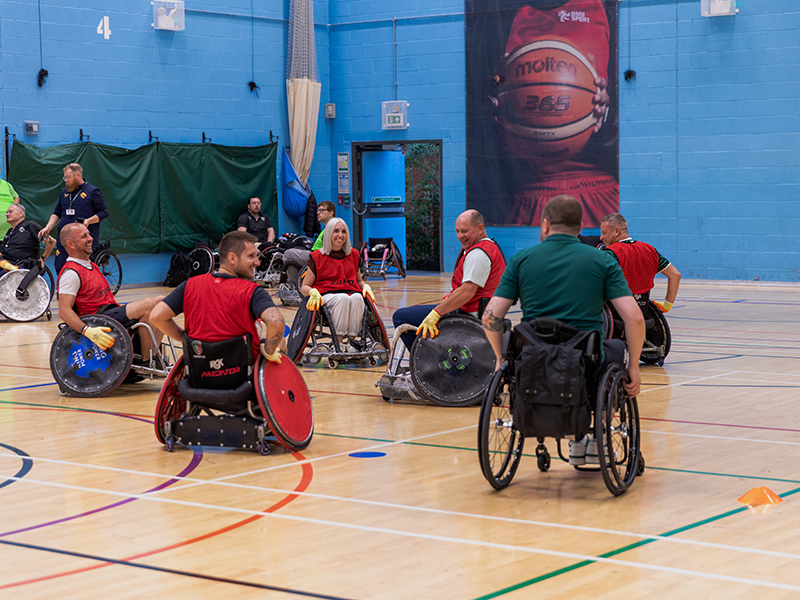
I saw that clearly at a recent accessibility and inclusive design event that Häfele UK hosted with the Leicester Tigers Foundation, bringing together members of its Wheelchair Rugby team with retailers from across the KBB industry. Hearing directly from people with lived experience added a level of detail and perspective that you simply are not able to get from talking about accessibility in theory.
One thing I learned was just how varied people’s needs can be. Some people are born with a disability, others acquire one through illness or injury, and for others their physical needs change significantly over time or with age.
Even where two people have similar mobility requirements, the way they use a kitchen can be very different. Reach, strength, dexterity, routines and household circumstances all have an impact.
But alongside physical needs, personal choice still matters too, and hearing from people with lived experience really brought that home. Jacob Smith, a designer at Bespoke Trade Kitchens who joined us on the day, became a wheelchair user around five years ago following a life-changing accident.
Spending time talking with Jacob was a powerful reminder that a change in someone’s physical circumstances does not also change their taste, personality or sense of what makes a home feel like truly theirs. And that’s just as relevant for someone who has lived with a disability from birth. They may need their kitchen to function in a particular way, but they will still care about the colours, finishes, materials and overall feel of the space.
It may sound obvious, but it’s easy for that to get lost when the focus is on practical requirements or when we associate accessible solutions with products that are clinical in design. Instead, a kitchen needs to work in practice, while still leaving room for everyone’s design preferences.
For designers, this way of thinking is nothing new. They already spend time getting under the skin of what a customer wants and how they use a room. The difference is that some briefs may raise unfamiliar requirements that come up less often.
That’s where I see an important role for manufacturers and distributors. Retailers and designers understand their customer, but the wider supply chain can support that with technical knowledge, awareness of different options and experience of how products have been used in other situations. That might mean explaining how a particular product works, helping identify an option they haven’t used before, or pointing them toward more specialist expertise.
One of the most meaningful messages from the event was how accessibility isn’t one-size-fits-all. Everyone’s needs and preferences are different, so the best solutions really depend on each person, and that’s why drawing on specialist knowledge and expertise is so important.
No single part of the industry has all the answers, but by sharing what we know and learning from real experiences, we can work together to create kitchens that genuinely fit each person, all while keeping the personal touch that makes a space feel like home.