
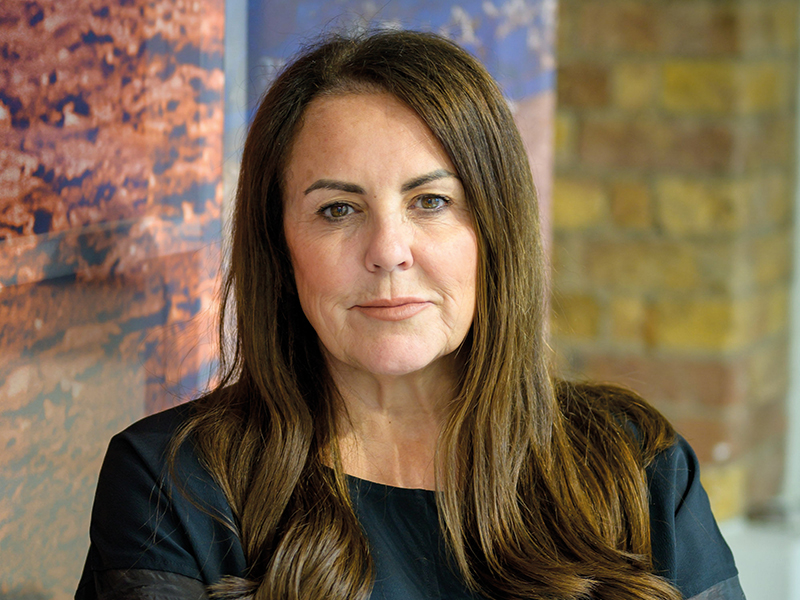
Villeroy & Boch’s Lisa Whitfield: Our brands are better together
Two years after Villeroy & Boch acquired Ideal Standard, what has the integration of two of the bathroom sector’s biggest names achieved, and is there a future for UK manufacturing? We get all the answers from UK MD Lisa Whitfield…
Uncertainty has become something of a permanent fixture in the bathroom market of late as confidence in consumers, contracts and construction stubbornly remain around rock bottom.
But for Lisa Whitfield, managing director UK & Ireland for Villeroy & Boch, Ideal Standard and Armitage Shanks, the answer is to stop waiting for the market to provide the solution.
“We’ve been focusing on ourselves,” she says. “There is still a lot of activity out there and we have two very big global brands and one very strong local brand in Armitage Shanks. For us, it’s about focusing on what is actually happening and not getting too hung up on things that we just can’t influence.”
That philosophy has underpinned the merger of Villeroy & Boch and Ideal Standard in the UK. From January 2025, the businesses effectively became one organisation here, with integrated teams and systems but still those three distinct brands.
And for independent retailers, Whitfield says it has also meant a renewed focus on showrooms.
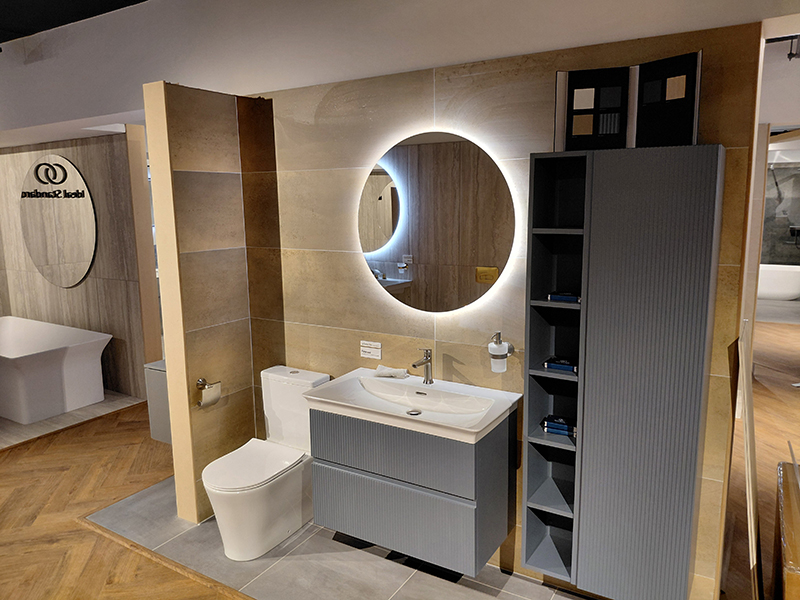
“The showroom channel is right at the centre of that and it’s so incredibly important because it is the touch point with so many consumers,” she says. “It’s where consumers can go into those showrooms and learn from the experts who understand how to take a product from a display and design it into a dream bathroom.”
The company has backed that commitment with people. Whitfield says that during integration planning the UK management team specifically made the case for maintaining a large sales team dedicated to showrooms.
The acquisition has also given Villeroy & Boch access to infrastructure and resources it previously lacked in the UK, despite the size of the brand in mainland Europe.
“The Villeroy & Boch organisation in the UK was actually quite small pre-acquisition,” she explains. “What’s been really exciting is that we’ve been able to open up the scale, processes and structure of the larger Ideal Standard business to Villeroy & Boch, which means we’ve been able to take it to more showrooms and retailers and ultimately more consumers.”
The positioning of the two brands is deliberately complementary. Villeroy & Boch occupies the premium-to-luxury space, while Ideal Standard is positioned as what Whitfield calls ‘smart premium’, giving retailers different price points and, importantly, different aesthetics.
That strategy is already translating into greater crossover. Whitfield says there are now 69 ‘synergy showrooms’ that previously dealt with one of the brands but now display or sell both. One retailer is making a particularly significant commitment with around 35 displays across the two brands.
There is, however, another significant challenge sitting behind the strategy – UK manufacturing.
There’s no question the factory side of Ideal Standard and Armitage Shanks is a shadow of its historic self and Whitfield acknowledges that ceramics production remains extremely difficult. The group closed one kiln at its Armitage facility last year although she says the remaining operation has been reshaped to make it more competitive.
The reason, Whitfield says, is that it is simply too expensive to make things in the UK, particularly with energy-intensive processes like ceramics. In fact, the company is now talking to Government policy advisers about potential support.
“We’re really passionate about this UK business and its heritage,” Whitfield says. “But we’ve got to see what happens with the Government and which direction they take.”
Against that backdrop, her definition of ongoing success is still ambitious for the year to come.
“I want our customers, regardless of channel, to highlight us as the shining light within the bathroom industry and know that we’re listening to them. We will concentrate on doing the right thing for our customers and consumers and, if we do that, we will take market share.”