Sweet Dreams: Latest bedroom trends
This month we open the doors into the world of fitted bedroom furniture, and find out why it pays not to sleep on this often-overlooked corner of the KBB world.
Words: Francesca Seden
Bedroom furniture is the ‘B’ in KBB that is ever-present but often sidelined in favour of kitchens and bathrooms, though most of our respondents who supply it, say it’s a clear no-brainer to have.
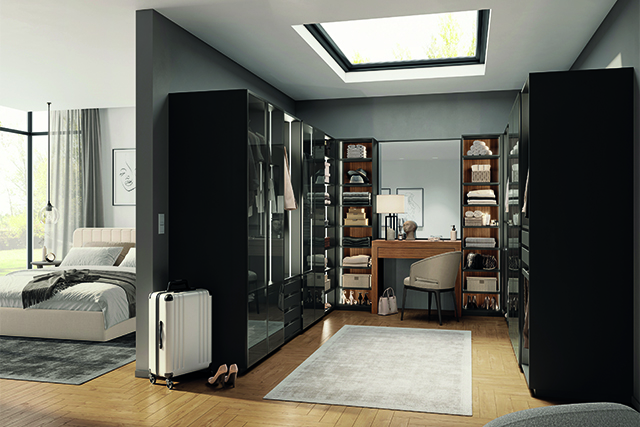
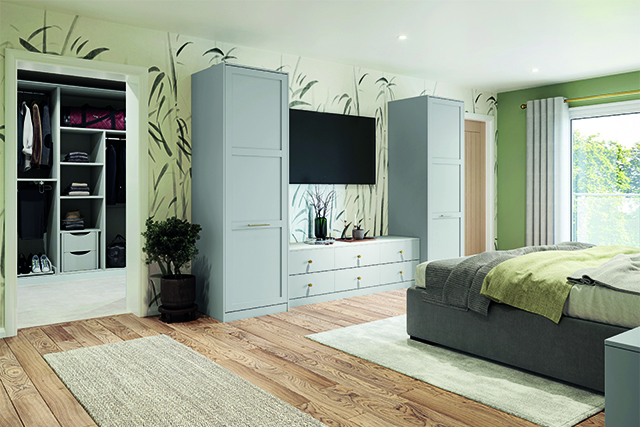
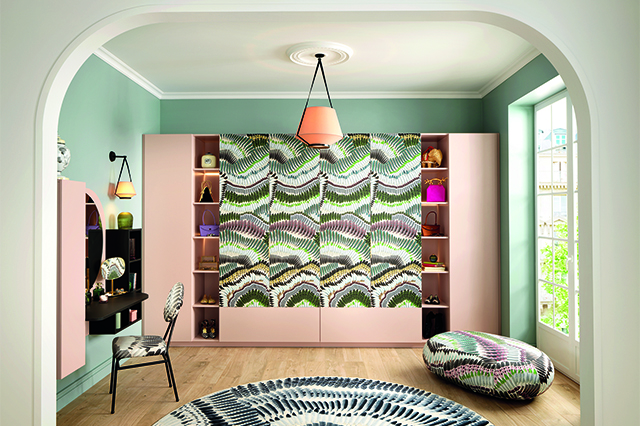
Firstly, where trends are concerned, a big theme, like everywhere else, is for personalisation and customisation. Fitted bedroom furniture, by its very nature, lends itself well to this as it largely needs to be made to order to fit those awkward spaces. There are also almost endless configuration options in terms of the arrangement of storage.
Schmidt UK’s marketing operations manager, Tamara Heller, adds: “Multiple LED lighting options from lighting pull out hangers to LED inside wardrobes and shelving enhances convenience and adds a luxurious touch.”
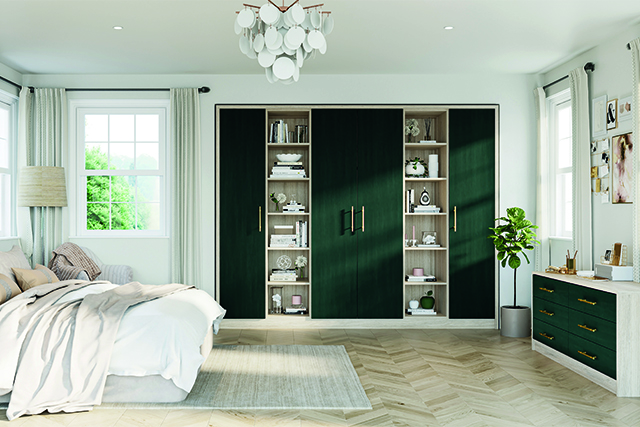
In terms of the overall look and interior storage, Symphony design manager Josie Medved said, “there is a shift towards minimalist and seamless designs. Clean lines, hidden handles, and concealed compartments are becoming prevalent, contributing to a clutter-free environment. Sliding doors have gained momentum due to their space-saving attributes too.”
The wide variety and choice of interior options are also a big draw for homeowners looking for fitted bedroom furniture, or specifically, fitted wardrobes. A combination of plenty of hanging space, built-in drawers, pull-out racks for shoes and custom shelving all help to maximise space further.
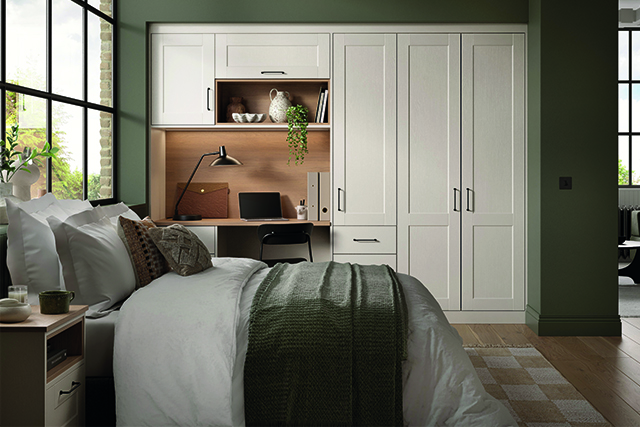
Thinking about drivers for the growth or popularity, the key factor concerns maximising what is often limited floor space in UK homes generally.
“It is among the lowest in Western Europe,” Uform GB sales director, Dan Winchester, explains, “creating a strong demand for space-saving solutions that fitted furniture can provide. The increasing trend on the building of smaller homes, including apartments, has led to smaller bedroom spaces, and the need to maximise this space as much as possible.”
Repeat business
So, why should retailers consider selling bedroom furniture?
Firstly, as a dry fit, it is a reasonably easy add-on, particularly if you’re already selling a kitchen or bathroom, and if you are selling a bathroom, offering bedroom furniture will give you a nice way of tying the two rooms together – the en-suite bathroom and the master bedroom, for example.
As Symphony’s Medved notes, it also gives retailers the opportunity for repeat business. If you’ve already done a great job of the kitchen, chances are that the customer will call you back for at least one bedroom too, and then perhaps another.
Interior Door Systems’ Steve Healy adds that faster lead times also allow retailers to take advantage of quicker turnaround and profitability.
Talking about profitability, bedroom furniture tends to have higher profit margins than other categories because you don’t have to take a margin hit like you would with kitchen appliances, and installation costs will not be anywhere near as high, as there is only the furniture, and a few LEDs to consider.
Three principles to follow…

Tom Howley, creative design director of the eponymous furniture maker, gives his take on the fundamentals of good bedroom design.
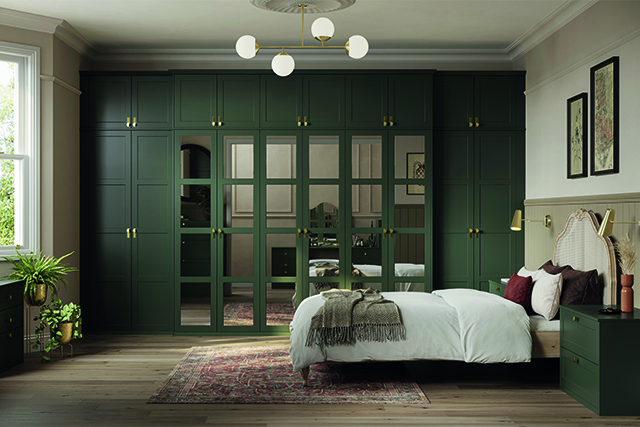
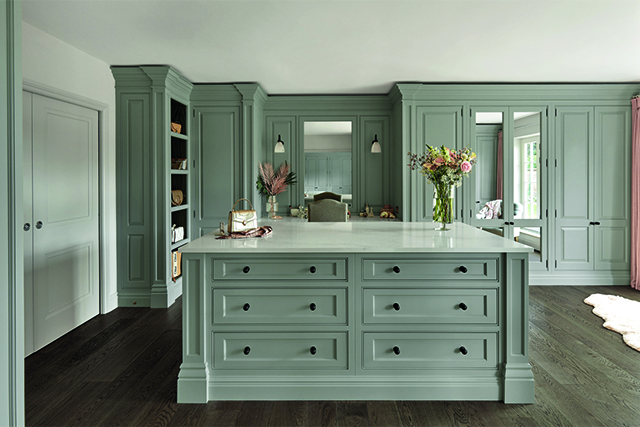
“I believe three key elements contribute to a well-designed bedroom: effective storage solutions, appropriate lighting, and overall comfort. The first consideration is always storage – there should be ample hanging space, drawers and shelving to accommodate the client’s wardrobe and ensuring an organised space. The next priority is ensuring that the design is aesthetically pleasing, well-proportioned, and balanced. I also prefer bedrooms to feature neutral colour palettes, creating a serene and timeless atmosphere.”
Finally, Uform’s Dan Winchester adds that the growing demand driven by an increasing population and a rise in households, alongside the need for space optimisation in smaller average UK homes, should be a factor if you’re looking to include bedroom furniture in your offering.
“The emphasis on affordable homes suggests a valuable opportunity in the freestanding furniture segment, while consumer preferences for innovative storage solutions will likely boost sales in the fitted furniture sector,” he says.
Plus, most homes only have one kitchen and perhaps two bathrooms, but usually have three bedrooms to potentially fit.
So, we’ve discussed trends and why you should sell bedroom furniture, but how can you maximise sales if you are selling it already?
Firstly, our contributors recommend displaying a diverse range of customisable options, with various colours, finishes and configurations, which will appeal to different segments of your target audience. Showcase the different lighting options available, any other techy add-ons, and any storage surprises which might illicit the “wow-factor”.
“Retailers can also drive sales through personal consultations, 2D visualisation tools, and installation services,” Interior Door Systems’ Steve Healy adds. “Eye-catching showroom displays and a strong online presence with high-quality imagery help convert interest into sales. Partnering with manufacturers offering installer-friendly solutions can also streamline installation and improve efficiency.”
To finish, we asked our experts this month about the potential drawbacks of selling fitted bedroom furniture, and we only got two responses. Schmidt’s Heller said there are “no drawbacks”, while Healy commented that the main challenges are showroom space and managing bespoke order expectations.
“Unlike kitchens and bathrooms, bedroom furniture is often a discretionary purchase, requiring a strong sales approach. However, with faster turnaround times and simpler installation, it remains a strong opportunity.”