
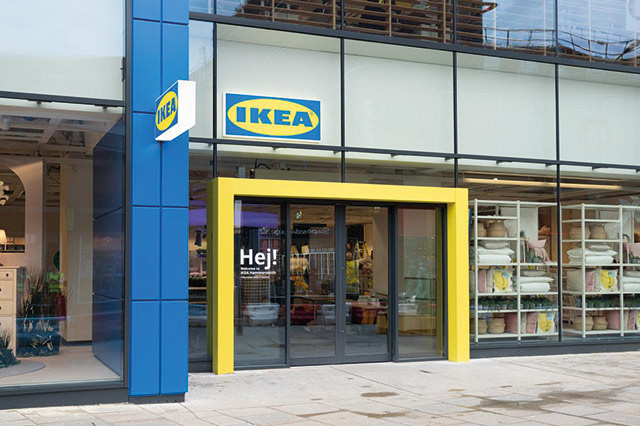
Hettich UK managing director, Simeon Gabriel, reflects on the significance of a big (but relatively small) arrival on London’s Oxford Street.
Ikea’s new 5,800 sqm store on London’s Oxford Street is a huge retail space by most standards.
Yet the footprint is modest compared with the Wembley store up the road at 37,000 sqm. Even a more average-sized Ikea outlet dwarfs it at 25,000 sqm.
So what’s the thinking? Big city centres cannot provide the retail space Ikea is used to. That’s why Ikea followed, and then turbocharged, the out-of-town shopping trend in the first place.
Maybe the great Swedish innovator, which first landed in the UK in Warrington in 1987, has spotted an opportunity? With its track record of success in this country, we should pay attention.
While online sales are growing apace, there is still a need for physical stores large and small, as “essential parts of the Ikea experience – as places for inspiration, community and engagement,” in the words of Ikea UK CEO, Peter Jelkeby.
He adds: “Bringing Ikea to the heart of Oxford Street – one of the most innovative, dynamic and exciting retail destinations in the world – is a direct response to these societal shifts.” It’s a big vote in favour of physical retail.
From Hettich’s perspective, as a furniture fittings manufacturer, we are drawn to the significance of locating a store in the heart of a city where space is at such a premium.
The Oxford Street area sees 50sqm flats sell for well over £500K. Location has trumped floor area for Ikea just as it has for those who choose to rent or buy in desirable central locations.
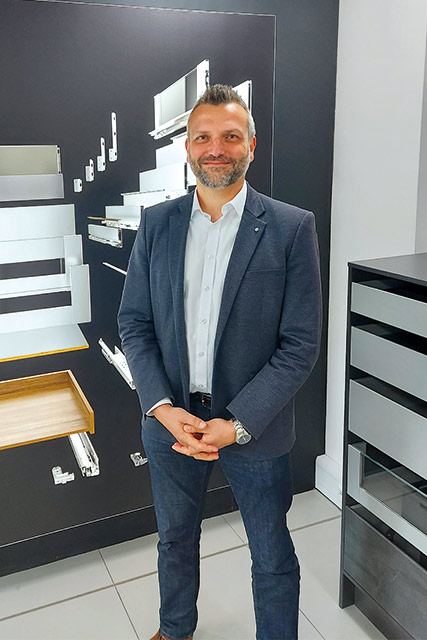
Where there are fewer cabinets, each has to work harder to justify its footprint or wall space. Humans are very good at either expanding into larger spaces or adapting to smaller ones. From executive homes to caravans, we make it work and love each space for what it is.
Details matter
Catering to those who embrace compact city living requires attention to detail. The furniture must move harmoniously, doors and drawers must shut smoothly and silently – this is someone’s urban sanctuary after all. These things matter even more in small spaces, where quality has a heightened impact on how you experience, connect with, and use your home environment.
So it’s about sliding solutions which reveal kitchen elements and workstations, perhaps even lending theatricality to that transformative moment between “on duty” and “closed for business”.
Whenever furniture users take part in this transformation process, they experience a positive emotional connection to their surroundings. If you think that is fanciful, consider the huge budgets that makers of consumer goods, from phones to cars, devote to user experience.
Ikea made its mark through a persuasive proposition which Oxford Street shoppers will likely embrace. I believe innovation of furniture motion technology is the vital enabler of the next revolution in interiors, compact and otherwise.
It is a revolution in which 40 is the new 60 (square meters in this case) regarding what space can deliver. Ikea’s choice to package its successful concept in a fraction of the floor area should give us all food for thought – whether or not you’re a fan of their meatballs.