
Smart living and connected appliances
Smart and connected technology is becoming more and more integrated with appliances with each passing year. Here, we bring you some of the latest trends, and advice on how retailers can ensure consumers get the most out of their smart tech.
Words: Francesca Seden
According to a recent market report from Market Research Future, the UK smart home appliances market is expected to grow from $1.98bn (£1.46bn) in 2025 to $7.83bn (£5.80bn) by 2035, with a compound annual growth rate of 13.337%.
There is a growing desire for connected appliances and the key trends we’re seeing are around convenience and ease-of-use, such as remote control, voice activation, and status updates, as well as eco-features, such as energy usage calculators.
For features that consumers most value, InHouse Inspired Design’s managing director, Stuart Dance, believes that customers are prioritising user friendliness and intuitive design, seeking tools that boost efficiency rather than add complexity.
He explains: “There are clear preferences for devices that are managed from a single app, and can be integrated with smart assistants, voice activated, paired with smart devices and automated for repetitive tasks.”
Most importantly, functionality should be intuitive and easy to use – so pairable with existing smart hubs that homeowners might already have like Amazon Echo, Google Assistant, or Apple HomePod.
Other highly valued features include anything which promotes sustainability or energy saving, and a number of brands now offer consumption calculators, such as Miele’s Consumption Dashboard via its Miele@Home app, and Lieberr’s SmartDevice App.
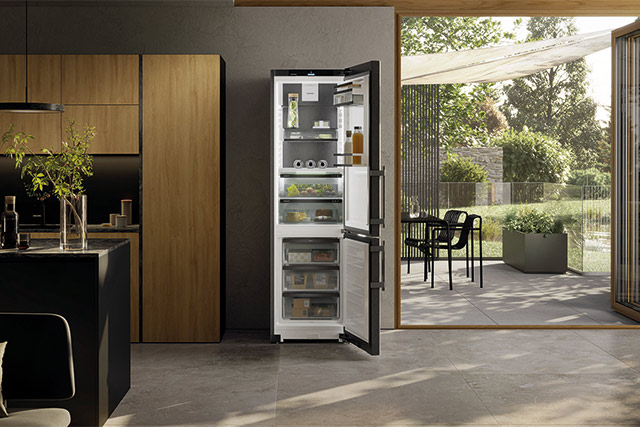
Interestingly, both Miele and Liebherr have also added hands-free opening and closing of their fridge-freezers – Miele, with its ActiveDoor feature, which opens the door via Amazon Alexa/Echo, or Google Assistant voice commands, and Liebherr, with its AutoDoor, which allows users to open their fridge with a simple knock or voice command.
This sort of functionality, and voice activation generally, makes appliances much more accessible for those who might have mobility issues, so on that basis, we are likely to see this tech increasingly utilised.
Role of AI
In the past, there’s been concerns amongst consumers about cybersecurity and suspicion around AI, but according to Samsung’s internal research, people are now more optimistic and excited about the benefits of AI, as we all become more familiar with it.
“These insights have been reflected in our AI-powered home appliances that all have innovative AI features designed to improve efficiency and save you time on daily tasks or routines,” Seb Goff, marketing lead for digital appliances at Samsung UK, says.
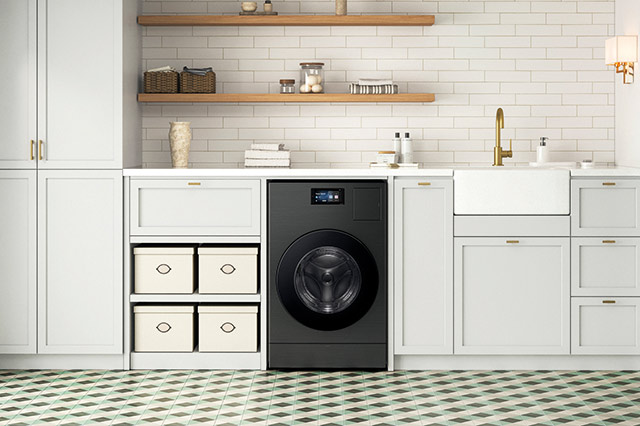
Samsung is another brand pushing smart tech with its AI Fridges, which can recognise certain foods as they enter the fridge, keep an inventory and then recommend recipes based on dietary preferences and needs – helping reduce food waste and plan meals in advance.
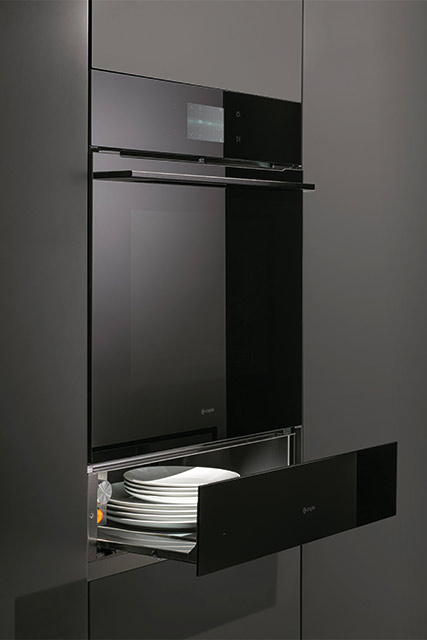
Away from refrigeration, Caple offers smart functionality in its ovens and hobs, allowing users to save their own recipes in its C2601BG wi-fi connected oven and smart pan detection, and the ‘pan move’ function in its C990I induction, zoneless hob.
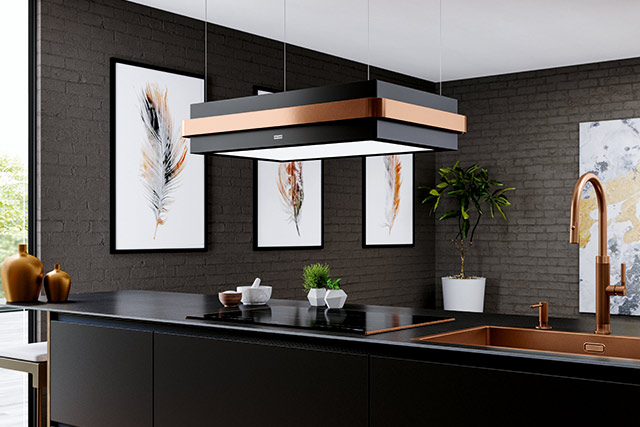
Franke, meanwhile, is promoting hobs and hoods that talk to each other through smart connectivity, which are proving popular because the level of extraction automatically adjusts to the cooking activity on the hob. “The hood senses what’s going on and provides the correct level of extraction with no manual intervention at all. From high temperature searing to gentle simmering, the sophistication of the technology makes all the decisions for you and keeps the air steam and odour free effortlessly,” says Chris Gallagher, sales director at Franke UK.
Eco-efficiency
Now, we touched briefly on features that promote sustainability, and with energy bills ever growing, eco-efficiency is definitely an important purchasing factor for consumers.
Anecdotal evidence from brands suggests that consumers will pay more for sustainable appliances, exemplified by ASKO’s national account manager, Jag Sandhu, who says that “by choosing high-quality, durable appliances, consumers can avoid the cycle of frequent replacements to minimise waste and long-term costs.
“While the initial investment may be slightly higher, many see it as a strategic and ethical choice that pays off over time, both financially and environmentally.”
A recent YouGov poll found that nearly 40% of respondents were open to paying 10% or more for eco-friendly tech. “This signals a potential market for sustainable products,” YouGov said, “but only if companies can clearly communicate the benefits and justify the price increase.”
This segways us very neatly into how brands, and their retailers can ensure that consumers maximise the smart functionality in their appliances, and this comes down to, as always, a combination of educated, expert sales teams and consumer demonstration days, with the ability for consumers to get hands on with appliances in store.
This in-store experience is also what can be used to incentivise consumers into buying from kitchen studios, rather than online. This in-store experience “remains irreplaceable”, according to Liebherr UK divisional manager, Lee Hutchinson, “especially for premium appliances where personal consultation and hands-on interaction are of the utmost importance.
“To support our kitchen partners, we offer exclusive promotions and value-added services, including expert aftercare and tailored sales support to help match customers with the perfect appliance for their needs.”
Samsung also offers such exclusive in-store benefits, including extended warranties from retailers, bundled offers, or installation packages that consumers won’t find online.
“You’ll also get invaluable, one-to-one advice from experts who can help you create a kitchen that’s both beautiful and brilliantly functional. We see kitchen studios as partners in delivering a premium, personalised experience, and our Bespoke range has been designed with that in mind,” Samsung UK’s Seb Goff says.
The future of smart appliance development
What our experts predict for the future of smart appliance development:
Caple’s head of product, Luke Shipway says he expects that appliances will be fully connected, where ovens, refrigerators, dishwashers and others communicate seamlessly with each other, and the consumer. “The result will be that kitchens are not just functional, but intuitive and adaptive, significantly enhancing convenience, and the overall cooking experience.”
Liebherr’s Hutchinson agrees, adding that “while we’re not quite at full integration yet, the foundations are firmly in place. At Liebherr, we’re committed to open-platform compatibility and future-proof innovation, ensuring our appliances are ready for the next wave of smart home evolution. For retailers, this means partnering with a brand that’s not just keeping pace but setting the standard for what’s possible in the modern kitchen.”
Samsung UK’s Goff says that “one final important factor is that we also understand the importance of data privacy, which is why Samsung designs its AI systems and appliances with user transparency and security at the core to give the user that peace of mind. Samsung has continually invested in its Knox security platform, our proprietary multi-layer security platform, offering comprehensive protection for both devices and user data across all Wi-Fi-enabled digital appliances.”