
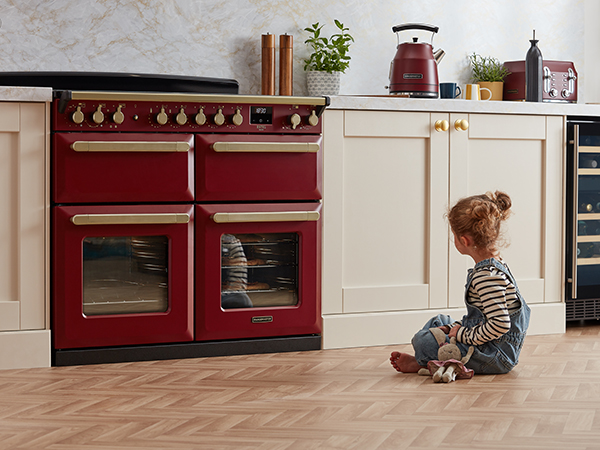
AGA Rangemaster: A mix of old and new
AGA Rangemaster is a company that’s rightly proud of its heritage, so the challenge is how to develop new products without compromising the brand DNA. We meet the British team that more than meets that challenge…
This article is sponsored content
For a business built on some of the most recognisable appliances in the UK, product development at AGA Rangemaster is as much about knowing what not to change as it is about innovation.
The DNA of the brands informs a philosophy that underpins everything from early concept work to the finished product on a showroom floor – and its retailers play a massive part in that process.
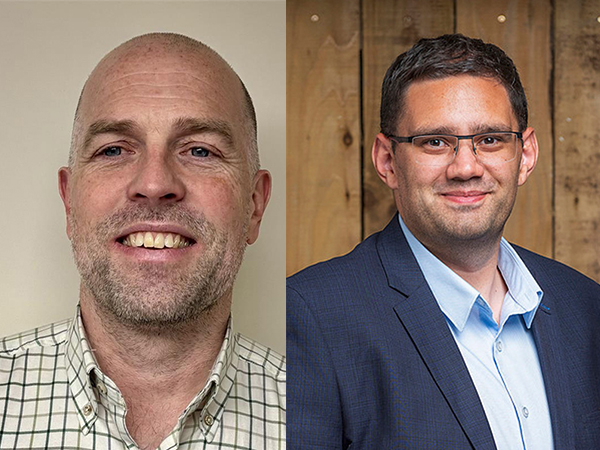
At the centre of it are Rob Inglis, group technical director, and Stewart McLelland, head of category, whose roles are closely intertwined. Between them, they bring together technical engineering, market intelligence and customer insight to ensure new products move the brand forward without compromising the DNA that has made Rangemaster and AGA enduring names in British kitchens.
“Everything we do here is collaborative,” says McLelland. “Product development isn’t owned by one function – it’s a constant dialogue between the market, the sales team and the technical side of the business.”
McLelland’s role is heavily weighted towards the front end of that conversation. He leads on product lifecycle and category strategy, spending much of his time working directly with retailers, installers and sales teams. “I’m very focused on conversations with customers,” he explains. “A lot of my time is spent in research meetings with retailers and understanding how our products actually perform in the real world.”
McLelland describes the research process as drawing from four core sources: consumers, retail partners, installers and the business’s own long-standing knowledge. “We bring all of that together to create our range architecture,” he says. “That structure is what allows the sales team to go out and hit their numbers with confidence.”
Once that framework is in place, it is Inglis and his team who translate it into physical product. “Stewart and I work together on defining what ‘good’ looks like,” says Inglis. “From there, my team takes responsibility for the design, the engineering and ultimately bringing that concept to life.”
With brands as established as Rangemaster and AGA, the scope for radical design shifts is intentionally limited. Inglis argues that this clarity is actually a strength. “We’re very clear on what makes a Rangemaster a Rangemaster,” he says. “Those USPs are defined and built into our design standards.”
Innovation
That does not mean innovation is discouraged, but it does mean it is carefully tested. When a concept pushes beyond familiar territory, the business leans heavily on visualisation and feedback. “If we feel we need to step outside those boundaries, we’ll create renderings and prototypes,” Inglis explains. “Stewart will then bring in retailers, wholesalers or even end consumers to gauge reaction before we go any further.”
In practice, however, most development work sits comfortably within well-understood parameters. “We have a very clear formula for what a range cooker is,” says Inglis. “That makes it much easier to create new models without losing our identity.”
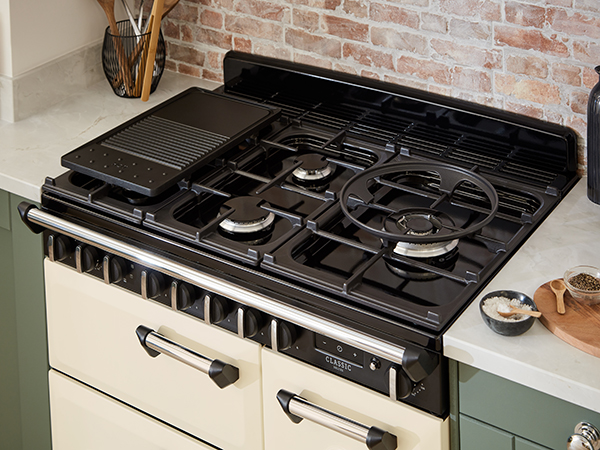
Crucially, that identity extends beyond styling. Inglis points out that heritage brands are defined as much by how they are used as how they look. “The DNA isn’t just visual,” he says. “It’s about how the product works, how it feels to cook on and what it gives back to the customer.”
He points to the launch of the AGA ERA as an example of how the business approaches evolution. While the product represented a clear step forward in styling, its proportions, layout and core functionality remained unmistakably AGA. “It moved the design on,” he says, “but it never lost the essence of what an AGA is.”
Retailers play a central role in maintaining that balance. Many Aga Rangemaster partners have relationships with the brands that stretch back decades, and McLelland believes that longevity gives them a deep sense of ownership.
“We recently held an AGA open day where some of our partners had been working with the brand for 70 or 80 years,” he says. “They understand the heritage and the DNA as well as we do, and they’re incredibly invested in protecting it.”
That closeness creates an unusually direct level of feedback. McLelland describes a business where senior leadership is highly accessible to key customers. “For our top-tier partners, there’s virtually no distance between them and the decision-makers,” he says. “That connection feeds directly into how we develop products.”
Despite its market-leading position in range cooking, McLelland is clear that complacency is not an option. “Being number one isn’t something you can just sit on,” he says. “You have to keep earning that position through development and innovation.”
Trend awareness is fundamental to that effort, but both men stress the importance of being proactive rather than reactive. McLelland explains that the business invests heavily in market data and attends global trade shows to stay ahead of the curve. “The goal is to understand what’s coming next, not just respond to what’s already happening,” he says.
Inglis adds that much of the work his team undertakes will not reach the market for several years. “We’re often working two or three years ahead,” he says. “That time allows us to get things right and make sure any innovation still feels true to the brand.”
Refinement
Many of those improvements are deliberately understated. “A lot of development happens behind the door,” McLelland notes. “It’s about refining performance, efficiency and usability rather than adding features for the sake of it.”
Research, design, development and manufacturing all happen in the UK, and that absolutely shapes the end result
Rob InglisOne area where AGA Rangemaster makes no compromise is its commitment to British design and development. Inglis believes this has a tangible impact on the finished product. “All our products are designed in Britain and we develop everything here from the concept stage onwards,” he says.
That includes extensive in-house testing. “We carry out our own lab testing before certification, and we have chefs working with us who test and stress the products in real cooking scenarios,” Inglis explains.
Sustainability is becoming an increasingly important driver of development, even if it is not always visible to the end user. McLelland notes that environmental considerations are now firmly embedded in consumer and retailer expectations. “Sustainability is no longer optional,” he says. “It’s part of the normal. It has to be part of everything we do because it’s expected of us.”
The business is already working on future products where sustainability is a core principle rather than an add-on but at the same time, both men stress that improvements are often incremental. “It’s about making products more efficient, more economical and better engineered,” McLelland says, “even if those changes aren’t immediately obvious.”
For Inglis, the challenge is integrating new technology without undermining what makes a range cooker special. “A range cooker isn’t just another appliance,” he says. “It’s the heart of the kitchen, it’s about spending time cooking with the family.
And that belief ultimately shapes every development decision. “Our job,” Inglis concludes, “is to move these products forward while keeping everything people already love about them.”
This article is sponsored content