
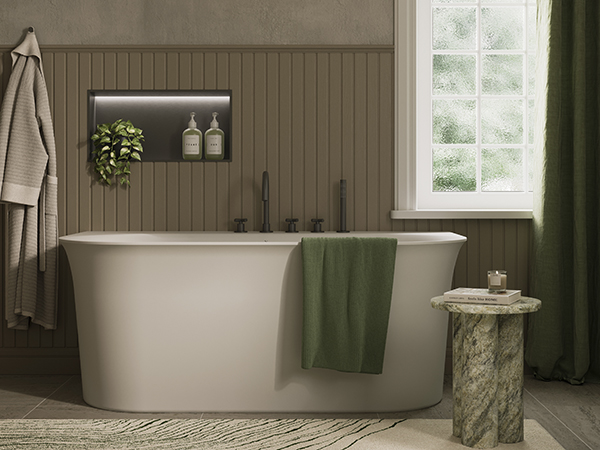
Bathroom products: Showers vs Baths
Shower, bath or both? Not quite as poetic or as philosophical as Shakespeare’s “to be, or not to be?”, but probably more important, practically speaking, when designing a bathroom…
Words: Francesca Seden
Bathroom design continues to be dominated by a combination of wellness, luxury and indulgence, and product trends are very much reflecting this where both showers and baths are concerned.
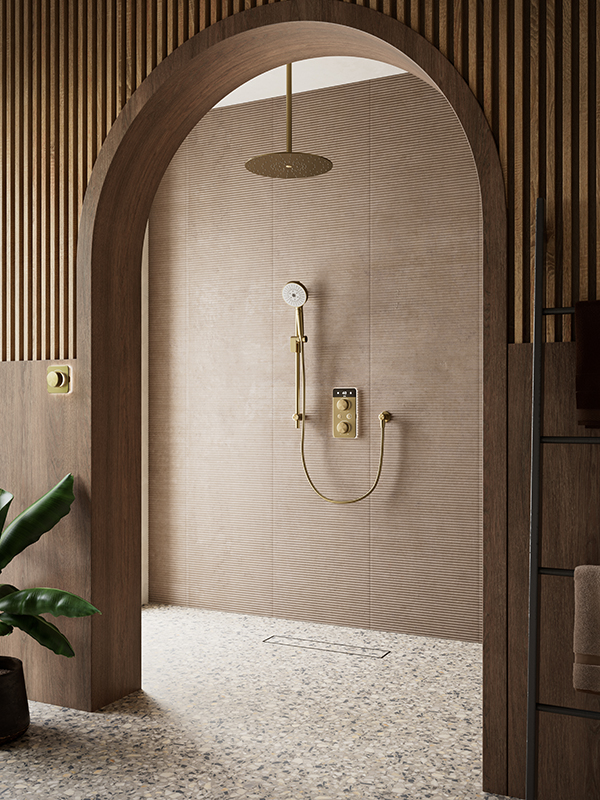
In showering, wellness features such as chromotherapy lighting, infrared or UV technology, and large rainfall showerheads are sought after – offering a luxurious and multi-sensory experience. Showers with digital and/or customisable controls, are also on the rise so homeowners can personalise their experience, choosing something relaxing or something invigorating depending on mood, or simply the time of day.
According to the latest Houzz Emerging Trends Report, interest in double showers is surging, with searches up a whopping 746% compared with 2024. Further research by Flair Showers states that demand for wetrooms continues to rise due to their low-maintenance appeal.
“Furthermore,” says Flair marketing manager, Gillian Furey, “bathrooms that feature large tiles, or panels, with minimal grout are increasingly popular, especially with parents of teenagers who use fake tan.”
So, there are very practical reasons for wanting a shower space, and low maintenance is one, but so is accessibility and sustainability. “A wetroom is also the perfect showering solution for multigenerational homes thanks to its ease of access and open layout,” Furey adds.
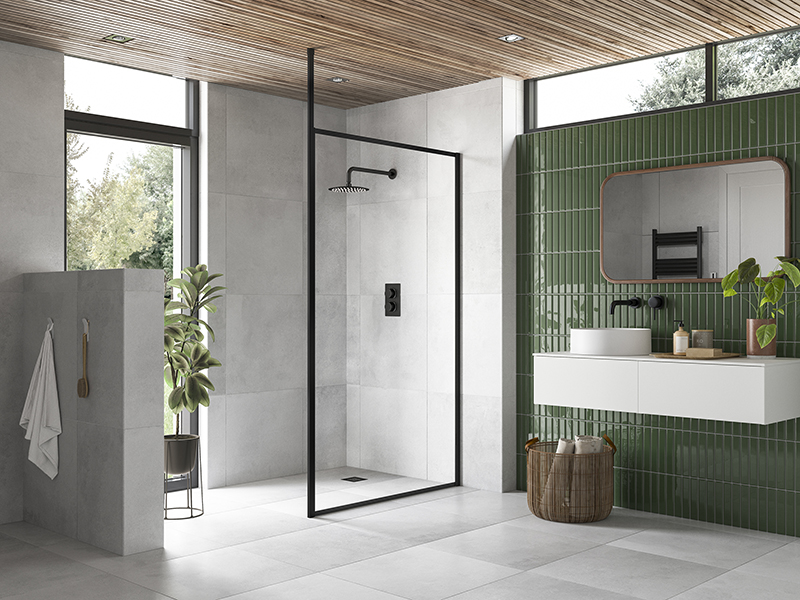
In terms of aesthetics, large format tiles, as Furey mentions, are great for easy maintenance, and for more traditional shower spaces, framed shower doors have returned, “but in more architectural ways, adding warmth and definition rather than ornament,” says Sonas Bathrooms’ chief commercial officer, Gerard Fahy.
“Wetrooms are also evolving. Rather than purely functional spaces, they are becoming design-led environments, with coloured profiles and fluted or smoked glass increasingly used to add depth and character,” he adds.
“‘Soft elegance’ is proving particularly influential – a refined take on minimalism that prioritises warmth and subtle luxury over stark, clinical schemes,” Hansgrohe UK brand and communications manager, Emma Freeman continues. “In this context, the shower has become the focal point of the room, both aesthetically and experientially. Performance, reliability and sensory quality are now as important as visual appeal.”
Aspirational features
Moving on to baths and bathing – this is viewed by some as a “considered lifestyle feature, offering homeowners a chance to slow down and create restorative moments,” according to Vado’s product and marketing director, Angela Neve, or, it is simply a practical necessity if the homeowner has young children, who are often the main users of the tub.
On the more luxury or indulgent end of that spectrum, “smart bathtub options that save floor space in small bathrooms, like built-in fixtures or Japanese-style tubs that are short but deep”, are popular, according to Sanctuary Bathrooms director, James Roberts.
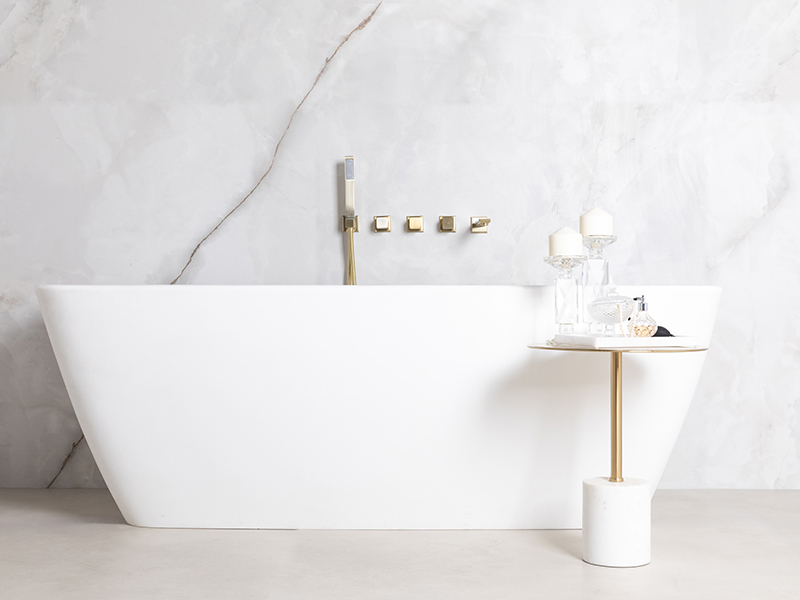
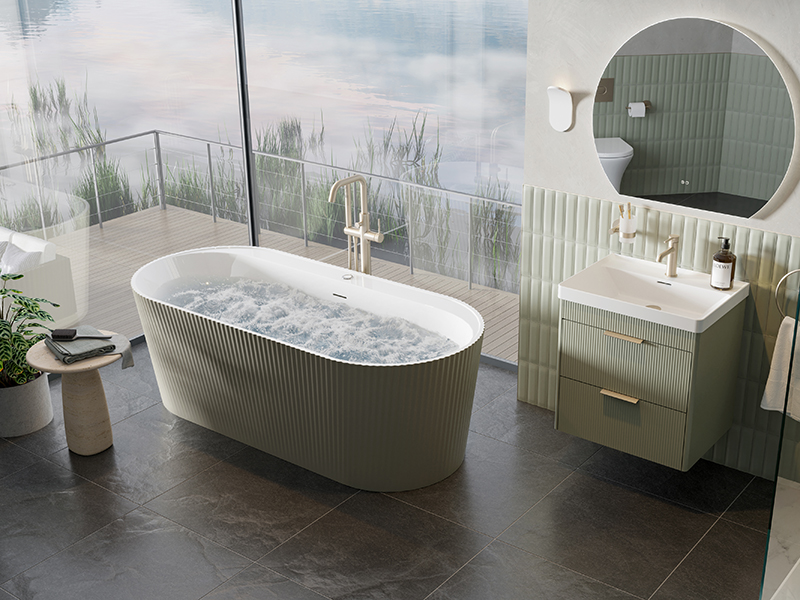
Large, freestanding tubs still tend to be the aspirational dream for many, however Sonas’ Fahy believes that this category has matured, with visual impact alone no longer sufficient.
“Baths increasingly need to justify their footprint through comfort, ergonomics, and wellness features. Compact freestanding and space-efficient designs are gaining traction, particularly in urban homes where indulgence still needs to function within tighter layouts.”
Looking at the more practical side, we asked if the humble shower bath has any place in modern bathroom design. The answer, on the whole, was “yes”, particularly where you are designing in a smaller space, and the homeowner really needs a tub, or because of budget constraints, where the homeowner may want both, but their budget doesn’t stretch to that.
It’s important to note here that options have become increasingly refined over the years, with “slimmer profiles, elegant screens and improved proportions that feel intentional rather than compromised,” according to Jo Sangster, senior designer at Ripples London.
Vado’s Neve adds that elevating this solution comes down to thoughtful specification. “A well-proportioned bath shower mixer paired with a streamlined thermostatic shower system in a consistent finish creates a unified look,” she explains.
In terms of how these markets are performing, it’s widely agreed that showers are outperforming baths in volume sales, which makes sense considering that people are probably more likely to swap a bath for a shower, rather than the other way round. They’re much more likely to install a shower in additional bathrooms, such as en-suites.
Balanced bathing
Finally, we asked our contributors for their advice on the key considerations designers should be making when planning either showering or bathing spaces.
Alan Harrison, bespoke design consultant at Merlyn Showering, comments: “Be conscious of light and space. I see too many bathrooms ruined by poor planning and restricting natural lighting leading to areas that feel dark and claustrophobic.
“Starting with a large element like a shower or bath can be the key in achieving a balance within the space. The last thing you want to do is run out of space for a shower.”
Hansgrohe’s Freeman adds that three factors should guide specification: spatial planning, cohesive aesthetics and long-term sustainability.
“Space remains the primary constraint in many projects,” she says. “In compact bathrooms, visual harmony is critical, as fixtures are positioned in close proximity and inconsistencies in style or finish become immediately apparent. Specifying from a single brand can help ensure cohesion across brassware, ceramics, furniture and accessories, particularly where consistent finish options are required.
“Finally, sustainability should be considered at the outset of the design process. Specifying water-optimising technologies ensures long-term environmental and economic benefits, enabling clients to make responsible choices without sacrificing comfort or performance.”
Vado’s Neve comments, “Planning is fundamental. Shower layouts must consider valve positioning, outlet configuration and system pressure early in the design process. Exposed thermostatic options can simplify installation and future servicing, while concealed systems offer a more architectural finish but require careful access planning.
“Fit for purpose is equally important in bathing areas. Consider how the space will realistically be used, for example, whether a standalone bathing area would benefit from a shower hose for rinsing, cleaning or washing children and pets, or whether a shower over-bath layout requires thoughtful positioning, so outlets comfortably reach where people are likely to sit. Details such as overflow placement, spout projection, and practical solutions like a hair-catching bath waste can make a meaningful difference to day-to-day usability.”