
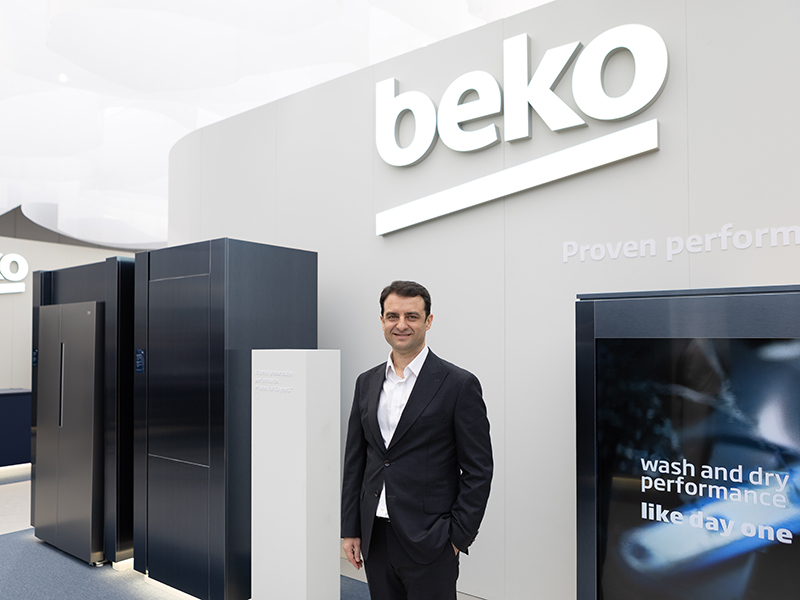
The kbbreview Interview: Akin Garzanli, Beko Europe CEO
Two years on from one of the biggest appliance company mergers in history, Beko Europe has survived the herculean challenge of bringing together two vastly different companies. But in an ever-shifting European market, where has new boss Akın Garzanlı set his sights for the future?
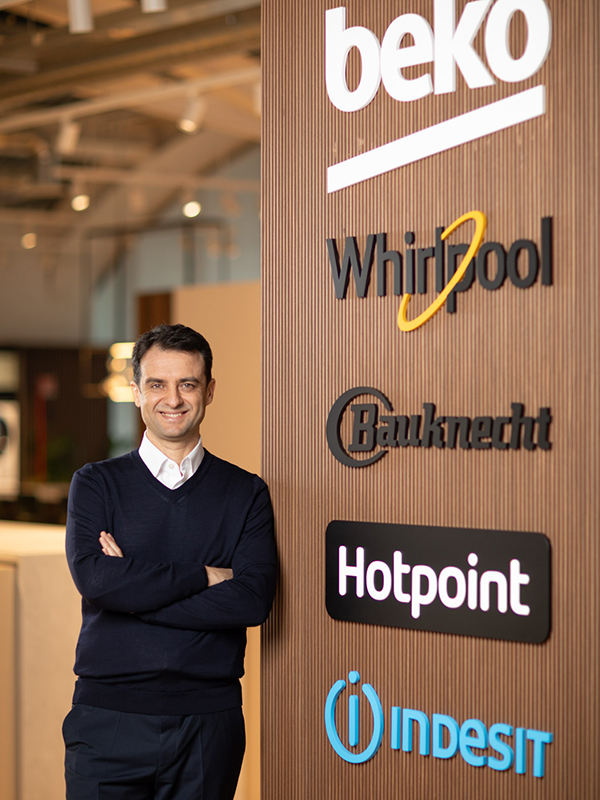
When he stepped into the CEO role last October, Akın Garzanlı became responsible for not only steering Beko Europe’s overall strategy, but also agreeing to help shape the culture of a company that is still, relatively speaking, in its infancy.
Originally owned by Turkish appliance giant Arçelik, Beko’s European operations were combined with Whirlpool Corporation’s residential business in early 2024. Out of the merger, Beko Europe was born, with the resulting business being so large that the UK’s Competition and Markets Authority felt compelled to investigate the deal because of concerns it could completely upend the market.
Two years on, with more than 15,000 employees and a production capacity of roughly 24 million products per year, the newly-born appliance giant now boasts a whopping 11 production sites across the continent. And that’s not even mentioning Beko’s ownership of huge brands like Hotpoint, Arctic, Ariston, Leisure, Indesit, Blomberg and Bauknecht, and that’s just to name a few.
Garzanlı certainly earned his right to take the reins of the company, too. After starting at Beko all the way back in 2002, he steadily climbed the branches of the company tree, becoming global customer care director in 2018, global brand director in 2020, before eventually stepping into the role of European CEO at the end of last year.
But even with such a strong foundation and a massive base to grow from, even Beko hasn’t been immune from the complicated ups and downs of a turbulent market.
As Garzanlı himself candidly recognises, geopolitical uncertainty, rising energy costs and constantly shifting regulations are all obstacles that the appliance juggernaut is having to juggle, and on a continental scale where each country’s market comes with its own unique challenges, too.
“European manufacturing is getting more and more difficult,” he admits, “but for us, that’s just more of an inspiration…”
How’s business been for Beko Europe over the past year?
The business is moving in the right direction, but there are lot of changes, so we never get bored in this industry! We have the challenges of the geopolitical situation, but Europe has its own challenges as well. Of course, we are a company that is willing to take chances. Two years ago, we had the Beko Europe formation, where we now have Whirlpool, Hotpoint, Indesit and Bauknecht brands together, with Beko, of course. That definitely made us stronger, not just in terms of market share. We are a market leader in many countries, including UK and Ireland, but what’s most exciting for us now is how we can contribute to peoples’ lives.
Outside of just the ongoing geopolitical situation, what are some of the big issues you’re seeing for European manufacturing?
There are certainly some very difficult challenges to handle, because as you know, European manufacturing is getting more and more difficult in terms of regulations and energy costs. But for us, that’s just more of an inspiration. I mean, if we want to carry on being successful selling these products in Europe, we have to be inspired by the people who are living here and their lifestyles.
It’s two years on now from when Beko and Whirlpool merged, and they were both massive groups individually with their own identities, cultures and ways of working. How difficult was it to bring those two ways of thinking together?
I think it was a big learning experience for all of us. It was a real journey and we learned a lot. And learning, of course, means you make a few mistakes along the way. However we came out of that process as a much stronger company. When I look back, it was like a roller coaster. But you become richer, not just financially, but in terms of what you learn and also the culture you get to build. Previously we had a limited number of people, many of which were engineers. But now we have people in 80 different countries around the world, all working together. And of course, with that comes lot of inspiration, and a lot of mixing cultures. When I was studying business during university, we were taught about all of these case studies of companies that had merged. In most of those case studies, I’d say the mergers went “okay”, but for us, it’s much deeper than that. In fact, you’d probably have to have something like a Harry Potter series of seven books to describe ours (laughs). In the end, we have a new culture. It’s not Beko culture or Whirlpool culture that prevails, but a totally new culture born of those two legacies.
Some KBB retailers say they find it difficult to have to juggle working with so many suppliers, so do you think merging all of those brands into Beko Europe makes it easier for them? Was that a consideration at any point?
Yes, actually that was one of our strongest considerations. Obviously with Beko, we became very strong in terms of market share, but our engineering capabilities were far beyond what we could have built before. We were building products that were the most sustainable and technologically advanced, but we didn’t necessarily have the right brands to position them with. For example, if we were to put every product under the Beko brand, it might seem too strange. You cannot give all the right marketing messages with one brand – that doesn’t fit. Now with the set of brands we have, we have more options for every country. So it’s not the case that we sell every brand in every region. It’s very selective. So, Hotpoint for the UK, and Whirlpool for Ireland, they are very strong brands there. Actually, according to Trustpilot, Hotpoint was recently chosen as the most trusted home appliance brand in the UK and that gives us a strong basis for all our technology and to upscale products. What’s important to me is that there is a Hotpoint appliance in nearly every home in the UK.
You’ve discussed before that Hotpoint has always been a value-led brand, but there’s lots of talk that the market is going to have to become a lot more premium in the coming years. Does that concern you at all?
That’s a very good question, but honestly there is no single right answer to this because there is a lot to think about. In the UK, we know there are a lot of living trends to consider that are quite unique to that market. For instance, in London, there is a kind of social housing where you have four apartments and one group kitchen. Some people, even if they have the money to afford a bigger apartment, still prefer to live in smaller spaces. Or you might even have smaller apartments where the kitchen is a part of the living room as well. So we have to build products that fit to these different ways of living, and it’s our responsibility to build products that can still be sustainable even when they are used in different ways. So we have to always be aware of things like, what does Beko do well? In which houses do Beko products fit? And where will Hotpoint go? With Hotpoint, with our new strategy, we will look to go in more to the premium direction, but Beko will stay as the value brand.
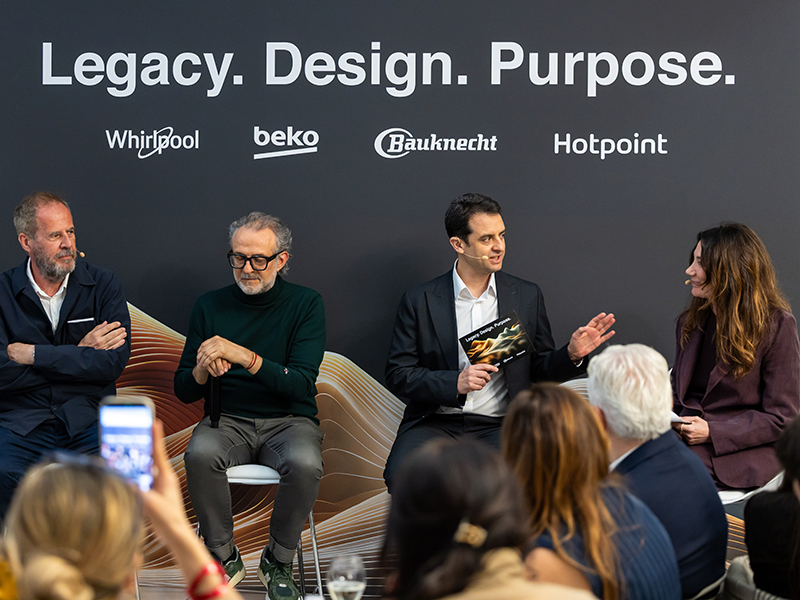
But with as many brands in the portoflio as Beko Europe has, it must be quite hard to have a unifying philosophy with all of them. So where’s your priority at the moment for product development? Is it sustainability? Design? Affordability?
Sustainability has been a key focus for us for quite a long time. And even through these difficult times when some other companies are switching their focus away from sustainability, we’ve stayed on course. That’s because, as you know, sustainability in the form of energy saving is probably the most important consideration today. Looking at the energy crisis, and thinking about what’s happening in the Middle East, it’s becomes more and more important to have. And considering that today’s appliance products are 50% more energy-saving than 20 or 30 years ago, for us, sustainability is absolutely staying at the very top of our priorities.
I’m sure, but is there any plan to try and differentiate your brands even further with other qualities?
For all of our brands, they have to find their own values. So something like modularity or adaptability. As I mentioned before, there is more than just one type of kitchen. When you watch movies set in the 17th century, all of the kitchens look the same, but that’s definitely not the world we live in now. There’s a variety, so we have to meet the demands of customers and their families, in terms of adaptability. Flexibility is also going to be important in the future.
Touching on that geopolitical conflict, a lot of retailers are anxious that we might see supply chain problems again like what happened during Covid. Are you taking any steps to prevent that?
Well, Beko has factories all around the world, which helps a lot. What really helps is making sure we have product availability. Currently, we don’t have any availability issues, even though there are problems, like you say, in the Middle East. But we have factories in Italy, Romania Poland – all over. They all run with the capacities that can serve the market’s needs, which we know is a big advantage for us.
What do the next five years look like for Beko Europe?
They’re all about the brand strategy we have. We’re two years in right now, and we still see it as just the beginning. We are excited about the new culture, about our people and the company, but we’re also working with the customers to excite them with all of our brands and the individual things they offer the market – that’s Bauknecht in Germany, Hotpoint in the UK, and Whirlpool across Europe. We know those brands have the technology to excite our customers and our retail partners to create value… not to draw the prices to a crazy level. It’s really all about how to add more value, not just for the retailers, but also in people’s homes.