
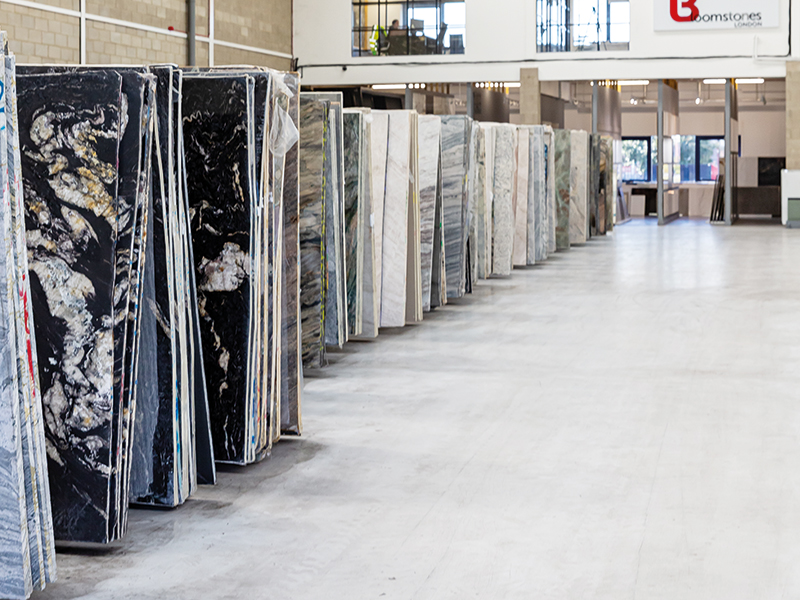
Opinion: Is the stone market evolving – or devolving?
As stone techniques have become more and more sophisticated, Bloomstones director Adam Reuvany wonders whether the industry has started seeing product character as some kind of a defect?

Words: Adam Reuvany
We’ve all seen the news recently which has taken the industry by storm. Almost like it was an issue hiding in plain sight all along.
But let’s be honest with ourselves for a moment, was it really hidden, or were many of us simply hoping the people raising concerns around silica and fabrication standards were overreacting?
The facts are fairly simple. The industry needs scrutiny around working procedures, and the conversation around silica dust is an unfortunate but necessary opportunity to raise standards across the sector. Not just for the quality of work being produced across all materials, but for the people carrying out the craftsmanship itself.
At the end of the day, most people in this trade are simply trying to earn a living and provide for their families. That is exactly why health, safety and proper working practices have to come first. But whilst the industry reflects on where improvements need to happen, we also need to acknowledge how we arrived here in the first place, because accountability sits in many different places.
Did we create our own mess? Probably. Have we allowed parts of the skillset of traditional stonemasonry to be stripped back by the rise of materials that are simpler, faster and more repeatable to work with? In many ways, undeniably yes.
As a former stonemason myself, now working as a wholesaler and director of Bloomstones London, I think it is important to be transparent about my own position in the industry. Just because I sell a product does not make me any less part of the wider conversation. Equally though, for many years now I have strongly believed natural stone remains one of the best and most sustainable material choices available when properly understood and specified.
Predictability
Fast forward over the last decade and the market shifted massively. Brands emerged with enormous marketing budgets, colours and designs the market had never seen before, and most importantly, products that offered consistency at scale.
For designers, studios and retailers, samples began to genuinely resemble the finished slabs customers would receive. Predictability became easier to sell.
Without even fully realising it, the industry gradually moved into a world of high-volume, high-turnover worktop production centred around uniformity and repetition.
But somewhere along the line, perhaps we stopped just selling stone and started selling predictability instead.
How did we end up with kitchens, arguably the focal point of most homes, becoming copy-and-paste spaces filled with stark whiteness and familiar grey or gold veining? Why do people now spend thousands creating spaces that look almost identical to everyone else’s, rather than embracing individuality and character through natural materials?
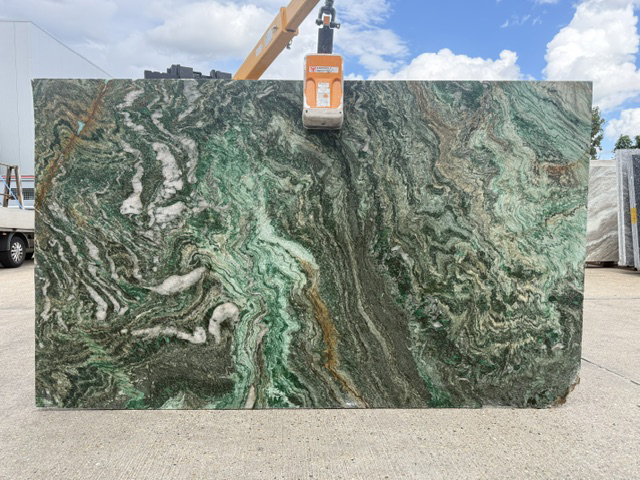
Natural stone suddenly became viewed as a “risk”. Variation and geological individuality became something that needed explaining away rather than celebrated as the very thing that made the material special in the first place.
We look at wood and celebrate knots, grains and imperfections as signs of life, age and authenticity. Yet when it comes to stone, we often label the exact same individuality as “defect”. Strangely, many sintered and engineered products now even print those natural imperfections back into their designs artificially because somewhere deep down, we still recognise character as beauty.
Perfection alone does not create timeless spaces. Character, texture and patina do.
In many parts of Europe and the Middle East, natural variation within stone is still widely viewed as luxury, authenticity and craftsmanship. Meanwhile, parts of the UK market increasingly conditioned consumers to expect uniformity above almost everything else.
Which then raises an uncomfortable question. Did the rise of quartz truly represent progression, or in some ways was it actually a devolution of the trade itself?
This is, after all, an industry built upon materials that shaped monuments, cathedrals and structures that have outlived entire civilisations. Yet over time, parts of the trade gradually found themselves producing endless uniform rectangles designed around speed, consistency and scale.
And whilst engineered quartz absolutely still has a place within the modern market, it is also fair to ask whether some of the strengths of natural materials became undervalued during that shift.
Granite and quartzite remain exceptionally durable materials. Natural stone offers individuality, longevity and in many cases a more favourable end-of-life sustainability profile than heavily engineered alternatives, which can present greater challenges around recycling and repurposing.
At the same time, quartz undeniably helped create a system that allowed faster fabrication, easier repeatability and large-scale volume production in ways natural materials often cannot.
Which brings us to where we are now. The industry is rightly discussing change. Safer fabrication methods, dust extraction, wet cutting procedures and better protection for workers should all be considered non-negotiable moving forward.
But perhaps this moment also gives the wider industry an opportunity to rebalance itself slightly. To re-educate consumers around natural variation. To appreciate geology, craftsmanship and individuality again. To stop treating movement within natural stone as a defect and start recognising it as authenticity.
The market does not need to abandon one material for another. It needs to find a healthier path where all of these materials can coexist honestly and appropriately, whilst ensuring the people fabricating them are protected properly.
Because perhaps the rebirth of stone begins the moment we stop fearing variation and start valuing authenticity again?