
Adopted Retailer July 2026: Church Farm Kitchens
Church Farm Kitchens has not had it easy since founders Charlie and Alex Braidwood set off on their retail journey. But now, the light at the end of the tunnel is starting to shine brightly…
The story so far…
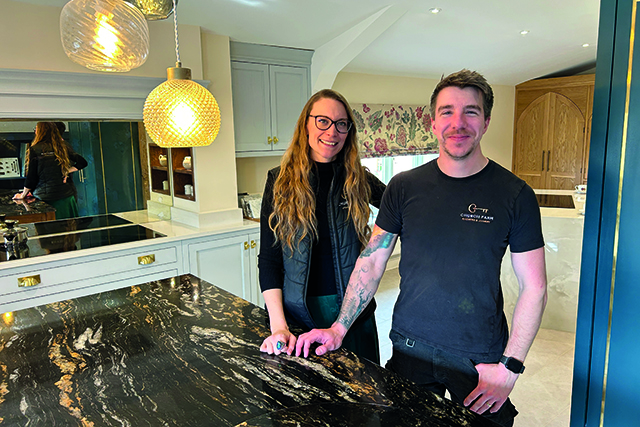
Church Farm Kitchens was launched in July 2024 by young husband-and-wife team Charlie and Alex Braidwood. The business has grown out of Charlie’s family firm, David Smallcombe Ltd, which has been doing construction and joinery locally for more than 30 years.
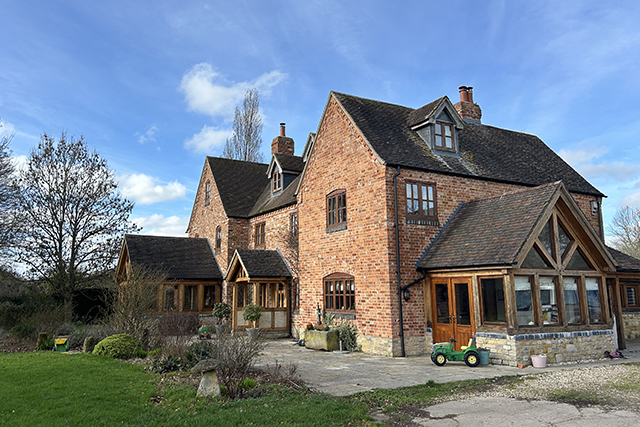
Set on a working farm in Worcestershire, it’s a proper rural set-up, with showroom and workshop side by side, and that means they can handle everything from designing a kitchen to full construction. Timing, though, hasn’t exactly been on their side. Opening in the middle of a tough market meant kitchen sales were slower than hoped, so they’ve relied on their joinery and building work to keep things ticking over.
That’s led to a really varied first year, with everything from wardrobes to full refurb projects going through the workshop. It’s a small, hands-on team, and that flexibility has helped. The wonky old barn showroom has also turned into a bit of an asset, showing what they can achieve even in awkward spaces.
When we last caught up with Church Farm Kitchens, Charlie Braidwood was beginning to understand that the business she was building with husband Alex and her workshop team wasn’t simply about kitchens.
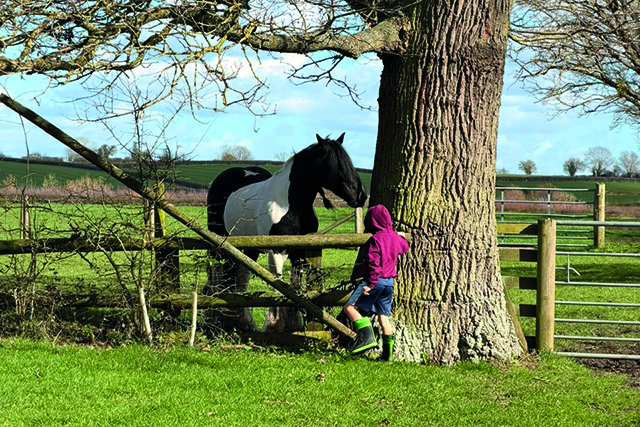
It was about projecting the narrative of the whole business – the working family farm, the animals that populate it, the chapel that gives it its name and the barn where they held their own wedding reception.
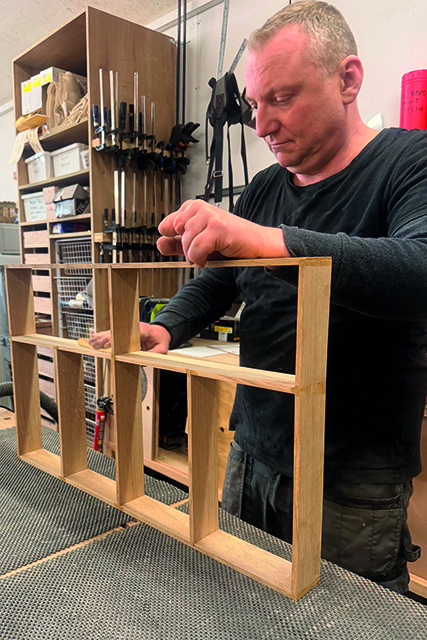
It’s about the workshop where customers can watch their furniture being made by the people who will eventually fit it.
The story invokes an idyllic rural scene but, unfortunately, market conditions for a new kitchen retail business were fast becoming the villain in the tale.
“Until recently, it was very quiet, uncomfortably so in fact,” admits Braidwood. “We were at a stage where you have to start asking yourself how long you do this for until you have to make a tough decision.
“We had a kitchen enquiry we’d been working on for quite a while and I thought if I could just get that one over the line, it would give us three months of work into the New Year and I’d be quite happy with that. We had jobs in the workshop for January and I thought, ‘right, that takes us through to February’. Then January came and it just went really, really quiet.”
This candid admission will strike a chord with many retailers who have felt the same creeping feeling of wondering where all the enquiries have gone. They will also share Braidwood’s frustration that nothing appeared to actually be wrong – the projects simply stopped moving and the clients went quiet.
“There’s only so many times you can email somebody to see where things are going,” she says. “Eventually I thought, ‘right, we haven’t got that one, let’s move on’.
“Then we got another enquiry in February and thought, ‘Good, we could really use this kitchen. This will be our breathing space’. We measured it, did the estimate and were ready to go, but then they just said they were going to wait. I think that was when we realised we needed to do something because we were running out of time.”
Talking to other retailers, Braidwood quickly realised Church Farm Kitchens wasn’t alone. “From what I could gather, a lot of people were having the same thing happen. Customers were saying, ‘It’s not you, we’re just going to wait.’ The confidence just wasn’t there.”
For a young business still establishing itself, this barren patch could’ve spelled disaster and Braidwood was terrified that they were reaching a point where she might lose her highly skilled team in the workshop.
“I didn’t want to lose these guys because I know I won’t find anyone like them again,” she says. “So there was a lot of pressure because I knew that I had to find work for them. We work really well together and we’ve built something that I genuinely didn’t want to lose.
“It was my idea to do all this in the first place, so of course I feel responsible, and I’m just thinking, ‘God, I’ve got to make this work.’ We want to run it how we want to run it so if we wanted this to be our business, then this had to be a turning point.”
Alternate markets
So the team adapted. Holiday entitlement was used where possible and the workshop team picked up other jobs, while Alex worked on bigger construction jobs.
But for Charlie Braidwood, the downtime gave her an opportunity to stop and think. Now, looking back, she believes the quiet spell may ultimately have accelerated the business’s development.
“We started looking at things properly and dispassionately,” she says. “I’d already done a local scheme called the Elevate Growth Programme and we’d looked at marketing in that so I went and spoke to different people and got some great advice.
“I also had somebody come in who does promotional work with local businesses and the interesting thing was nobody was really saying we were doing anything wrong. It wasn’t, ‘You need to change this’, It was more, ‘Hold on, this is what you need to do to future-proof it’. I think that really became the focus. How do we make sure we’re not in this position again?”
That thinking quickly led beyond kitchens. A social media post on her daughter’s school page introduced the business to a local estate agent.
“She came to visit the workshop and said, ‘We get asked about this sort of work all the time’, So now we’ve got that relationship there.”
At the same time, Church Farm Kitchens began exploring products aimed at the equestrian market, another audience that appreciates craftsmanship and heritage.
“We’ve been making things like rosette boards and saddle racks,” says Braidwood. “It’s funny because once you start looking around you realise there are all these little opportunities. They’re not kitchens, but they’re still beautifully made products and they still tell our story.”
However, the first real breakthrough came from somewhere altogether more familiar – a previous customer returned.
Hands-on skills
“We’d fitted an extractor for her before and then we’d done a door,” says Braidwood. “Then she came back with windows that needed work, a summerhouse that needed repairing, a bookcase and various joinery jobs.
“It wasn’t a kitchen but it gave us our breathing room and, actually, it reminded us of something important. We’re joiners. We can make things, not just make kitchens.”
Then, suddenly, the market woke up. “Like buses, they’ve all come at once now,” she laughs. “We’ve got the kitchen we’re working on now. Then another one came in from a village where we’ve already done two kitchens. Then the one we’d been waiting on earlier in the year came back and said they wanted to go ahead after all.
“One couple had actually been thinking about moving house. That’s why they’d gone quiet. The estate agent came round and told them the house had gone up in value and they decided they’d rather stay where they were and get the kitchen done instead.
For a retailer that only a few months earlier was worrying about where the next project would come from, it was a remarkable turnaround. And the change has reinforced another lesson as almost every opportunity now comes from recommendation, repeat business or relationships built over time.
“We find that once people have worked with us, they see the value,” says Braidwood. “We did three kitchens last year and two of those customers have already had more work done. One of the kitchens we’re about to start is already talking about a utility room next year and we haven’t even fitted the kitchen yet.
“Once people understand what we do and meet the team, they’re comfortable. It’s not being made somewhere else and then fitted by somebody completely different. They know the people making it and they know the people fitting it.”
Perhaps the biggest sign that Church Farm has genuinely turned a corner is a target Braidwood set herself as almost a distant ambition – six months of work in hand.
“I honestly thought it would be a couple of years before we got there,” she says. “I thought if we had three or four months in front of us I’d be delighted. But as we stand now, we’ve got six months of work.
“So if somebody comes in for another kitchen today, we’re looking at November and it’s a really comfortable place to be. I’m not taking it for granted for one minute because I know how quickly things can change, but it’s nice to be able to look ahead and know where we’re going.”
A few months ago, Church Farm Kitchens was wondering how long it could wait for the next order. Today, the workshop is busy, the diary is full and the team is planning months ahead.
The difficult period hasn’t been forgotten but in many ways it may have been exactly what the business needed. It forced Braidwood and her team to think beyond kitchens, strengthen their story and build a more resilient company.