
Multigenerational or accessible design?
In this extended product feature, we explore what the ever-evolving concept of accessible design means to different designers, and discover the varied ways its guiding principles can be implemented…
Words: Francesca Seden
Multigenerational design has become a bit of a buzz word, and it is defined quite differently depending on who you ask.
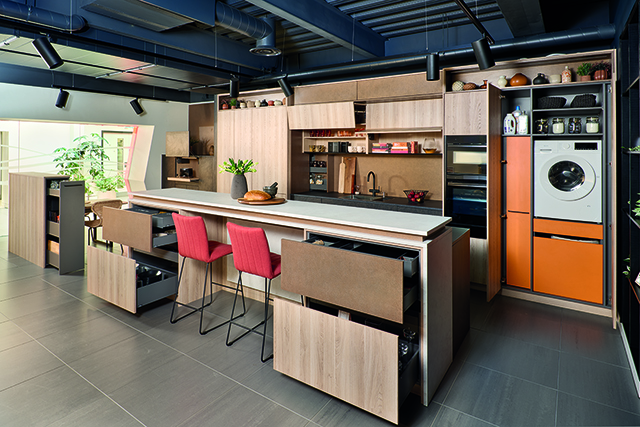
For some, it is about a focus on family-friendly design, with plenty of easily-accessible storage, and flexible seating at different heights to accommodate young to old. In the bathroom, there might be a comfort height loo, step-free access for the shower, and a bath for the kids. There may be a light-touch approach to safety features or fully inclusive functionality.
Others, such as inclusive design experts Adam Thomas of Adam Thomas Consultancy, and Karen Fardell from Futureproof my Home, believe that the best kitchens and bathrooms for anyone are those that are designed for everyone. They take the most thoughtful consideration of the current and future needs of everyone in the home, whatever those needs might be.
Mini case study: Vorbild Architects
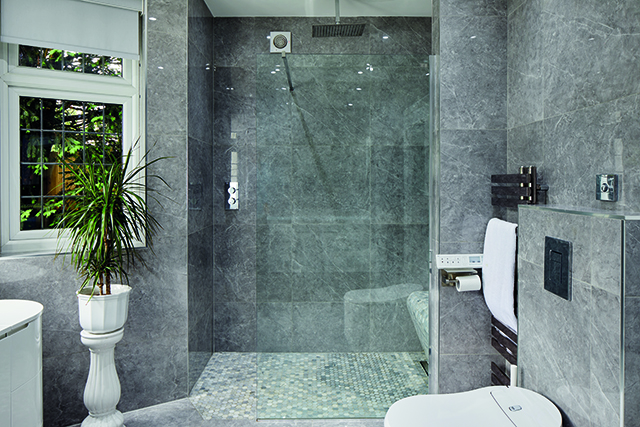
Designed by Michael Schienke at Vorbild Architects, this detached house was transformed into a multi-generational home for one family – the owners, their two grown-up children and the children’s young families. The property has been enlarged at the back with a large, two-storey extension. The top level has been converted into a new living area and four dormers were added. Internally, it has been split into three independent apartments, one on each floor, with an elevator to allow for easy access between levels.
This bathroom, on the ground floor, was created for the owners of the house, and designed to be easily accessible, with step-free access. It is future-proofed for a time where a wheelchair might be necessary or for a future time when mobility issues might arise. Accessible features include a shower seat, electric underfloor heating, and a smart WC. The WC has been set at an appropriate height to be more comfortable for the users. The shower also features controls which are straightforward and simple to use, with large format tiles, and a simple frameless shower glass for easy cleaning and maintenance.
Designs that follow this approach are fully accessible, with Symphony’s Freedom kitchen range, developed in consultation Adam Thomas, perhaps the quintessential example (See case study right).
In the bathroom, the emphasis is on accessibility and safety, with all the functionality that goes with that – grab rails, a shower seat, or perhaps a vanity which is accessible for a wheelchair (like in this feature’s case study by Instil Interiors).
So, although sometimes couched under the umbrella term “multigenerational design”, there is agreement among the majority of our contributors that it exists in practice on a sliding scale, depending on the needs of the family.
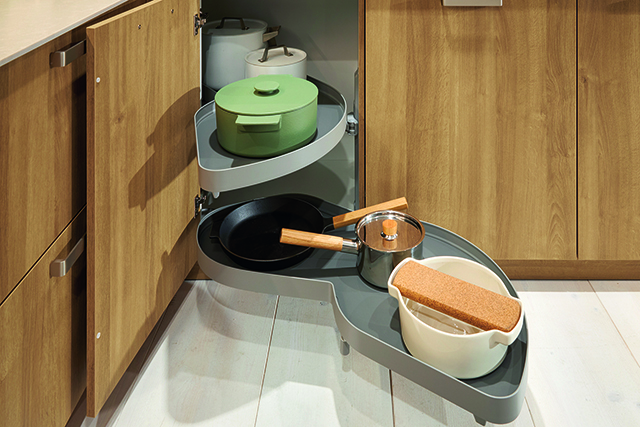
As Symphony’s marketing director, Simon Collyns notes: “There is no single ‘accessible kitchen’ box that fits every household. Some families simply benefit from universal touches such as pull-out larders, induction hobs, better lighting and mixed-height work surfaces.
“Others require full bespoke solutions such as electrically adjustable worktops, lowered islands, or clearance for mobility aids. Freedom by Symphony was created with this in mind – many features are optional and combinable so a kitchen can sit anywhere along that scale.”
Open dialogue
So, when it comes to designing a multigenerational kitchen or bathroom, how should retailers and designers determine what level of accessibility is necessary for now and in the future?
Firstly, it is essential to find out who lives in the household and who will use the space. Does a member of the household have mobility challenges or use a mobility aid? Might their needs change in the future? Might you need to accommodate a wheelchair in the future? How does their current space function? What are the key issues that need addressing?
Symphony’s Collyns recommends enlisting the help of an occupational therapist for guidance, where the needs of a client might be more complex.
Mini case study: Instil Design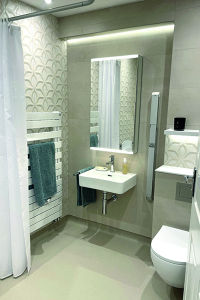
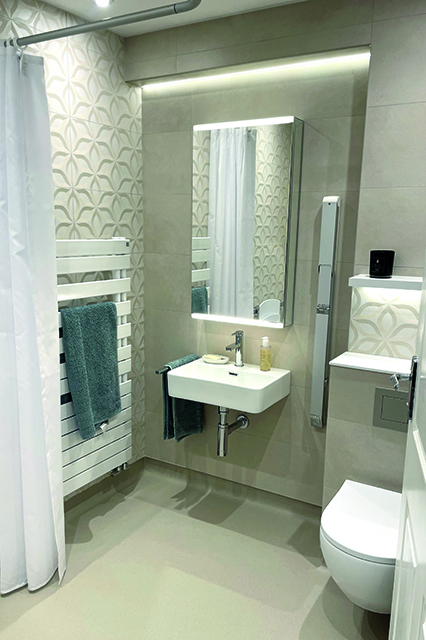
Martina Landhead at Instil Design and her team used Keuco’s products – The Future Proof My Bathroom Quintessentials – to create this kbbreview Award-nominated bathroom that promises subtle support, enabling the bathroom to adapt to the clients’ needs as they change.The client is a lady in her 70’s with scoliosis, who is also an amputee. Having been in and out of hospital for a long time, she was very keen to have a stylish, fully accessible bathroom which allows her to live independently, and which would also be nice for guests to use.
The referral to Instil Design came from Future Proof my Home, an online platform and service concept designed to link home improvers and self-builders with selected retailers qualified to future proof homes. The entrance was widened in order to accommodate the client’s wheelchair, and non-slip flooring was specified at the customer’s request, as she wasn’t keen on having hard, cold tiles, having fallen in the past. Although the client did want a glass enclosure, it was decided that a shower curtain was the only feasible option for allowing her to safely manoeuvre from the wheelchair to the shower seat and back again.
Conversations around accessible design and futureproofing with customers are sensitive so must be approached with empathy, respect and dignity in order to build trust and fully determine their needs.
Using the right language, whether you’re designing for a family home with an older relative, or a wheelchair user, is absolutely essential.
Ensure you focus on the benefits of the safety, convenience and ability for independence, rather than on limitations. Keep the language couched in universal terms.
“Use language that focuses on ‘thoughtful design’, and talk about how we can all experience difficulties at different life stages and that these experiences are often shared,” says Karen Fardell of Future Proof My Home.
“For example, a five-year-old has limited dexterity in their hands which can be problematic if you’ve ever had a hand injury or arthritis too.
“Talk about ‘creating spaces that adapt seamlessly’, that are ‘able to meet our needs as they change over time’, celebrate products for their ‘thoughtful design’ because they ‘make life easy, promote independence’ and ultimately ‘make homes welcoming for anyone,’” Fardell advises.
She continues: “There is no need to focus on ability or disability or use clinical or overly technical terms. Ultimately everyone – regardless of age or ability – wants a home that offers comfort, safety, beauty, independence and dignity for everyone.”
Using the right language, asking the right questions, and carefully assessing how the family will use the space should stand you in good stead for creating a space which works now and for the future.
Adaptable actions
In terms of key things to consider when planning a multigenerational kitchen or bathroom and future-proofing, there is general agreement amongst our contributors that the space should be made easily adaptable, without the need for any structural change.
As Fardell points out: “No one wants to have to carry out home-improvement in the midst of a crisis, therefore we need to future proof every home so it can seamlessly adapt and support the needs of every family member or visitor as they change over time.”
Mini case study: Joanne Jeyes
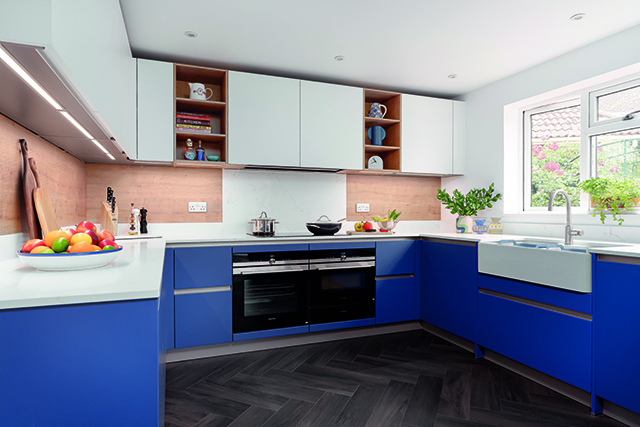
Joanne Jeyes is specialist in designing for people with dementia, this design is for a retired couple who wanted to stay in the home they love rather than downsize. It includes a professional coffee machine, which the couple use several times a day. Instead of letting it dominate the main worktop, Jeyes planned a dedicated coffee station with its own small sink and undercounter fridge, positioned just outside the main cooking area. This means hot drinks can be made independently and safely, including by visiting grandchildren, without crossing the main prep zone.
Jeyes normally advocates for eye-level ovens to futureproof safely, but in this case the couple were confident and preferred to retain undercounter models. “Design should always respect an informed choice, not impose a standard,” she says. Even though this was not a cognitive impairment project, Jeyes used contrasting tones between the base and wall units, a principle she often applies in dementia design – because clear visual definition helps all. The darker herringbone floor supports this too. “The final design is not a fully future- proofed kitchen in the technical sense, but it goes a long way towards it. It works for everyday life now and can flex easily for a full family gathering, which is exactly what this couple needed,” concluded Jeyes. “It quietly demonstrates what multigenerational design looks like in reality.
Starting with the basics, the placement of electrical sockets and switches, and electrical switchboards should be taken into consideration so that they’re always within reach.
It’s a simple thing which doesn’t impact at all on the look of the space, but is fundamental for someone with mobility issues, particularly if they live alone, and it’s something that can very easily be overlooked. It’s up to you as a designer, to make sure it isn’t.
As far as layout is concerned, think about the route through the space, and whether there is turning space, or accessibility for a wheelchair. Think about step-free access, and consider widening doorways if there is a possibility this might need to be done in the future.
Talk to your clients about setting the appliances at a height that will work for wheelchair users if this is a likely future scenario. A Neff Hide and Slide oven is considered the gold standard by accessible design experts, as the slide-away action of the door makes it one of the safest options on the market.
Symphony’s Collyns adds: “Plan for adaptable storage solutions, allow wiring and plumbing access for later installation of motorised units, consider a rise-and-fall worktop or the space to add one later, and choose durable surfaces and slip-reducing finishes.
“The aim is to avoid immediate over-specification while removing barriers to relatively simple upgrades later.”
Rachel Tuckey, chief product and marketing officer at Hafele believes that designers should consider cross-category products that work together to elevate designs further – like pocket and sliding door systems, with clever lighting.
“Materiality is important from an acoustics point of view,” she says. “There aren’t often many soft furnishings in a kitchen to absorb sounds, but different textures can work together to achieve that which is beneficial for those with hearing difficulties.”
“Finally, if you’re working across a larger space than just the kitchen, consider how to zone the layout to create a relaxing space that brings together all generations to socialise and enjoy one another’s company. Showing you’ve thought about the value that could add to their lifestyle will give you an unbeatable edge.”
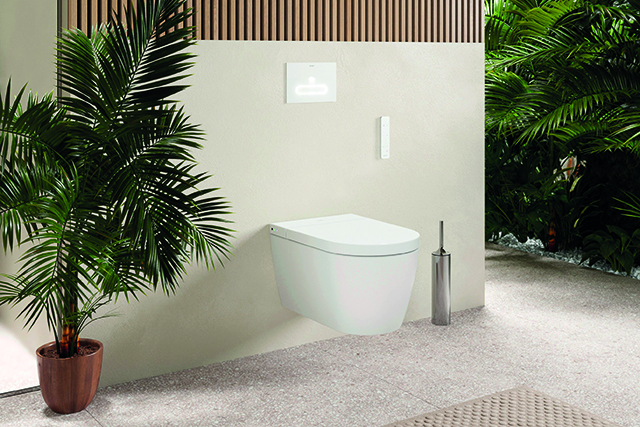
shower toilet may look like just like a standard toilet, it houses state-of-the-art technology allowing for a fully customisable cleaning experience.
Careful consideration
Thinking about bathroom futureproofing, it is possible to easily install points at which grab rails and other mobility aids can later be added. Also give careful consideration to the flooring.
Underfloor heating with a warmer vinyl non-slip floor might be preferable to tiles, for families with young children, and those with mobility issues, both for comfort and from a safety perspective.
Where you do opt for tiles, go for large format options which are easier to clean and a shower that has digital, or simple to use controls for anyone with mobility issues. An adjustable riser might also be a good idea for wheelchair users and any small people in the home.
A final consideration for the shower is pressure, according to Emma Freeman, brand and communications manager for Hansgrohe UK. “A forceful water jet may not be suitable for the elderly so products should be proposed to deliver a more relaxing shower jet as opposed to a more invigorating experience,” she says.
Case study // Freedom Kitchen
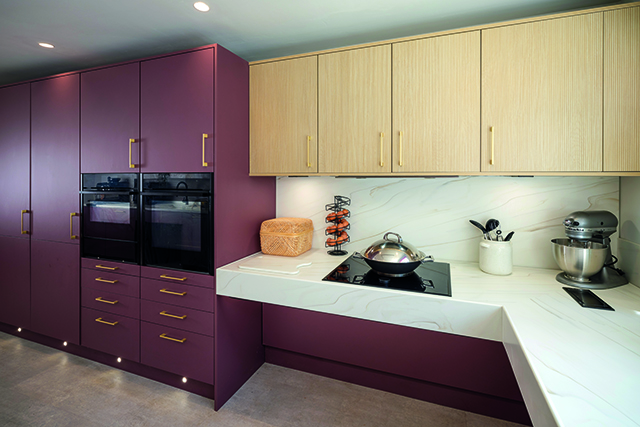
Working with Freedom by Symphony, accessible design consultant Adam Thomas, Moorgate Kitchens designer Mark Doble, and George Clarke’s production team, this home for wheelchair user, Ben, was transformed into an open-plan environment designed around freedom of movement, functionality, and togetherness.
The kitchen features a central hub for eating, working, and socialising. Every detail was designed to be both practical and elegant, including a rise-and-fall Corian worktop with prep sink, dual-sink configuration for ease of use, and advanced NEFF smart appliances operable by voice command or app.
Premium Corian Calacatta Greige worktops were supplied by CDUK and fabricated by Counter Production, and include a waterfall-edge rise-and-fall section and matching window–sills. Central to the design is a right-angled rise-and-fall worktop with integrated prep sink, providing essential height adjustability for inclusive use.
State-of-the-art appliances from NEFF enhance both safety and independence, including the Slide & Hide oven with its retractable door, and the push-to-open DoorAssist fridge, all operable via the HomeConnect app or by voice command.
A ZIP Water HydroTap Celius Plus All-in-One delivers boiling, chilled, sparkling and filtered water instantly, and a dual-sink configuration – a shallow prep sink alongside a deeper fixed-height sink – further ensures the space works seamlessly for all members of the household.