
The kbbreview Interview: Tom Howley
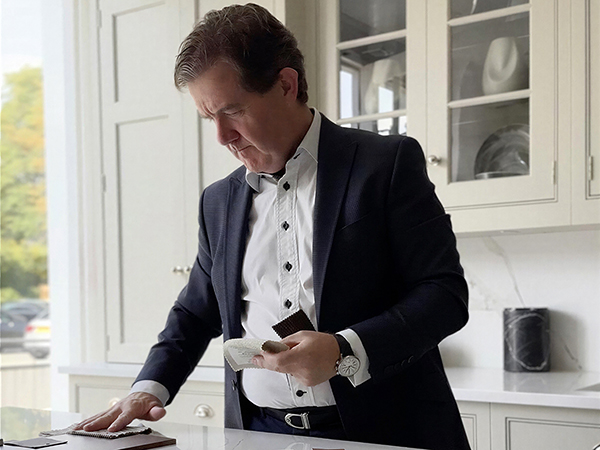
As one of the biggest names in UK kitchens over the last two decades, few have carved out their own niche in this industry quite like Tom Howley. But with the bespoke kitchen virtuoso launching his first-ever contemporary range this year, how is he staying true to his design principles whilst also charting a course for new, more modern horizons?
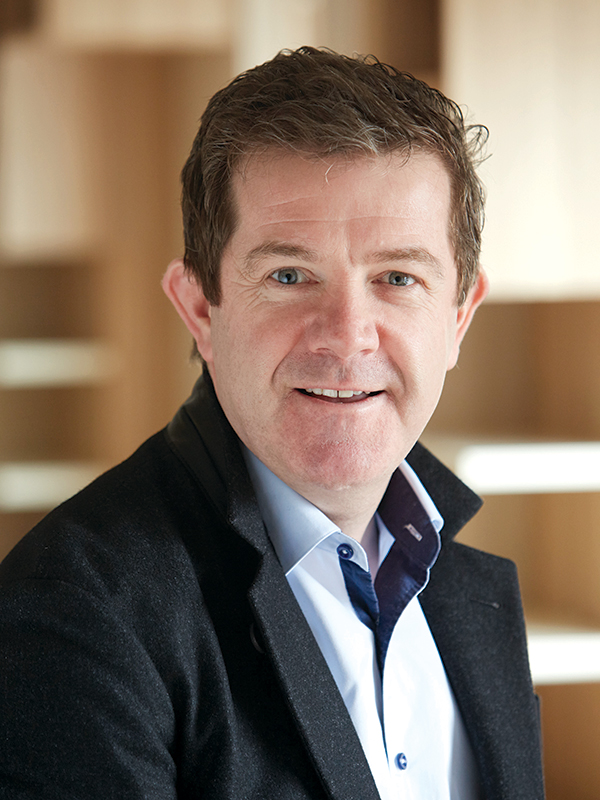
It’s just a couple of days before Christmas when I get the chance to speak with Tom Howley, and I let him know how surprised I am that he hasn’t yet signed off for a well-earned festive break.
“Believe me, I’m working to the death,” he jokes. “I’ll probably be going right up until Christmas Eve, actually.”
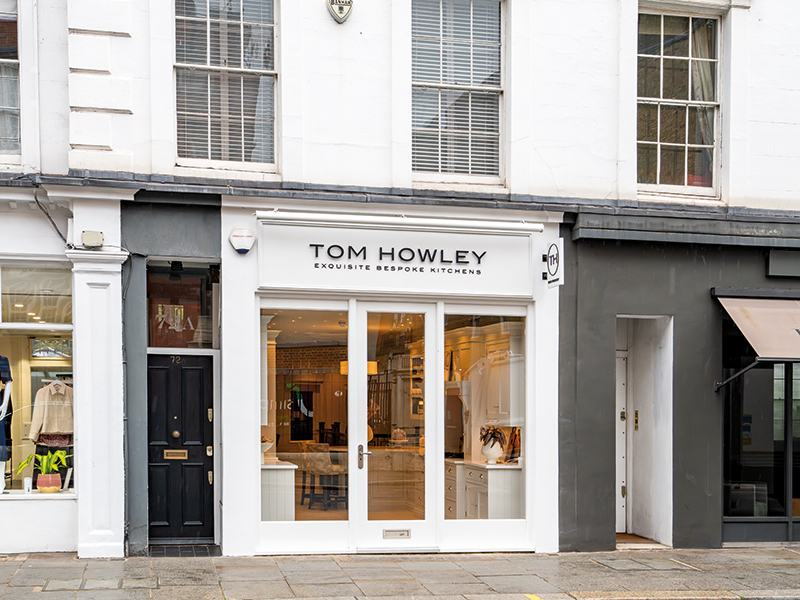
And after hearing about how he first started his incredibly successful kitchen business, that work ethic doesn’t surprise me at all. He’s a man who – along with operations director Mark Clayton – has worked hard to grow his empire from a single showroom in Altrincham to a national bespoke kitchen empire, with 20 showrooms now stretching the length and breadth of the country, from Winchester to Wigmore Street, Chelsea to Cheltenham.
Although the Tom Howley name has become deservedly well-known in the past two decades for its signature heritage-style kitchens, the brand was one of the first large-scale retailers to move fully into kitchen-adjacent spaces as well, now with a considerable portfolio across bedrooms, boot rooms, utilities, bars and media walls. Essentially, you name it, Tom Howley can furnish it.
And even though that signature style has always pulled from the appeal of times gone by up until now, Tom himself is very candid about the need to look to the future as the kitchen company evolves.
“As a team, we’ve put this fantastic brand together, but by no means is this done,” he insists. “We’ve got some fantastic showrooms and some fantastic people. But my philosophy is that it’s never good enough, and we’ve always got a lot more work to do…”
What started you down the path towards design?
When I left school, I ended up getting a scholarship to go to a cabinet making college in Dublin, back in 1986. Then I worked as an apprentice cabinet maker in a small workshop in County Mayo where we made kitchens and built a lot of furniture. I’d also fallen for a young lady in Mayo who moved to Manchester, so I followed over to England to be with her, and I started to work as a site joiner, doing architrave, curtains and kitchens. By 1994, I applied for a job as a designer at Magnet, then I stayed there for eight years. At the time, I wasn’t actually a designer, but I’d come to learn a lot about making products.
And what were your impressions of kitchen design at the time?
Coming off the tools, they had a CAD system I had to learn. And in the beginning, it was so difficult for me because I didn’t have that skillset at all. But I thought to myself: “If I’m going to do this, I’m going to have to learn it”. So I spent hours and hours and I worked the late into the night just to get good at it. Aside from that, I had a great relationship with the builders because I’d come off the building sites myself. They helped me build up a great reputation at Magnet, and certainly by the time I left there, I’d say I was probably one of their top performers.
How did that lead on to you starting your own business?
I was approached in 2002 by someone who had a struggling bespoke kitchen company, and they thought I could turn it around. Then they advertised for a guy to come and run the workshop, and Mark Clayton – who’s our operations director now at Tom Howley – got the job. Within three weeks, he had the workshop all singing and all dancing again. After a couple of years, we got to a stage where we thought we could do this for ourselves. I ended up going for an interview with another high-end company, but there was something about it I didn’t feel comfortable about. I came out of that interview, looked up the street in Altrincham, and there was a shop to let. So I rang Mark and said, “How much do you think we could get a workshop up and running for?”. I sold my car and remortgaged the house, Mark remortgaged his house too, and we got maybe a hundred grand together, and that was what we used to get Tom Howley up and running.
And how was business when you first started out?
We set the business up on my son’s second birthday, and we bought some secondhand machines, got a workshop set up in Glossop and put it all together. However, we’d spent nearly all the money and we still hadn’t got an order. Then, in a single week – I’ll never forget it – the sports agent Chubby Chandler came in for a kitchen, along with two other big names. So we got £80k in deposits in and the rest, as they say, is history. We’ve grown from that and had our ups and downs, but we’re one of the biggest bespoke kitchen companies in the UK now because of what we did in Altrincham that day.
Aside from that incredible good fortune, what do you think the secret has been to the success of the Tom Howley name?
We’ve learned a lot along the way. Running a business isn’t just about being a good designer or having a good worker in the workshop. We were fortunate enough to meet some great people along our journey – great marketing people, great guys on computer software programs, great people in accountancy, and between us all we’ve created this fantastic brand together. And it’s by no means done – my motto is “it’s never, ever good enough”. Don’t get me wrong, what we’ve done already is a fantastic achievement, but we’ve got a lot of work to still do.
Most people in your position would be perfectly content to slow down a little bit and continue to do the same thing, especially considering where the market is right now…
Well, if you look at a company like Nokia, everyone had one of their phones – they were huge! Although they didn’t really do anything wrong, what they didn’t do is innovate or move the product forward. Then the likes of Apple have come in and we run our lives from our smartphones nowadays. Nokia didn’t go where everyone in the market was going, so that’s what I’m making sure we’re doing now.
So how has that philosophy shaped what you’re working on right now?
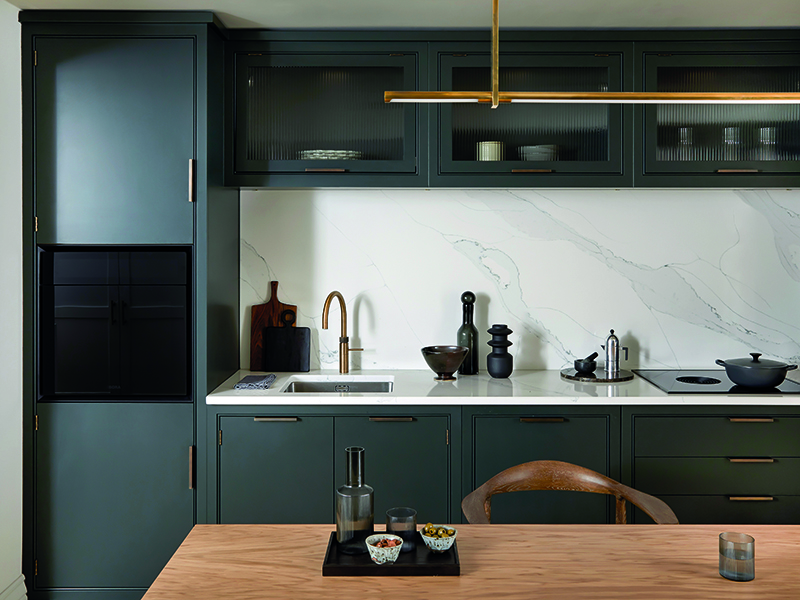
Lately, I’ve been working on a totally new style of kitchen called Malone, and it’s given our kitchens a totally different look. We needed something a little bit more modern and contemporary, but I didn’t want to completely take it away from Tom Howley. So we left it in frame, because we knew it needed simplicity and scale. It’s got an edge-pull handle, and as soon as I added that, I knew it was right. And now as I design it and I’m coaching the designers on how I want it to look, I’ve got a completely different feel for it when I’m designing. As a contemporary style, I think it will become a very big part of the Tom Howley portfolio because next we’re going to introduce that into other rooms as well. So we’ve probably got 12 months work on just creating the full portfolio of Malone furniture.
Now that the company is more than 20 years old and you’ve really established its place in quite a crowded market, what do you think sets you apart?
I think when you get down to it, all good design is just about good choices, and we simply have the ability to offer loads of choices to our customers. Every job goes through the factory for three or four weeks, and our designers get to make the choices that make sure everything looks right. If the customer wants to a specific pair of ovens or whatever it might be, we have to choose how to build the furniture around things like that, and that’s what people value. What furniture am I going to put in there? Am I going to put a wine bin? Am I going to put in a three drawer unit or whatever it might be? The sky’s the limit, and I think that’s really what has made the difference over the years.
A lot of designers have said that the kitchen has become a lot more theatrical now. Would you say that’s fair?
I definitely would. People now want their media walls with a bar in there. People want their island in the kitchen and a walk in pantry and a bootility, as well. So actually, the whole bottom floor of the house is now like that. A few people might still like to have a snug or a little gym or something, but people don’t really have a formal dining room any more, they want to bring that into the main kitchen area. We see lots of people want to have a hob on the island, so while you’re cooking, you can talk to people while they’re having a glass of wine. Then when it’s time for dinner, you can move over to the big table.
What’s something you used to see as essential in the kitchen but is now a bit outdated?
Probably filter taps. Some people used to have a filter tap on the side of their sink, but that’s gone now because obviously you can get it all in the Quooker tap. That’s one thing I’ve seen disappear, but also extraction has disappeared as well. Remember when you used to have a big funnel extraction hanging from the ceiling? We did ceiling extractors for a while and then Bora brought out these extraction hobs and other companies have followed like Miele and Neff and they’ve just taken over. I think those are such fantastic products because I think the hob area isn’t as busy as it used to be, because of steam ovens doing the vegetables and things like that. I’d say that’s been one of the biggest breakthroughs in kitchen design, probably over the last 15 years.
The sky’s the limit for us, and I think that’s really what has made the difference over the years.
As such a seasoned designer, and especially one brought up in the hand-drawn tradition, what’s your take on AI in kitchen design?
Honestly, I love AI and I love what AI can bring to the table. I’ve recently done a presentation drawing that uses AI, and I think it will give the clients such a realistic feel for what we’re presenting to them. There’s obviously a lot of companies out there that aren’t all using great software programs, and it’s hard for a customer to understand what the project is going to look like. But the visualisations that we are getting now are so realistic, a customer will be in no doubt whatsoever what they’re getting. So from that point of view, it’s brilliant.
But what you do as a designer requires such a human quality, do you think there’s anything in that design process that AI could never do?
I think AI is going to play a big role from an order processing point of view, or production management or project management. But what AI won’t do – and will never do – is put the cabinets together in the factory. Because AI might be able to do something, but somebody’s got to look at it and say, “I like it” or “I don’t like it”. It won’t look at the doors and make sure that there’s a nice finish on them, or get that kitchen out to the customer’s house. We’re going to need electricians and plumbers and kitchen fitters and carpenters and tilers and all of that. And all of that’s very manual.
What’s next for you?
For me, it’s more of the same. We’ve got to keep striving within the business to get it better, and essentially, to keep elevating what we’re already doing. So that’s bringing new designs out, making things better, looking at better processes, better systems, and better training. And importantly, keeping ahead of the game by keeping an eye on the market. We don’t ever want to be the Nokias of the kitchen world…