
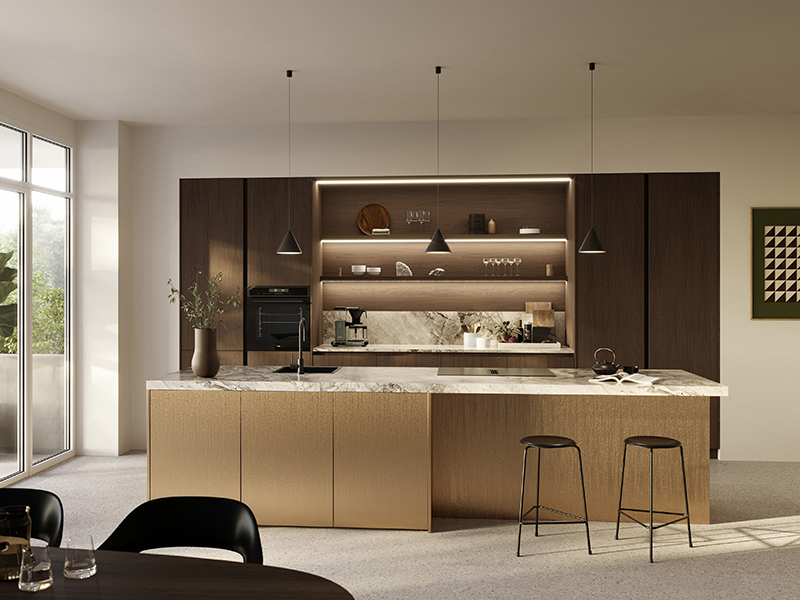
Your guide to 2026’s minimalist kitchen trends
Minimalist-style kitchens are no longer stark and boring. Instead, today’s designs are increasingly defined by their warm tones and textures.
Words: Francesca Seden
“Soul-stirring simplicity” is how Masterclass Kitchens brand manager, Cassie Jones, describes minimalist kitchens in 2026, and I think it’s a nice summary.
Gone are the days of the clinical and sparse shiny schemes, which have been replaced with something much warmer and more tactile. The minimalist kitchen is defined by natural materials and textures and, as Matt Phillips, Rotpunkt’s head of UK operations, adds: “Special surface solutions such as brass, copper, smoked glass and super matte finishes”.
In fact, Japandi, Scandi, quiet luxury, and refined Shaker styles were all referenced by our contributors this month, with these trends all evoking similar feelings of calm and simplicity.
According to Häfele’s Homes for Living report, kitchen preferences are continuing to shift towards a more minimalist look and feel. Category manager for furniture equipment, Isabel James, says: “When asked about their biggest kitchen pain point, almost a third (29%) said cluttered worktops and surfaces – up 10% on our previous research in 2023.
When asked what’s most important in their kitchen, more than half (52%) said they need to be able to minimise clutter – up 6% on last time. Reflecting this, almost two in five (37%) now favour a modern, sleek kitchen style, up 6% from 2023.
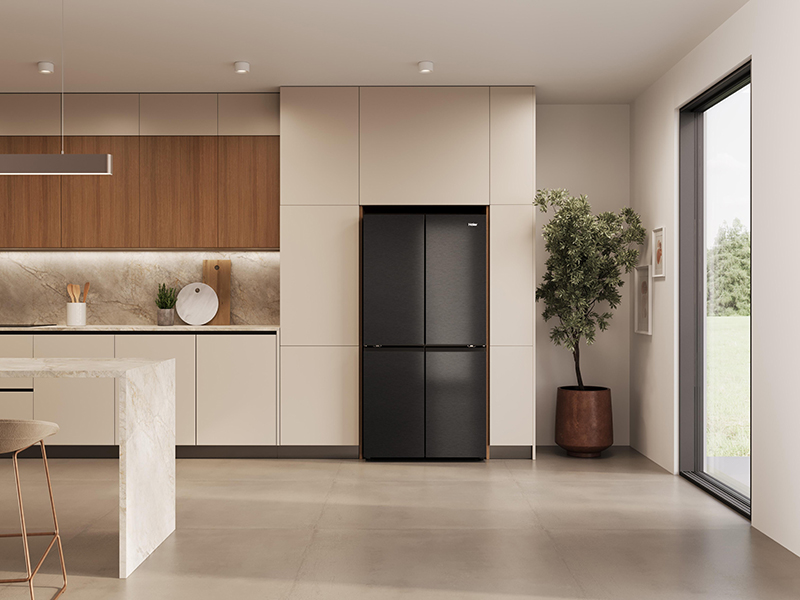
“When it comes to translating these priorities into a design and colour palette, lighter colours – including beige, cream and cashmere – are leading the way,” she adds.
Storage is the most critical element of any minimalist kitchen, ideally, everything should be hidden away, with just some carefully curated items on open shelving, to and add visual interest, while not adding visual noise.
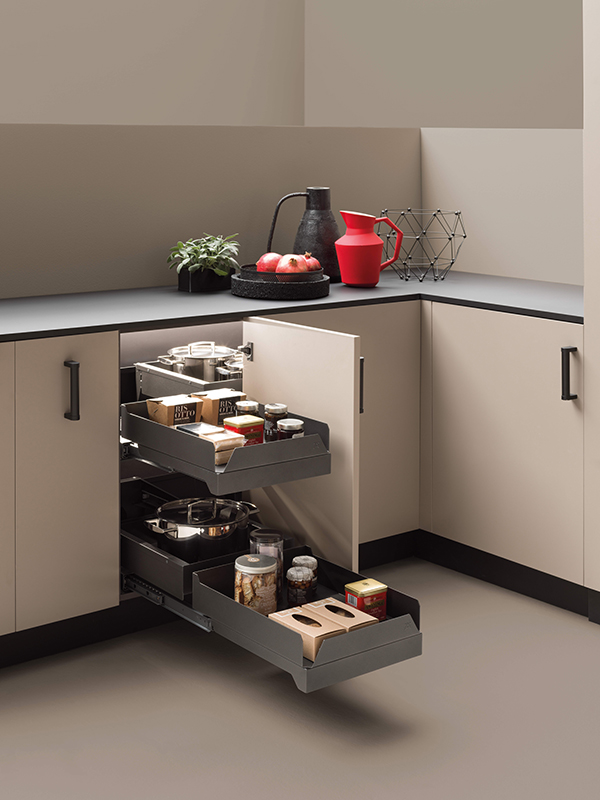
But, cabinets filling the walls can be cluttering, so Masterclass’s Cassie Jones recommends “floor-to-ceiling banks of cabinetry that blend into the walls like a second skin. Internally, these are marvels of storage: tall larders with internal drawers that reveal only what you need, exactly when you need it.”
She adds: “It’s about curating your chaos behind closed doors, so the exterior remains a calm, continuous plane.”
Built-in bonuses
Florim’s UK managing director, Gavin Shaw, also says that pocket doors, hidden pantry systems and multifunctional islands that combine preparation space with discreet storage are absolutely key. Rather than multiplying cabinets, the approach is to concentrate storage in fewer architectural volumes, often aligned with walls or integrated into the room’s structure.
“Large-format surfaces such as Florim stone also contribute to this clarity: continuous worktops and cladding minimise visual breaks and help cabinetry appear more monolithic and architectural rather than fragmented.”
For the rest of 2026 and beyond, it’s likely that the trend for calm minimalism will continue as it combines the best of both worlds – seamlessness through clever storage and homeliness through the tactility and warmth provided by lots of natural materials. This trend towards nature-inspired interiors has also been recognised by Houzz in its 2025 Emerging Trends Report.
Searches for “wood beams” were up nearly 3.5x, while in the kitchen, searches are increasing for “oak kitchen” (up 214%) and “wood kitchen” (up 116%). Wall treatments like “wooden slat walls” and “wood panels” are also trending, offering ways to soften and elevate interiors with texture and tone.”
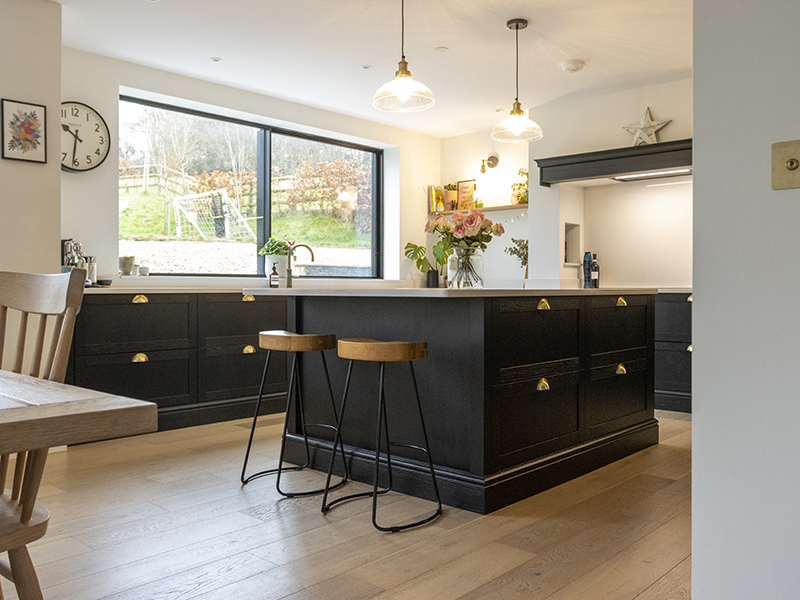
In its 2026 UK Kitchen Trends Study, Houzz found that more than four in five homeowners (82%) are adding speciality built-in features. Of those, many focus on storage with pantry cabinets (40%), a walk-in pantry (12%) or prep kitchen (11%).
Meanwhile, task-specific built-ins are also popular, including beverage stations (12%), which has risen five percentage points year-on-year. Two percent even include a snack station.
The emphasis on storage continues throughout the kitchen, Houzz says, where cabinet upgrades remain nearly universal (98%). More than three-quarters of renovating homeowners (78%) replace all cabinets during kitchen renovations, while just 6% opt for partial replacements.
Almost all homeowners (95%) integrate speciality storage features in their upgraded cabinetry, including cutlery organisers (78%), pull-out waste or recycling bins (55%) and storage for spices (36%). Solutions for hard-to-reach spaces include deep drawer organisers (45%), pullout shelves (31%) and corner carousels (29%).