
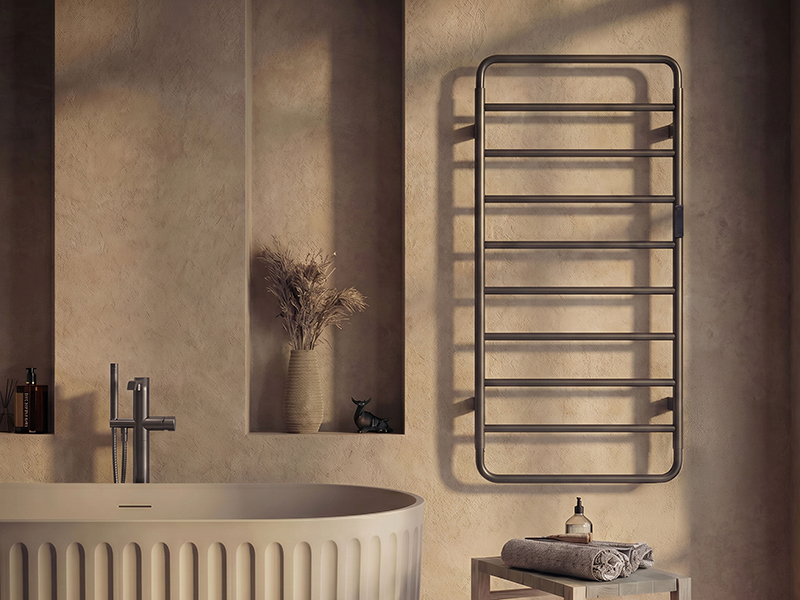
How is the heating market evolving in 2026?
From underfloor systems to towel rails that operate independently from the central heating, we bring you some of the latest innovations in bathroom heating and explore why these products are worth adding to your offering.
Words: Francesca Seden
With energy supply globally unstable and energy prices rocketing, how we heat our homes is a particularly prescient topic, and bathroom heating is perhaps the most essential part of the whole system.
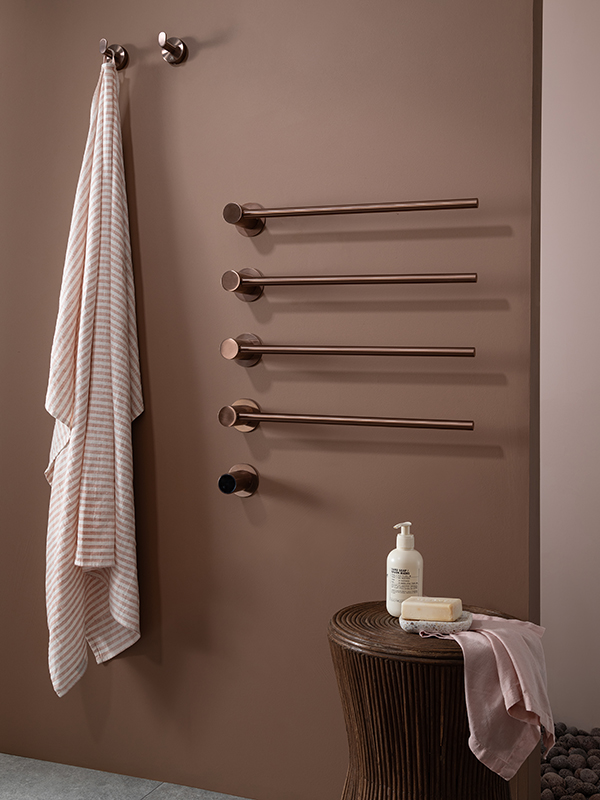
Manufacturers and brands are recognising this necessity in their most recent innovations, where the focus is on smart, thermostatic elements, which give homeowners greater flexibility and control over their energy usage, as well as clever design and material use, which helps to maximise heat output.
One example includes ThermoSphere’s T-MO thermostat, which enables homeowners to fine-tune their heating schedules and optimise comfort while maintaining efficiency. “In an increasingly connected home environment,” says managing director, Rhylan Bell, “products like T-MO are helping to bridge the gap between convenience and sustainability.”
The product is also said to be easy to install and features ‘remote commissioning’, which allows installers to configure the heating system, without needing to be physically present at the property.
In a drive towards energy savings, underfloor heating is also growing in popularity as homeowners recognise the efficiency benefits that it can offer, as well the fact that it frees up wall space, which is important in the UK’s notoriously small bathrooms.
Michael Marcer, director at Ripples’ Bath showroom notes how underfloor heating is an extremely flexible system, offering excellent control over both temperature and timing. “For us, it is one of the most important considerations when installing a new bathroom or shower space. Homeowners are not only looking for warmth and comfort, but also longevity and practicality.
“When designing bathrooms for customers, we are always looking at ways to future-proof the space and enhance the user experience. For example, where possible we may incorporate tiled seating within a shower area, with heating extended into the seat and walls. This removes the discomfort of cold tiles while adding a more luxurious feel and contributes further to heating the room effectively.”
There are now a wide variety of systems available, says Marcer, including wet systems, electric systems, and hybrid options, sometimes referred to as electric summer heaters. These allow homeowners to use towel warmers independently of the main central heating system, which is especially useful during warmer months when people still want dry towels without heating the whole house.
Vogue UK offers single towel bars, including the VIVID range, which runs from the heating system. The company also offers an electric-only option called the ECO Modular Bars, as well as the Simplicity II Wall Bar, which also works from the heating system.
Many of their towel rails are available in different options, including electric, heating system, or dual fuel (“summer heating”) versions.
Thinking about aesthetic trends, there seems to be two main prongs – statement heating such as designer, retro-looking rads or architectural forms, and very understated, barely there heating – or perhaps a combination of both of these; like underfloor heating and a couple of designer towel rails.
Design desirability
Sanctuary Bathrooms director James Roberts notes that wellness-focused bathrooms, which are particularly popular right now, “will aim to include heating solutions that don’t look like standard traditional ones. Rather, it will be fixtures that blend into the overall aesthetic of the room – think towel rails to complement brassware, or underfloor systems that keep the visual line of the space completely clean.”
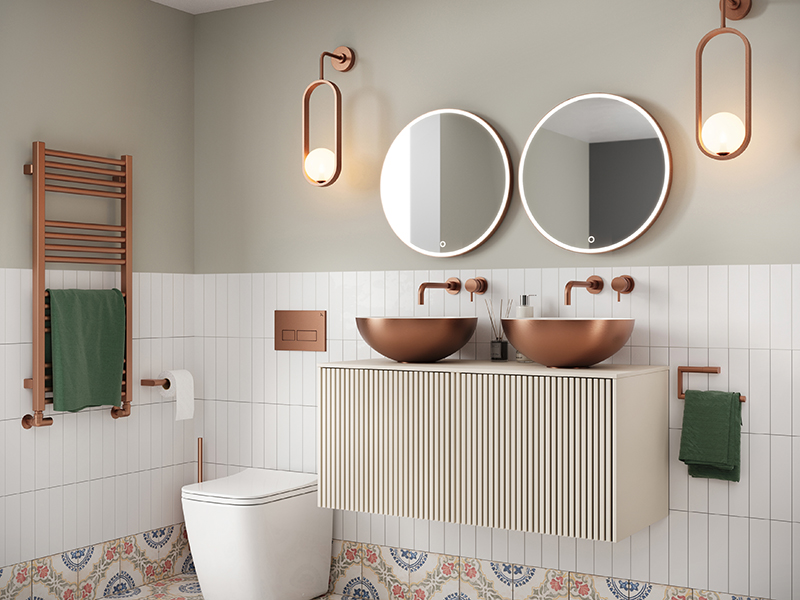
Jeevan Seth, CEO at JTP adds that heating products are becoming part of the overall interior scheme rather than something purely practical. “We’re also seeing increased interest in minimalist forms and space-saving designs, especially within smaller bathrooms and ensuites. Slim-profile towel rails and modular styles are becoming more desirable because they deliver both functionality and visual impact without overwhelming the room.”
Focusing briefly on eco-efficiency and sustainability, because it’s safe
to say that this is absolutely central to the majority of bathroom brands across all areas of the market, but especially heating, the consideration is an absolute driving force behind both product development and what homeowners are likely to go for.
Nick Duggan, director at The Radiator Centre, notes that from a materials perspective, aluminium continues to gain ground on steel precisely because of its sustainability credentials. It heats up faster, retains heat well, and requires less energy to reach operating temperature. The move away from trend-driven, disposable fittings towards investment pieces with timeless design and durable finishes is a message that resonates strongly with the design community.
“Sustainability is no longer a box to tick, it’s a genuine driver of purchasing decisions at every level of the market, and the brands and suppliers who take it seriously are the ones earning long-term loyalty from specifiers and consumers alike.”
Sam Jump, head of product development for underfloor heating specialist, Wunda, adds: “Correctly installed and zoned underfloor heating will result in reduced energy usage and a lower heating bill. When utilised properly and paired with smart controls, it is one of the cheapest and most convenient ways to improve energy ratings in a building, cutting heating bills and reducing CO2 emissions. Some smart heating control providers, such as WundaSmart, allow users to ‘smart zone’ a building, so users can turn it off in rooms they’re not using, further helping to reduce energy consumption.”
Complete offerings
Finally, we asked our experts this month why bathroom retailers should sell heating solutions if they’re not doing so already, and the answer is simple: homeowners generally prefer a one-stop-shop solution, rather than shopping around in a variety of different places. Plus, in an increasingly competitive and difficult market, the more you can offer, the better.
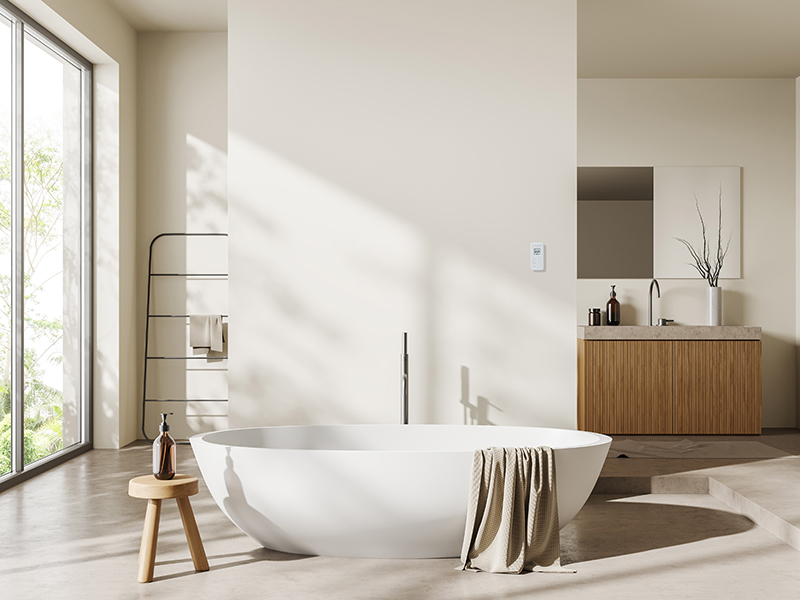
Shaun Corcoran, commercial director of Harrison Bathrooms, comments that heating represents a strong opportunity to increase basket value and strengthen the overall customer proposition. “Customers increasingly expect complete bathroom solutions rather than standalone bathroom products. It also opens up opportunities for repeat business with heating requirements extending beyond the bathroom to other areas of the home.”
From a design perspective, it also makes sense for the bathroom designer and retailer to have full control over the heating, “because it cannot be an afterthought”, Roberts, from Sanctuary Bathrooms says.
“Bathroom heating takes up wall-mounted or floor-standing space that directly affects the room’s layout, so it needs to be considered alongside the key fixtures – storage, showers, sinks and toilets – rather than squeezed in once everything else has been decided.
“When it’s planned in from the start, bathroom heating is one of the easiest ways to add value to a project. It improves both comfort and design, making it a fixture that’s not just functional but changes how a bathroom feels every day – that’s an easy conversation to have with any customer.
“It’s also a category that carries healthy margins and naturally opens the door to discussions about finishes, smart controls and upgrades.”