

Massive UK kitchen retailer, Magnet, has put forward proposals to place the business in a Company Voluntary Arrangement (CVA), with 15 “underperforming” stores set to be closed as a result.
This news comes just months after Magnet was acquired by private equity firm Alteri Partners, following its former parent company, Nobia, departing the UK market entirely.
Magnet says the proposed CVA will “address historic property costs, strengthen the business and support its return to sustainable profitability”. The process will be overseen by Natasha Harbinson, Will Wright and Chris Pole from Interpath.
A CVA is an insolvency process which allows a financially strapped business to repay a portion of its debts over an agreed period. If the CVA proposals are approved, Magnet says it will be able to “address unsustainable property costs in a controlled and structured way”. However this can only happen if the business’ creditors agree to the arrangement and its terms.
Magnet currently has 159 stores, with the proposed closure of 15 locations representing 9.4% of the company’s entire store estate. Magnet confirmed the remaining 144 stores will not be impacted by the changes and will continue operating as normal.
Currently, the stores identified for closure are: Andover, Birmingham, Blackburn, Bridgwater, Brighton, Colwyn Bay, Dorking, Farnborough, Ramsgate, Stirling, Stockton, Watford and Weymouth. In addition, the retailer’s two trade stores in Romford and York are also set to be closed.
Magnet has reassured colleagues impacted by the proposals that they will be supported throughout the process and that “suitable alternative roles within the business will be offered wherever possible”.
Additionally, Magnet says customers will not be impacted and that customer orders will remain a priority for the business. Customers with orders through a store that is proposed to close will apparently have their orders transferred to their closest alternative Magnet store.
The proposed CVA follows a multi-year turnaround plan for Magnet. In Q3 2025, Magnet announced it had returned to profitability for the first time in several years, with both former MD George Dymond and current CEO Sophie Rose both speaking to kbbreview about their plans to turn the business around in recent years.
In particular, both Dymond and Rose identified a move towards an “asset light” store model, with larger showrooms potentially closing in favour of opening smaller locations instead.
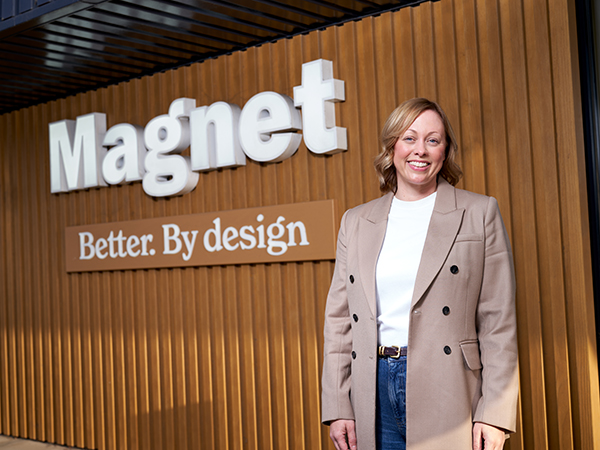
Addressing these recent strategies in a press statement today, Magnet explained that these actions had helped strengthen the business’ performance, however “parts of the Group’s historic property footprint and cost base continue to put pressure on the business and its route back to sustainable profitability”.
“This is a difficult decision and not one we have taken lightly, particularly where colleagues may be impacted,” explained Sophie Rose, Magnet Group CEO. “But taking this action now is the right thing to do for the long-term health of Magnet Group. It allows us to deal with property costs that are no longer sustainable and protect the stronger parts of our estate.
“We have a strong brand, talented teams, successful customer relationships and a long-established manufacturing base that will continue to underpin the business for years to come. By removing costs that are holding us back, we can focus more of our time, energy and investment on the areas where we see the greatest opportunity.
“I am confident these proposals will help Magnet Group build a stronger, more resilient business that is better placed to serve customers, support partners and return to sustainable profitability.”
In January of this year, Magnet confirmed to kbbreview that it had “no plans for any major structural changes, redundancies or store closures”, following the retailer’s acquisition by Alteri Partners. However, this was prior to the announcement of the retailer’s CVA proposals.