
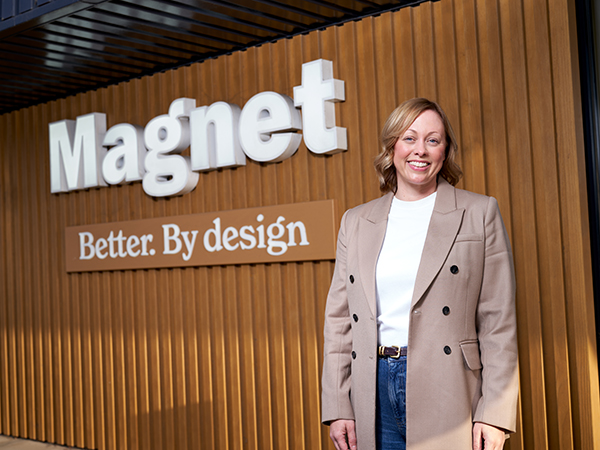
The kbbreview Interview: Sophie Rose, Magnet
With the recent news that it is now fully out from under Nobia’s ownership, CEO Sophie Rose says national kitchen retailer Magnet is more flexible and agile than ever before. But with a fresh start and new leadership, where will the 108-year old kitchen company go next?
Just months after her predecessor, George Dymond, stepped down as head of Magnet in the UK, Sophie Rose not only found herself in charge of the country’s longest-running national kitchen retailer, but also navigating its separation from long-running parent company Nobia.
Blaming the general market malaise since Brexit and Covid, Nobia decided to pull out of the UK market entirely earlier this year to focus on its Nordic home regions, divesting the Magnet business it had owned for a quarter of a century on its way out the door.
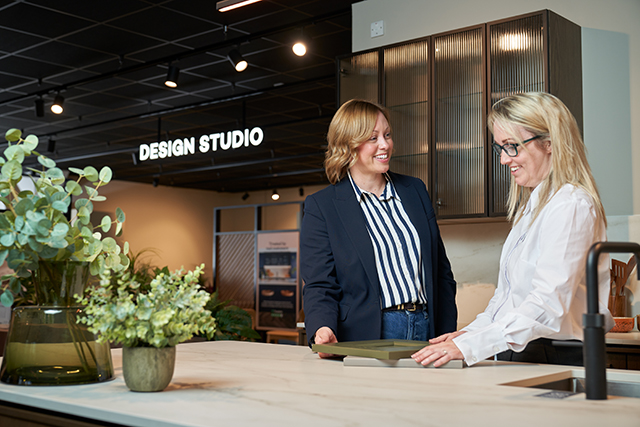
And although that all sounds like an incredibly stressful first few months for any job, Magnet CEO Sophie Rose doesn’t seem outwardly phased by it at all. If anything, it means she can – with the backing of new owners Alteri Partners – focus solely on the UK home market and have a lot more freedom about where to take Magnet now.
“Having dedicated UK ownership does now give us that greater focus,” she explains. “That backing and decision making being fully aligned to our priorities here in the UK means we can be more agile and make decisions that are right for us.”
With a previous career history in the health and beauty sector, Rose also seems to have expertly struck the balance between honouring the heritage British company’s impressive legacy, as well as shaping what a fresher, sleeker Magnet of tomorrow could look like.
And with the memory of difficult few turnaround years also now seemingly behind it, 2026 seems like the perfect time to chart a course for calmer seas. But whatever path she chooses to take, Rose is adamant that Magnet’s customers will always remain at the core of that proposition.
“We’re focused on delivering great service and quality for our customers and building that trust through every step of the journey. We know when we get those things right, profitable growth will follow…”
Before we start, can you tell me a bit more about your career background so far?
Over the last 15 years or so, I’ve very much been focused on the customer proposition, which still remains an incredible passion of mine. Prior to joining Magnet I was actually in the health and beauty sector, so the last two years in particular have been a learning journey for me in the kitchen sector, but one I’ve thoroughly enjoyed. I joined Magnet as the customer and commercial director and five months ago I stepped up to lead the business when George [Dymond] departed.
How have you been finding your first few months in the new role?
It’s been a really exciting few months, as you can imagine! There’s been a lot happening, but there’s a huge amount of positivity across the business. I’ve spent a lot of the last few months getting out there with our stores, our manufacturing and supply chain teams, speaking with our partners and customers. There’s a real sense of energy and confidence about what we’re doing and where we’re going. We’ve had a lot going on, from investing in our showrooms and B2B, to returning to TV advertising for the first time, and of course there’s the exciting news about our recent change of ownership, which for us is just a really strong endorsement of the direction we’re going. So it’s been a really great opportunity and time to step up and lead and build on that momentum.
What would you say your top priorities for Magnet are right now?
For me, it’s always about our people. As I always say we’ve got brilliant talent across the business and it is a key priority of ours to continue to build on that and support our colleagues to deliver at their best. Alongside that, we’re focused on delivering great service and quality for our customers and building that trust through every step of the journey. And we know when we get those things right, profitable growth will ultimately follow. Our store estate is also a big priority. You’ve seen us make investments there over the last year, but we’re going to continue to invest in the right format and locations as well. On top of all of that, our B2B business remains a core part of our growth plans too, where I see a real opportunity in sectors like social housing, residential development, where we have a strong track record.
Where do you think Magnet sits in the market now compared to the other national kitchen brands?
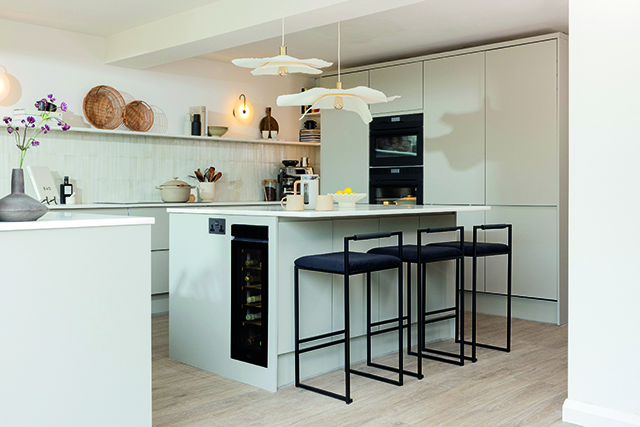
I think Magnet sits in a really strong place. We’re a specialist kitchen brand with national scale, and we’re obviously backed by UK manufacturing. And let’s not ignore the fact that we’ve got decades of experience that others in the sector simply do not have. I think that combination is increasingly important in a market where customers need that confidence and reassurance in quality. Our commitment to quality also sets us apart, I think. Our cabinets are backed with a lifetime guarantee which very few competitors can match in the market. And, for instance, we were also recently recognised with the manufacturing guild mark.
Out of all the nationals, Magnet’s always seemed like it catered to a slightly more premium client, would you say that’s still the case after all this time?
I’d say so. Essentially, we’re focused on value for money, and that’s what’s really important. It’s absolutely about ensuring the best quality, the best service, the best design standards, and the best products at affordable prices. That’s what makes us unique, and I think that’s something we can really stand by.
So, where do you think your market share is going to come from? Is it Wren and Howdens? Independents? Franchise networks like Kutchenhaus?
I suppose because of the breadth of our business, we don’t really look at it as taking share from one single competitor. I think the opportunity for us is much broader than that. Customers want that reassurance, as I said, that quality and that end-to-end experience in a market like this. And I don’t think everyone is delivering that consistently at the minute. So we see growth probably coming from a few areas. I think the recent news around Moores Furniture Group is a reminder of just how tough conditions have become. But it can create opportunities for trusted established brands like ourselves with a proven track record, particularly within that kind of longer term contract work, and over the last 100 years, we really know how to scale across all of those sectors, which truly sets us apart.
Magnet’s had a very public turnaround over the last few years, can you tell me about some of the ways you’ve handled that?
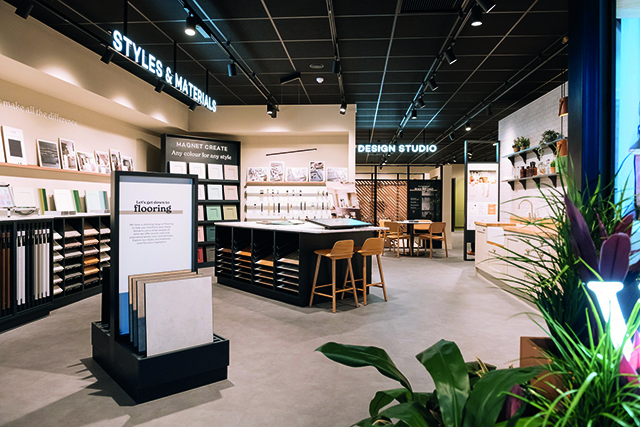
Well, a big part of our turnaround over the last 18 months has actually come from a much stronger commercial focus across our whole network and a more disciplined approach to performance across the business. The biggest shift in our overall performance has been the improvement in store profitability. And over the last year, our trade profit has improved significantly as we’ve really doubled down in some of these areas. Of course, a move towards smaller format showrooms has been a driver in supporting that profitability, reducing complexity, improving those returns through a more sustainable estate model.
And with that “asset-light” plan being so important over the last few years, can we expect to see that continue?
I think it’s safe to say we’ll continue to evolve our showroom approach in a way that supports that long-term profitable growth. We’ve seen really strong results, as I said, from those smaller formats – particularly high street locations – just getting closer to customers and really enabling us to deliver that great experience in a more efficient space. But alongside smaller formats, partnerships will continue to play a key role in our growth. It really helps us extend the Magnet experience into new markets in a way that’s more flexible for us and more sustainable, and it still protects the quality and service that we’re known for. So you will see more to come in partnerships over the course of the next few years, as well as a focus around small store format showrooms.
So, is there any kind of target number of ‘small format’ stores you’re aiming for?
Not exactly. I think the key here is not to probably get hung up on a number. We’re going to stay really focused on making sure we have the right formats in the right places. Sustainable growth is what’s really important for us, and we want to continue to invest in our offer, stay competitive and sustainably grow profitability over the long term. I think the honest answer really is what you can expect is to see us be quite selective. Rather than working towards a specific store number, it is about having those right showrooms in the right locations. You know, we are testing different formats at the minute and whether that’s concession formats within builders and merchant apartments, or whether that’s franchises. We will learn and evolve and it will be about the right format in the right places.
Speaking of franchises, how has Magnet’s own franchise rollout been going after it was announced back in 2024?
Well, successful partnerships have always played an important role in Magnet’s story. We’ve been working with Andersons in Scotland for nearly 30 years, and we’ve had a great partnership with Normans in Jersey as well to bring a showroom there. Looking at franchise partnerships specifically, we have seen really positive progress with the partnership that we established so far. We’ve been encouraged from what we’ve seen and we’re learning from those early steps. But again, growth in a sustainable way is really important to us, and that means testing, learning, making sure we’ve got it right before we scale up too quickly.
Following Magnet’s recent acquisition by Alteri Partners, can we expect to see any significant changes in the year ahead?
Well, our story here is very much one of continuity, but I’d say that also comes with greater focus now. Altari are backing the plan we’re already delivering because they can see it’s working, and I suppose what this gives us is more focus and flexibility as a standalone UK business to build on what’s already delivering progress. It also means we can make decisions faster. But really, for customers, colleagues, partners, and suppliers, it’s very much business as usual. Our products, our showroom formats, our priorities, they remain the same as we move through this transition and into the next chapter really for our business.
Would you say there was anything that Magnet was perhaps restricted by when it was under Nobia’s ownership?
Nobia helped us lay strong foundations during a very tough period in the market, as we’ve all witnessed. And we’re incredibly grateful for the support and the stability that they’ve provided. Particularly over the last five years or so. But for us, having dedicated UK ownership does now give us that greater focus, as I said. That backing and decision making that’s fully aligned to our priorities here in the UK means we can be more agile and make decisions that are right for us. And of course, the Nordic market can be quite different to the UK, and that’s quite important to remember.
You’ve previously mentioned having a three-year plan for Magnet, but what’s the ideal result for you at the end of those three years?
We can view it as one, or two or even three years, but really, that’s just a number. What’s really important, again, is profitable and sustainable growth. It builds directly on the progress the business has already made, and what George [Dymond] talked a lot about last year. Like I said right at the start, the investment in our people is going to be key. Last year, we introduced a new leadership structure across our store estate, probably one of the biggest investments we’ve made in strengthening store leadership in several years. And this year to support them, we’re launching a new leadership development program across the business too. I think in terms of what success looks like at the end of three years or two years or whatever, it’s a business delivering sustainable profitability and performing strongly across all parts of our business.
I think the sector is often quite quick to dismiss Magnet as simply “one of the sheds”. But what role do you think you can play in the wider kitchen community?
I do understand the perception and why that may be, but I would challenge it. Magnet isn’t a generalist DIY retailer – we are a specialist kitchen provider. We’ve got that national scale. We’ve got the deep expertise and I believe we have a real opportunity to play a leading role in supporting the wider kitchen sector. Whether that’s through closer links to industry bodies, shared work on skills, simply being a constructive voice on the future of the sector, we’ve got a real part to play. And hopefully, just maybe, that perception might start to change over the next couple of years. We’re real believers that the kitchen industry is at its best when we all focus on what builds that long-term trust with customers, quality service and doing things the right way. It’s just so important.
There is a criticism of the major retailers that there always seems to be a sale on – do you think that undermines credibility or does it genuinely drive sales?
Well, this is actually a topic that’s quite close to my heart. It is true that the market has conditioned customers to expect deals and promotions to play a role really in helping make that decision on big ticket purchases. It’s very true. But here at Magnet, we try to be very thoughtful about how we approach that. Our focus on value for money is really important and that means not discounting for the sake of it – it’s a balancing act. Our customers do shop in different ways. You’ve got those that are really promotionally sensitive – internally we call them “savvy deal maximisers” – and others who are more value-led, who are deal-aware but not necessarily deal-driven. And we’ve recently taken some steps to address some of our instore credibility in both our list prices and a real balance between everyday value and promotional activity. We’re really conscious of protecting the credibility of Magnet’s brand. We don’t want promotions to become a substitute for what really matters.
The market as a whole has broadly been on a bit of an uneven keel over the last couple of years, but do you think we’re seeing a genuine recovery going in 2026?
Well, the market’s definitely been very challenging over the last couple of years and I don’t think anybody would probably sit here in my position and say it’s back to normal yet. But that said, there are signs of resilience and most industry forecasts do point to a more stable environment going into 2026 with the potential for gradual improvement as the year progresses. We’re also starting now to annualise some of the disruption the market’s experienced over the last year, particularly in the new build housing cycle. So I suppose you could say the market is beginning to find its new baseline. I wouldn’t describe 2026 as sudden recovery year, but we are hopeful of continued stabilisation and definitely with the potential for a stronger second half if consumer confidence continues to improve and the housing market starts to see further support.
You can listen to the full interview with Sophie Rose on a special episode of The kbbreview Podcast. Either use the podcast player below, or search ‘kbbreview” in Apple Podcasts, Spotify or Youtube.