
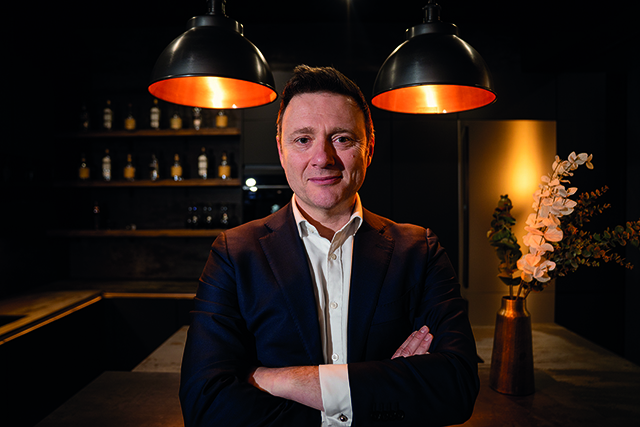
The kbbreview Interview: Jim Barnard, Kutchenhaus
As it hits the 100 showroom milestone, the momentum behind the astonishing rise of Kutchenhaus shows no sign of abating. Over the last decade it has been, by any subjective measure, one of the biggest stories in kitchen retail. "Our playbooks aren’t theoretical," says boss Jim Barnard. "They’re based on what we know works…"
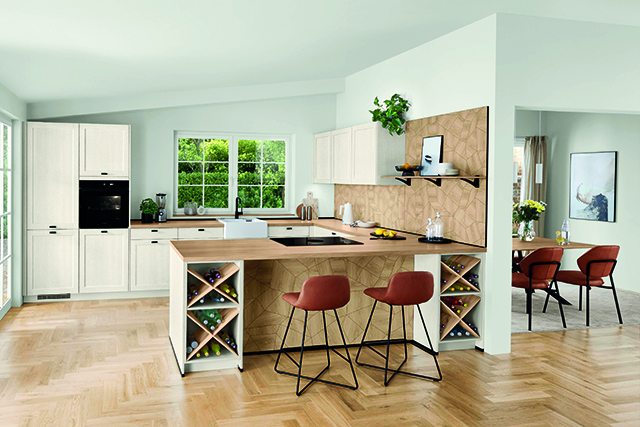
The 100th Kutchenhaus showroom is, in many ways, the text book vision of the brand. Right in the middle of a busy High Street – in this case Beckenham in South London – it is small but smart and bang on the affluent demographic of the area.
The franchisee, Charlotte Scofield, is also the perfect poster child for the concept. This is her third showroom after Orpington and Sevenoaks and she is one of their original franchise partners – from a PR point of view, it couldn’t have worked out better.
Standing in the middle of the showroom, dressed in a Kutchenhaus-branded gilet of course, is UK general manager Jim Barnard, and he is reflecting on a successful opening event the previous evening that included Dr Lars M. Bopf, the current managing director of parent company Nobilia as well as other company VIPs who had flown in especially.
Barnard himself is a relative newcomer, joining Kutchenhaus in December 2024 with a background as a turnaround specialist with companies such as CTD Tiles, Victoria Plum and Halfords. His CV also includes senior positions at Wickes and B&Q and time as a non-executive director for John Lewis of Hungerford.
Kutchenhaus is clearly not a turnaround job though and opening new businesses rather than closing them is something he is clearly enjoying but as the network grows the challenge of maintaining standards and consistency grows too.
And the success of Kutchenhas has also triggered a renewed interest in franchising across kitchens in general with Magnet, Nolte and even Homebase announcing new propositions that join more established names like Kesseler, Schmidt and Raison Home.
Franchising is very fashionable right now and that brings competitive challenges for Barnard too but, he says, successful businesses need challengers to keep them on their toes. “We’re not right for everyone, and not everyone is right for us,” he says…
Jim Barnard Interview
How significant is reaching 100 showrooms for Kutchenhaus?
It’s huge, particularly when you consider the age of the business. Kutchenhaus as a brand has been around since 2004, but in real terms it’s only been a franchised business since 2015. Back then we had around 10 showrooms, most of which we owned ourselves. To go from that to 100 in less than a decade is a phenomenal rate of growth.
Every single showroom feels like a gift, to be honest, and it’s only possible because of the quality of the owners we work with. Around 40% of our owners now operate more than one showroom, which tells you a lot about the viability of the model.
With that scale comes complexity. How do you maintain brand consistency across so many independently owned businesses?
That’s probably the biggest challenge of scaling any franchise business. Kutchenhaus has always been built on the idea of giving great owners the freedom to be at their best, and that does make consistency that bit harder harder. But the flip side is that the business was built with our owners, not imposed on them.
Many of our founding partners are still with us today, and a lot of the franchise model has evolved directly from owner feedback. That means our playbooks aren’t theoretical, they’re based on what we know works in the real world. We absolutely have frameworks and best practice, because we need them, but they’re flexible by design.
What works in Beckenham won’t necessarily work in Edinburgh or Croydon. Our owners know their local markets far better than we ever could, so our job is really to balance freedom with guidance and data-led insight.
What happens when a franchisee struggles? How much support is there?
We don’t succeed unless our owners succeed. That’s fundamental. Support starts long before a showroom opens, with making sure there’s a genuine fit on both sides. We’re very careful about who we partner with. Once an owner is on board, the support is extensive. A big part of it is peer-to-peer – we buddy new owners with experienced ones, create regional networks and spend a lot of time working together as a group.
If you ask our owners why they chose Kutchenhaus, that peer network comes up again and again. It’s not just about what the franchisor provides, it’s about being part of a community that actively helps each other improve.
It’s not just about what the franchisor provides, it’s about being part of a community that actively helps each other improve
Jim Barnard, KutchenhausThere’s always a temptation in fast-growing franchises to take anyone with the capital. How do you avoid that trap?
It’s a real temptation, and one you have to actively resist. We’re not right for everyone, and not everyone is right for us. We’re looking for passionate owners who want to build a business, not just invest in one. The fact that 40% of our owners go on to open additional showrooms is a strong proof point that we’re getting that selection process right.
Turning to you personally, you joined just over a year ago. What attracted you to Kutchenhaus?
This isn’t a turnaround job, it’s a growth one and that’s exactly why I joined. I’ve spent a lot of my career in transformation and turnaround roles, and you learn a huge amount from that, but I wanted to work on an extraordinary opportunity rather than an extraordinary problem.
Kutchenhaus has a clear ambition, a strong culture and a proposition that genuinely improves customers’ lives. Kitchens are incredibly complex, arguably the most complex thing in retail, and franchising is, in my view, the right way to deliver that complexity well.
Does your turnaround experience still influence how you approach growth?
Absolutely. You learn as much from things that don’t go to plan as you do from successes. One of the biggest lessons is the importance of clarity: knowing exactly what you stand for and being excellent at that before chasing the next big idea. A lot of businesses get distracted too easily. Our focus is on being brilliant for the customers and owners we already serve, and then growing from there.
Kutchenhaus has grown very quickly. What do you attribute that success to?
First and foremost, we’re incredibly fortunate to have Nobilia as our manufacturing partner and shareholder. That level of backing allows you to invest properly and build for the long term. But beyond that, it comes down to behaviour and culture.
This business listens – really listens – to its owners and customers. We don’t assume we know best. We choose the right owners, support them intensely and then get out of their way. We’ve also invested heavily in UK infrastructure, brand building and systems that remove operational complexity for owners. All of that matters, but the core is the relationship with our owners.
Where do you see Kutchenhaus sitting competitively in the market?
We sit firmly in the mid-market, where we think the proposition really excels in terms of value, service and range. We compete at the top end of the volume players and directly with high-quality independents.
Our owners often convert customers who are frustrated by a more transactional experience elsewhere, but we don’t approach it comparatively. The conversation starts with understanding what the customer wants to achieve and what they want to invest, then designing the right solution around that.
Franchising seems to be accelerating across the sector. Is that a good thing?
I think it is. Franchising, done well, removes a lot of the complexity of running a small business. It gives owners access to brand awareness, infrastructure and scale benefits that are very hard to achieve alone.
That allows them to focus on what they’re passionate about: designing and delivering great kitchens. Prospective owners should absolutely look at all franchise options and decide which fits them best in terms of values, culture and proposition.
Installation remains a major industry challenge. How do you address that?
Installation has been a challenge for at least a decade, and it’s the moment of truth for the customer. The final one or two weeks of a project disproportionately influence satisfaction and recommendation.
We support owners by sharing expertise on working with installers, pricing projects properly and managing customer expectations. We’re also fortunate to have people in our support team who have run installation businesses themselves, so there’s a lot of practical experience to draw on.
How are you reading the market right now?
It’s tough, and it has been for a while. Since the post-Covid boom unwound, the market has become increasingly competitive, and I don’t think it’s going to get easier in the short term. There are fewer customers around, which means businesses have to be watertight in how they attract and retain them. That makes brand clarity and customer experience absolutely critical.
And looking further ahead, what’s next for Kutchenhaus?
We’re excited about the pipeline of openings this year, with both new and existing owners expanding. Longer term, there are still many parts of the UK where customers don’t yet have easy access to what we offer, particularly in Scotland.
Our ambition is simple: to attract great entrepreneurs and help them build successful businesses in those areas. Beyond kitchens, it’s also about solving more of the home for customers who already trust us. If we’ve earned that relationship, we should make their lives easier by offering coordinated solutions across multiple rooms.
Ultimately, our focus remains the same: one great owner, one great showroom and one great customer experience at a time.