

The smallest details are starting to shape bathroom sales conversations
As consumers place greater emphasis on practicality, hib. CEO Rob Ginsberg examines why quieter, less visible innovations are becoming key drivers of bathroom purchasing decisions.

Bathroom showrooms have long been built around statement pieces and visual impact – products designed to catch the eye and anchor the space.
But it’s becoming clear that what captures attention isn’t always what closes the sale.
Changing customer priorities are shifting the showroom conversation and bringing a new focus to ‘quiet innovation’, where smaller, less visible design details are starting to shape how products are sold.
Spend any time on a showroom floor and the pattern is clear. Customers are still drawn to aesthetics, but they’re asking more practical questions: Will it work in a smaller space? What does it actually do differently day-to-day?
That’s reflected in the data too. New research from Houzz shows UK homeowners are prioritising how bathrooms function day-to-day over cosmetic upgrades. Seven-in-ten renovators are prioritising upgrades to systems like lighting and ventilation – a clear sign that performance is moving up the agenda.
Bathrooms are being asked to do more than ever. They’re spaces to get ready, unwind, and switch off. But as the Houzz research suggests, most UK bathrooms are still relatively compact – with 79% under 10 square metres – which puts pressure on every product in that room to work harder.
That tension is starting to shape buying behaviour. Retailers are seeing customers spend more time understanding how things function, not just how they look.
Features that might once have been secondary are becoming central to the conversation, particularly when they solve everyday frustrations.
It’s also where demonstration comes into its own. When customers can see how something works – how lighting changes to suit mood, how storage is accessed, how a feature fits into their daily routine – it often helps move the decision forward.
Little details
It’s telling that 46% of retailers are planning significant investments in their showroom this year, particularly to enhance the customer experience (according to kbbreview’s recent Retailer Survey 2026).
What’s interesting is that much of this isn’t about big, headline-grabbing innovation.
In many cases, it’s the smaller, more thoughtful decisions that are making the difference – the details that aren’t immediately obvious on first glance but become important during use.
As products start to look more alike, it’s those less visible details that increasingly set them apart. It reflects a shift towards quieter innovation, where the focus isn’t about adding more, but refining how things work.
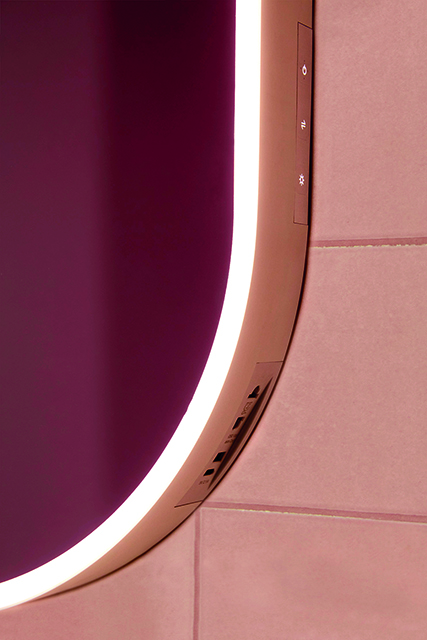
Often, it comes down to how something is integrated rather than what’s added. That might be a charging point built flush into the form of a mirror, following the same curve so it doesn’t interrupt the design; or a demister pad that covers more of the mirror’s surface to improve visibility during use.
Individually, these are small details. In practice, they’re often the things people notice once they start using the product – and what ultimately stays with them when making a purchasing decision.
Because increasingly, it’s not the big ideas that win, but the ones that make things easier, every day.