
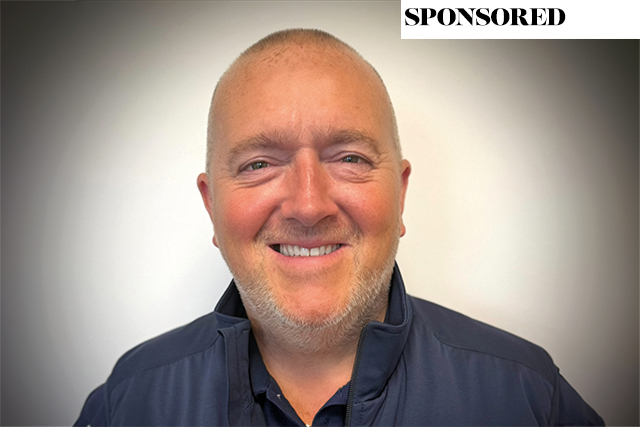
Resilience 2026: Arthur Leaker from LDD UK
How do you thrive for 26 years in distribution? Arthur Leaker, MD of LDD UK Ltd, explains the lessons learned from industry changes, and how they impact running a business with his own name above the door.
Advertisement Feature
Listen to a full interview with Arthur Leaker on a special episode of The kbbreview Podcast. Listen NOW using the player below or go straight to this episode in Apple Podcasts, Spotify or YouTube. Alternatively, simply search ‘kbbreview’ wherever you get your podcasts.
LDD UK Ltd has been part of the UK KBB market for 26 years now. And over that time, the business has evolved so much.
We started in 2000 after securing Siemens for distribution. Around the same time Teka had bought Küppersbusch, so we took that on as well. From there we added taps, range cookers and other complementary products, and for the first ten years things were going swimmingly well.
Then came the financial crash in 2009 and we lost hundreds of customers. We got through that, but in many ways the bigger disruption was the rise of internet appliance sales.
A lot of manufacturers rushed into online retail without really considering the impact on their existing retail channels or protecting their pricing structures. Built-in appliances went from being products with healthy retail margins to products that became very difficult for retailers to make money from.
That situation carried on for much of the 2010s until manufacturers gradually got a better grip on pricing and distribution. Covid reshaped things again, but today the market feels a bit more settled.
Distribution has probably seen more upheaval than most parts of the industry in recent years, so I really can’t overstate how importance resilience is to us.
Our size helps, and we’re small enough to stay flexible. If we see an opportunity, we can move into it quickly. If a product isn’t working anymore, we can move out just as quickly. I’ve watched a lot of businesses disappear over the last couple of years and I’ve spent a lot of time asking myself why. Whenever I see something that I think has gone wrong, I try to make sure we don’t make the same mistake.
Diversification is important, of course, but only if you stay within the areas you understand. We’ll stick to the markets we know because once you lose focus, you lose your expertise.
Considered approach
Looking back across the years, there are definitely lessons that have stayed with us from trading through things like Brexit and Covid.
For instance, your internal efficiency has to be top notch. You can’t carry passengers. You need complete visibility of what’s working and what isn’t, and you have to be prepared to make decisions quickly. During lockdown we rationalised parts of the business that weren’t performing. Afterwards, when demand surged, a lot of companies assumed that level of business was the new normal and expanded accordingly, but we took the opposite approach.
I sat the staff down and said we weren’t taking on more people, we weren’t overbuying stock and we weren’t going to overstretch ourselves because I couldn’t see any reason why that demand would continue. It was a backlog, and nothing more. When things settled down again, we were still in a strong position because we’d stayed disciplined.
I also think being an independent, family-owned business changes the way we make those decisions. The biggest thing is that my name’s above the door, so over my dead body will the business ever go bust! We’ve got staff who’ve been with me for more than 20 years, and I’ve got to make sure they’re looked after and that the business survives.
Relationships are also incredibly important to us, and there are certain things we naturally have to expect from the manufacturers we work with. We’ve all got to be pulling in the same direction, for example.
If a supplier starts becoming my competitor, they can’t be my supplier anymore. It’s as simple as that. The manufacturers we work with understand what we’re trying to achieve and we support each other.
Distribution only works when both sides are invested in the relationship. On the customer side, reliability is everything. Our regular customers know that when they place an order, it’ll arrive when we say it will. If there’s ever a problem, we’ll find a solution. And that consistency is what keeps people coming back.