
One last thing: Natalie Fry
As her studio celebrates its 13th anniversary this year, Grid Thirteen creative director, Natalie Fry, explains what she loves most about her job, what her proudest achievement is, and reveals a secret hobby most people don't know about…
When people outside the industry ask what I do I say….
I usually say I design spaces within the home, rather than kitchens. The kitchen may be where a project begins, but our work often goes much further than that, from fitted furniture and joinery through to the wider interior. Interior architecture is part of my everyday role – understanding how people live, how they move through a space and how proportion, materiality, light and function influence the way a home feels. As Creative Director, I also oversee the wider design direction of the studio, the team and everything we produce, alongside the less glamorous processes, technical detail and problem-solving that allow good design to be delivered properly. For me, creativity and rigour have to coexist; a beautiful idea is only successful if it works for the person living with it and can be properly realised.
If I was in charge of this industry I would…..
I don’t think kitchen design always gets the credit it deserves within the wider design arena, and perhaps part of that is that we don’t talk enough about the depth of knowledge and expertise behind what we do. A kitchen is an incredibly complex space to resolve, often with several people cooking, eating, working and moving through it at once, so understanding ergonomics, circulation, spatial planning and human behaviour is fundamental. Alongside that sits an enormous amount of technical knowledge – services, lighting, ventilation, appliances, material performance and installation tolerances – all of which have to come together seamlessly. When a kitchen is designed really well, you shouldn’t necessarily see any of that complexity; it should simply feel right. We have some incredibly talented designers in our industry and I’d like us to champion that expertise more confidently, alongside the independent studios bringing their own perspectives. I’m a proud Northerner and will always fly that flag, Yorkshire has a rich history of creativity, manufacturing and craftsmanship, and I love that we can build on that heritage while contributing to what Northern design looks like today.
What I love most about my job is…
That no two projects, or the people behind them, are ever the same. I find understanding how somebody really lives fascinating, it goes beyond the initial brief into listening, observing and sometimes recognising what a client needs before they can quite articulate it themselves. As designers, we have an opportunity to influence how a space is experienced and, in turn, how somebody lives within it – decisions around layout, light, proportion and functionality are experienced every day, often without us consciously noticing them. At this stage in my career, I also get a huge amount from bringing the next generation of designers through, sharing what I’ve learned while encouraging them to develop their own point of view. Seeing a client love their home is incredibly rewarding, but seeing a young designer find their confidence comes pretty close.
The thing people might not know about me is…
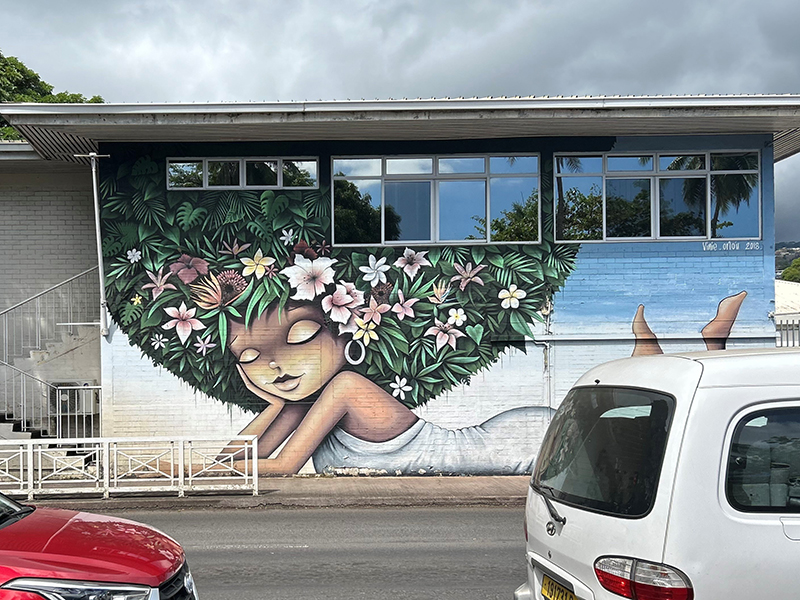
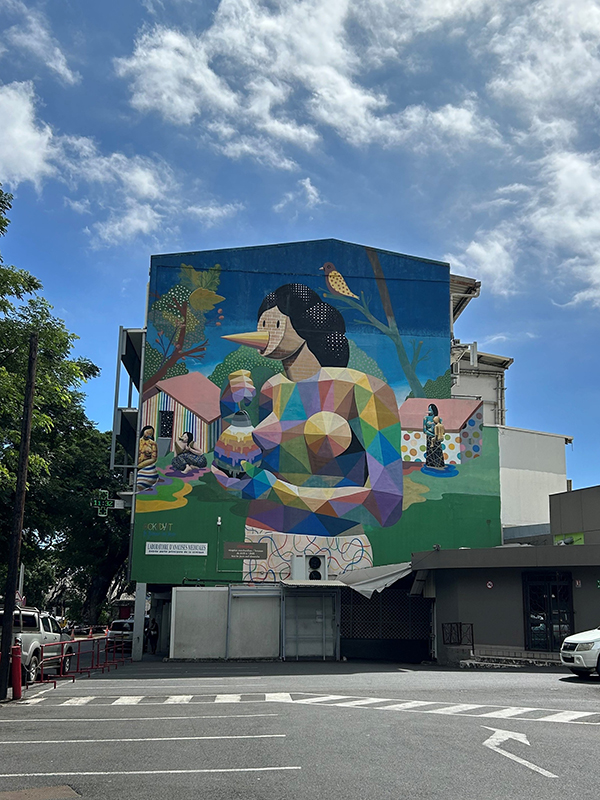
I’ve had a fascination with street art for many years and photograph it pretty much whenever I travel – from Berlin and New York to as far as Tahiti, and most recently Naples. I love its immediacy, but also what it can tell you about a place, its culture, politics, identity and the people who inhabit it. During Covid, I explored that interest from a more academic perspective through Painted Cities, my research into the cultural value of street art within the built environment and how these often temporary interventions influence our experience of a city. It might seem a world away from luxury interiors, but to me the connection is very clear; I’ve always been fascinated by people, places and our relationship with our surroundings – what a space says, how it makes us feel and the stories it tells about the people who occupy it.
The work story I always tell to make people laugh is…
Years ago, the team started playing a game without telling me, they’d move one of the props on a display ever so slightly – a vase, a book, something on a shelf and time how long it took me to notice. Apparently I’d walk past, stop, look at it, move it slightly, walk away and then come back and move it again until I was happy. This went on for far longer than I’d like to admit before I eventually cottoned on. I’d love to say I’ve become less particular over the years, but I’m not sure the team would agree, attention to detail is quite useful in my job, but it turns out it’s also a very easy way for your team to wind you up.
The industry person I most admire is (and why)…
I could honestly be here all day with this one because there are so many people and studios whose work I genuinely admire, but I’m going to say anyone running an independent business who has made it through the last six years. We’ve navigated Covid, rising costs, supply issues, changing client confidence and all the pressures of running a business while still trying to do great work and look after the people around us. Unless you run an independent studio yourself, it’s difficult to appreciate quite how much goes on behind the scenes, so hats off to everyone who has adapted, kept their doors open and is still here doing what they love. I know first-hand what that takes, and I have a huge amount of respect for it.
I wish this industry would talk more about…
How spaces make people feel. We understandably talk a lot about aesthetics, products and what’s new, but I’d love a much bigger conversation around neuroaesthetics, designing for the senses and how our surroundings influence everyday experience. My interest came from being a parent before it came from being a designer, making me much more aware of how differently we can experience the same environment, particularly for neurodivergent users. Light, sound, texture, colour and materiality all play a part, as do movement, visual stimulation and the demands a space places on us. The kitchen is particularly interesting because its pace can change so quickly, from several people cooking, talking and moving around each other to somewhere you want to sit and decompress. We’ve now included designing for the senses within our own training programme because I want our designers thinking about these questions as part of their design process. Ultimately, we’re designing spaces to be lived in, and how they make us feel should matter just as much as how they look.
I wish this industry would talk less about…
Trends. I understand why we talk about them, but I sometimes think we give them more importance than they deserve. When you’re designing something that will become part of somebody’s everyday life for the next fifteen, twenty or twenty-five years, what happens to be fashionable at that moment shouldn’t be the starting point. I’d much rather we talked about context – the architecture, location, natural light, proportions, material language and, of course, the people who will live there. A Georgian property in Yorkshire should ask something very different of us as designers than a contemporary new-build on the coast. There’s a difference between understanding the wider design landscape and allowing it to dictate your work, if the underlying decisions are grounded in people, place and architecture, the design should continue to feel relevant. Perhaps we should spend less time asking what’s next? and a little more time asking what will last?
My proudest professional achievement is….
Building Grid Thirteen into what it is today. There have been awards, recognition and projects I’m enormously proud of, but I don’t think any single one of those is the achievement for me. I started the studio thirteen years ago with a clear idea of the kind of design practice I wanted to create, and there have been incredible highs, genuinely difficult periods and a huge amount of learning along the way. I’m particularly proud of the team we’ve built and seeing younger designers develop, although the learning absolutely works both ways – every project should teach us something and, as a practice, I think we should always be prepared to question, reflect and improve. We’ve remained independent and rooted in Yorkshire while working across the country, and seeing Grid Thirteen develop an identity, values and design language of its own while knowing there is still so much more we want to do is probably what I’m proudest of.
One professional mistake I’ve learned from is…
Not trusting my instinct soon enough. In the earlier years of Grid Thirteen, I probably spent too much time believing I could make every relationship, partnership and opportunity work. Experience has taught me that recognising when something isn’t the right fit is just as important as knowing when to pursue it, and I’ve developed a much clearer understanding of what a genuine partnership looks like – mutual respect, shared standards and a willingness from both sides to contribute. That extends to protecting the culture we’ve created within our studio, where people feel valued, respected and able to do their best work. Collaboration over competition is something I feel strongly about, no one person or discipline has all the answers, and some of the most interesting ideas emerge when different perspectives come together. I’ve learned to trust my instinct, value the good partnerships and protect the people and principles that have helped shape the studio.
If I could go back to the day I started in this industry, I would tell myself…
Be a little kinder to yourself. I’ve always set very high standards and probably spent too much time focusing on what I could have done better rather than occasionally acknowledging what had actually been achieved. When I started Grid Thirteen, our youngest of five children was only three, so I was learning how to build a business alongside raising a busy family, while juggling a team, clients, suppliers and, as it turned out, the odd global pandemic. Looking back, I could probably have given myself a little more grace, I’d also tell myself not to fear the difficult projects, because they’ll often teach you far more about your business than the straightforward projects ever will. They expose the gaps in your processes, the weaknesses in your communication and the boundaries you didn’t realise you needed to set, you might not appreciate them while you’re living through them, but the lessons they leave behind can be more valuable than any course you could take. Thirteen years into running Grid Thirteen, I’m still learning all the time, and I hope I’m still able to say that in another thirteen years.
I dance in my kitchen to…
Donna Summer’s I Feel Love. It’s been responsible for many an impromptu kitchen disco in our house, although I make absolutely no claims about the quality of the dancing.
The song I always sing in the shower is…
Some performances are probably best kept behind a bathroom door though – although I’m often fully committed, I’m under no illusion about my vocal ability!
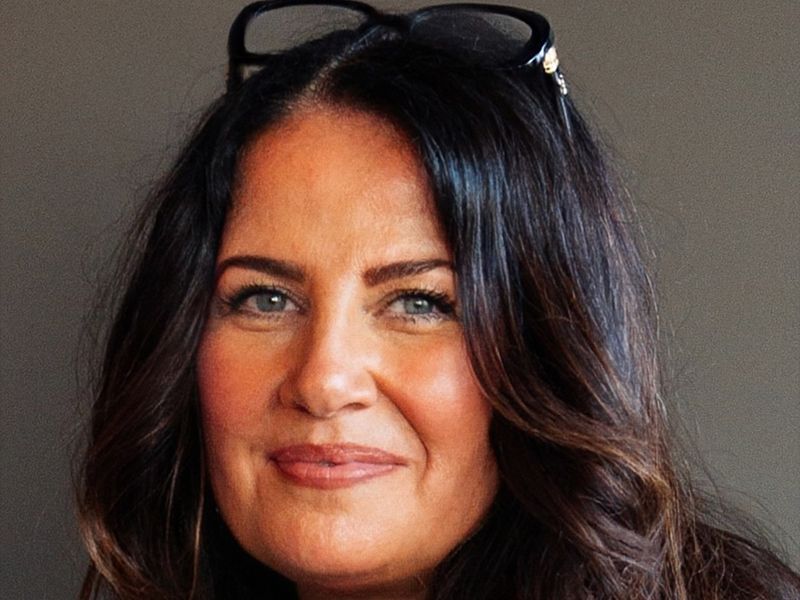
Natalie Fry’s studio, Grid Thirteen, is celebrating its namesake 13th anniversary this year.