

‘Stop the race to the bottom on worktop prices’
Jonathan Stanley, VP of marketing and customer service at Caesarstone, warns that the race to the bottom on price is putting quality, safety, and trust at risk – urging retailers to champion transparency and longevity.
In the vast theatre of the home, the kitchen usually takes centre stage. Not just a functional space; rather, a crucible of creativity and a hub of family life.
Take the worktop: a facet of the modern kitchen that has become synonymous with engineered stone. This material promises the timeless beauty of natural stone, with built-in practical resilience for our busy lives. But the devil, and indeed the true beauty, lies in the detail.
Here, we confront a fascinating paradox: our blinkered obsession with driving down the cost, notched against an item that plays such a significant role in the long-term success of the kitchen. It’s a mindset that often leads to a profoundly disheartening compromise across quality, safety, and longevity.
Allure and illusion
We’ve recently witnessed a explosion of innovation in surface materials and now design possibilities have expanded exponentially. Yet, this burgeoning market has, rather ironically, ushered in a new era of complexity – and with it, significant challenges concerning the inherent quality, fundamental safety, and transparency of what we are buying.
This is evident in the proliferation of anonymous engineered stone materials. On the surface – quite literally – they can present an appealing façade. This uncritical acceptance has fuelled a worrying “race to the bottom,” where meticulous attention to detail, rigorous adherence to standards, and fundamental integrity of the product are sacrificed at the altar of the lowest bid.
A “bargain” can often mean untested materials from unknown origins, inconsistent quality, inadequate safety protocols during production, and even substandard fabrication techniques that ultimately undermine the very longevity and aesthetic of the worktop.
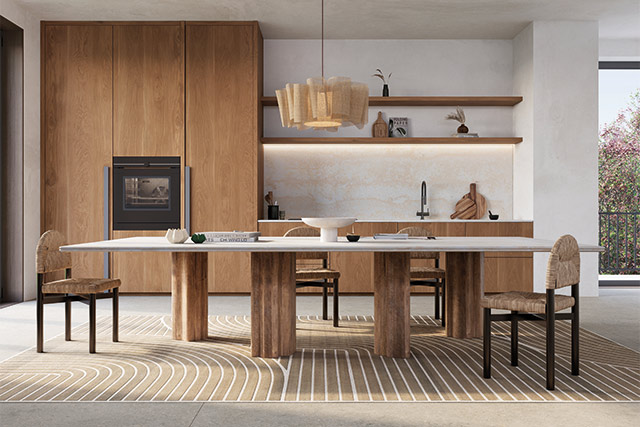
The true cost of these compromises often only reveals itself later, in moments of quiet frustration: a stubborn stain, a regrettable chip, or the stark realisation that the promised aftercare is, in fact, non-existent.
We wouldn’t take the same cavalier approach with our heating system, new sofa or TV, so why would we with the highly tactile, heavily utilised heart of our kitchens? The true cost of an engineered stone worktop is not just about the price tag on the stone itself; there are several layers that contribute to the final installed cost and knowing them helps spot where value is added – or, sometimes, where it’s subtly eroded.
A branded worktop carries with it an inherent narrative of trust. That name isn’t just a label; it’s a commitment to ethical sourcing and manufacturing. It offers traceability, accountability, and critically, provides verifiable data, born from rigorous testing.
Online research soon shows the difference between those who back their product and service with certification, environmental declarations and test results, and those who don’t have any such thing.
This offers a radical transparency of materials, laying bare the composition for designers, fabricators, and homeowners. A premium engineered stone worktop may seem costly, but over a kitchen’s 15–20-year lifespan, the annual difference can be as little as £100.
For that, you get durability, quality, safety assurance, and lasting peace of mind – making it a smart, long-term investment, not a luxury.
And that’s a statement.