

What would you do with £100,000?
Growth often means investment, but how many independent KBB retailers ever have time to really think about what they would do with that investment if it came along?
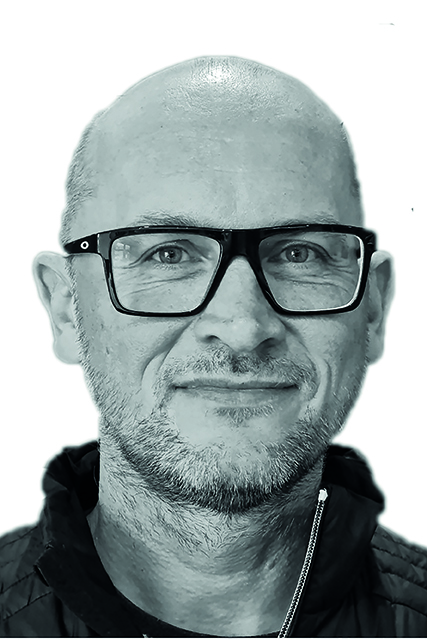
If someone gave you £100,000 tomorrow to invest in your business, do you know what you’d do with it?
A desire to grow often means seeking the funding to do it, internally or externally, but many retailers might not have a clear plan in their heads about what that actually means in practice. So this hypothetical question makes for a good test.
We discussed this on a recent episode of The kbbreview Podcast, and the answers surprisingly ended up being less about growing in terms of size and more about focusing on becoming smarter, more resilient, and less dependent on their owners.
The four regular retailers on the podcast, Trevor Scott of RFK in Rugby, Nick Warrington of Stuart J Warrington in Macclesfield, Liz Pantling-Jones of Lima Kitchens in Milton Keynes, and Justine Bullock of The Tap End near Cardiff, were asked the £100,000 question.
Time, people, systems, and control were seen as a more valid investment than bigger showrooms, more displays, or additional locations.
Nick Warrington admits his first reaction was to look for larger premises, until he started doing the maths. “You go from spending a couple of grand a month to five or ten,” he says. “Before you know it, you’ve doubled the number of kitchens you need to install just to cover the overheads.”
Time is money
Even for larger, more established businesses, the appetite for physical expansion seems to have cooled for many. Trevor Scott, whose business already operates three showrooms, is blunt about it. “If you’d asked me this question two years ago, I’d have said ‘open another showroom’ and we did,” he says. “But if that same £100,000 landed on my desk today, I wouldn’t be opening a fourth branch under these economic circumstances.”
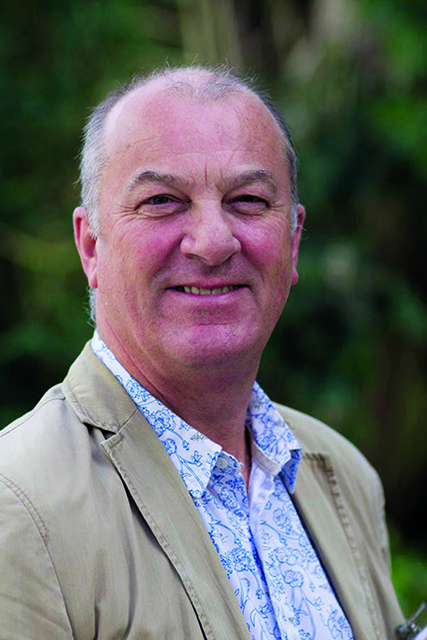
Looking to improve what they already have rather than chasing scale and adding more was the considered way to spend that £100,000.
For Scott, that means reinvesting in his flagship showroom, replacing tired displays, introducing new categories like bedrooms and home offices, and rethinking the front-of-house layout to give designers more privacy and customers a clearer welcome.
“That display is still an original carcass from 2012,” he says. “It needs addressing.”
What really united all four perspectives was an acceptance that time, not money, is the biggest constraint on independent businesses.
Warrington is candid about the strain of doing too much himself. “At the moment, I’m selling and project managing,” he says. “When we get busy with enquiries, my attention goes to sales, and I’m not spending enough time on installations.”
His solution wouldn’t be more displays or more space, but another person employed specifically to take operational responsibility off his shoulders. “If I’ve got more time to sell, we can put more kitchens in people’s homes,” he says.
Streamlining
Liz Pantling-Jones arrives at the same conclusion from a different angle. For her, the issue isn’t headcount but energy. “I work too many hours. I can’t sustain it,” she says. “The business needs to be less about us and more about the company.”
Her £100,000 wouldn’t go on expansion but on external help to analyse systems and processes, effectively buying back time by removing inefficiency from her business.

“When you’re caught up in the day-to-day, it’s really difficult to identify the flaws yourself,” she says.
Justine Bullock’s instinctive investment wasn’t in technology or turnover growth but in space, specifically space to think. Operating from a compact design studio, Bullock wants to create an additional area for meetings, planning, and strategy.
“It’s really difficult to turn your brain into a different gear when you work in one room with lots of people,” she says. “Sometimes we actually leave the building just to think.”
Investing in the conditions that allow creativity, collaboration, and long-term thinking to happen is a very interesting way to spend our hypothetical £100,000. It makes sense in a sector based on design services. “We’re a room full of creatives,” Bullock says. “We need a different space to think creatively and plan properly.”
So the investment is in people, not by adding more of them but by enabling the team she already has to operate at a higher level.
In fact, a notable shift running through all four answers is a reluctance to default to hiring as the solution to growth. Pantling-Jones is explicit about this. “I don’t think more bodies is always the answer,” she says. “It’s about streamlining.”
External expertise
That view is shaped by experience. Hiring the wrong person can carry a heavy cost, not just financially, but also culturally and operationally. Investing upfront in systems and processes is seen as a way of reducing that risk.

If there is one area where underinvestment is consistently acknowledged, it is marketing.
Warrington, for example, describes his own marketing as “close to non-existent,” not through neglect but through overload. The solution, in his view, is to use some of the £100,000 to bring in external expertise.
Scott agrees and speaks from experience. “We switched agencies just over a year ago, and that investment has been bearing fruit over the last six to nine months,” he says. “It’s about making sure it’s properly targeted and focused.”
Technology is also an interesting area of hypothetical attention. Warrington, in particular, sees potential in AI, not as a creative gimmick but as a way of building affordable, tailored workflows for his business.
“For small independents, that’s where the value is,” he says. “It’s about systems that make your life easier and more efficient.”
Perhaps the most telling moment came when Bullock admitted she wouldn’t even spend the full £100,000. “I’d probably keep the rest in the bank for a rainy day,” she says. “I’m not a big spender.”
That restraint says more about the current mindset of many independent retail than any grand expansion plan. This is a sector that has learned, often the hard way, that growth without control is fragile and that survival sometimes depends on knowing when not to spend.
So ask yourself and colleagues the £100,000 question and see what answers come back. It can often reveal where businesses feel constrained, where they feel exposed, and where they believe real value is created.
Increasingly, that value isn’t found in being bigger, louder, or flashier ideas but in having a better-structured, more efficient business, better prepared for a future where the owner can’t and shouldn’t do everything themselves.