
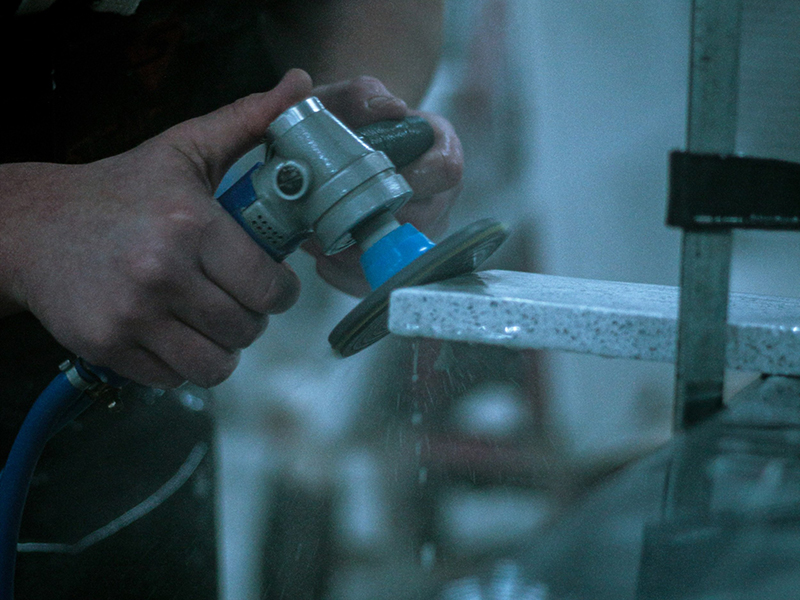
As well as encouraging fabricators to review their silica dust control methods, the Worktop Fabricators Federation (WFF) is also calling on kitchen studios, retailers and designers to probe more deeply into where and how their stone products are fabricated.
This follows the recent launch of the Health and Safety Executive’s (HSE) new guidance into working with engineered stone, which was revealed in May. As part of the new rules and regulations, the HSE has officially banned the practice of “dry cutting” stone in a bid to help prevent more deaths from silicosis, an incurable lung condition.
Following the rollout of the new rules, the HSE also promised it would investigate at least 1,000 stone companies across the UK to check whether the new rules were being adhered to, with several fabricators already being ordered to stop processing.
In a new statement released this week, the WFF said that now “the focus must turn from discussion to action”.
In the statement, Nigel Fletcher, operations officer of the WFF, likened the recent standards improvements to historic health campaigns such as the introduction of seatbelts or the public smoking ban, saying that now, “both are accepted as common-sense measures that have saved lives and improved public health”.
Referring to dry cutting, unprotected silica dust inhalation, and workers taking dangerous dust home on their clothes, Fletcher said that he believed that “in years to come, the industry will look back and wonder why these practices were ever considered acceptable”.
Fletcher continued: “The Worktop Fabricators Federation has been proud to work alongside the HSE, its scientific teams and leading medical experts throughout this process. Our members opened their workshops to support the research, we contributed to discussions around the scientific findings, and we stood alongside the HSE as these important measures were introduced.
“Our commitment doesn’t stop there. We are extending support across the whole industry, introducing our new WFF Accreditation Quality Mark and encouraging greater due diligence throughout the supply chain. Fabricators, suppliers, retailers and kitchen studios all have a role to play in raising standards and protecting the people who work in our industry every day.”
Looking ahead, the WFF says it is committed to continuing its collaborative work with the HSE, medical experts and the wider industry on what it calls “phase two” of the silica crackdown, which includes pushing for “lower-silica materials, enhanced engineering controls and the continued development of industry best practice”.