
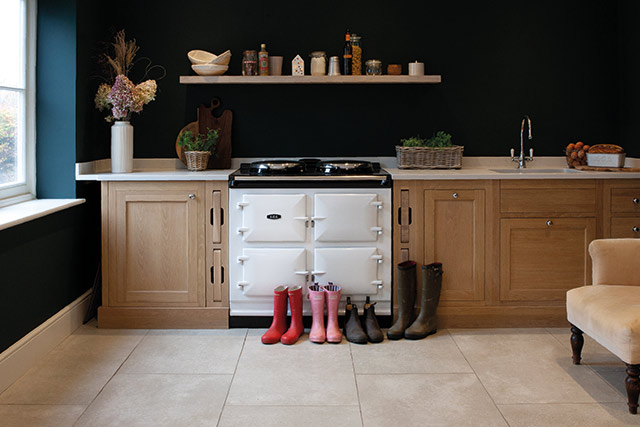
Supplier profile: AGA Rangemaster
After years of underinvestment, Aga Rangemaster is trying to shake off the dust under US owner Middleby. For new MD Dominic Worsley, it’s time to remind the independent retail market why these brands are an intrinsic part of both its heritage and its future…
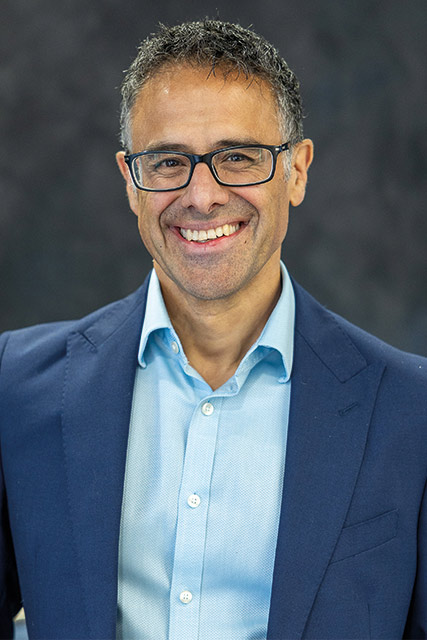
Listen to the full interview with Dominic Worsley NOW using the player above or go straight to this episode in Apple Podcasts, Spotify or YouTube. Alternatively, simply search ‘kbbreview’ wherever you get your podcasts.
When Dominic Worsley took over at Aga Rangemaster last autumn, after a short stint at CDA and a long tenure in very senior marketing positions at Miele, he inherited some of the most recognisable names in British kitchens.
These are brands with enormous equity, decades of past retail loyalty, and factories that have been producing in the UK for hundreds of years.
But he was also taking over a company that had become, in his words, a little ‘dusty’.
“Lots of people said to me before I came that it was a sleeping giant,” Worsley says. “It had been a bit neglected. Rangemaster has been number one in range cooking for a very long time, but it didn’t really have its own identity. People often thought Rangemaster was just the generic word for a range cooker. For me, that felt like a marketeer’s dream.”
Dreams, however, don’t keep production lines moving. His first year was dominated by supply chain issues, the kind of real-world manufacturing headaches many marketing men would run a mile from. “We struggled to provide fuel gas cookers for the first six months of the year because we couldn’t source the right component,” he recalls.
“In the end, we used the skills of the team in Telford to make that component ourselves. It was difficult, but it made us stronger as a company and the quality of the cooker went up.”
That episode, frustrating as it was, also proved something important – the resilience of the brands and the depth of loyalty still out there among retailers and consumers. It’s loyalty Worsley knows he has to repay.
Bold moves
His diagnosis of the decline is direct: the company had turned inwards, trying to protect a shrinking pie rather than grow the category. “If you don’t invest in the category, the category won’t grow,” he says. “The assumption was that range cooking was in decline, so the business asked how to protect what was left. That was the fundamental problem.”
The fix? Spend money. Talk loudly. Make noise. In other words, marketing.
This autumn, Rangemaster went back on national television with an advert that ran during “The Great British Bake Off”. That’s not a media slot you book if you’re looking to hide your light under a bushel.
“We wanted to do something completely different to any other appliance ad,” Worsley says. “The problem wasn’t the product, as independents sell it brilliantly once customers walk in, the problem was awareness. So our job was to send people through the doors of independents asking for Rangemaster.”
It’s a deliberately brave move in a sector where marketing budgets are often first to get the chop when sales slump. “I’ve been supported by Middleby to be brave and go out and play,” he says. “If we really want to get the sector going, then we need to excite people. Premium kitchen customers have money to spend, but they need reasons to put money into their homes.”
Which brings us neatly to the independent studios. There are few established retailers in the country who haven’t sold Rangemaster products at some point in their career, but Worsley knows he has fences to mend.
“If you went and polled retailers on Rangemaster right now, they’d probably feel a bit let down,” he says. “I’m under no illusion about that. But we’re putting the right things in place. Middleby has invested nearly £13 million in a new line in Leamington Spa which is a huge vote of confidence in British manufacturing – and that will make us much stronger.”
The pitch to independents is straightforward: breadth of range, margin protection and differentiation. “We can do things through independents that we couldn’t do anywhere else,” he says.
“Custom colours, personalisation, building your own Rangemaster or Aga. That’s only deliverable through independents. The key is making sure they have the right displays, the right training, and the margin to make it worth their while.”
It’s not an easy balancing act. Retailers want exclusivity and profitability. The brand needs reach and awareness. Worsley believes Rangemaster’s breadth of product gives him the flexibility to keep both sides happy.
Range revolution
Beyond the retailer relationships, Worsley wants to reposition range cooking itself. For too long, he argues, the category has been left to gather dust while most marketing attention was given to handleless German kitchens and built-in minimalism – the irony that Miele was a key proponent of this is not lost on him.
“When people start thinking about a new kitchen, they cut pictures out of magazines,” he says. “Ninety per cent of what they see is built-in kitchens. If there’s nothing inspirational making them think about range cooking, they won’t think about it.”
The counter-message is to frame the range cooker as the “modern hearth” – noisy, lively, family-friendly and proudly at the centre of the home. “They’re big, friendly, fun appliances,” Worsley says.
“You can spill on them, you can cook with your kids. They’re not intimidating, they’ve got personality. Our job is to make range cooking one of the first decisions people think about when planning a kitchen.”
If Rangemaster is about volume, Aga is about mythology. It’s one of the few British appliance names the general public still has a clear vision of, even if they probably don’t really know what the product does anymore. It’s up there with Mini Coopers, Barbour jackets and Land Rovers.
Potential
“Aga has two audiences,” Worsley explains. “People who grew up with one and know exactly what it’s about, and people who know the brand but don’t understand what a modern Aga is. At the heart of it is cast iron cooking. Our job is to distill what Aga is and then do something exciting and disruptive with it.”
You can spill on them, you can cook with your kids. They’re not intimidating, they’ve got personality. Our job is to make range cooking one of the first decisions people think about when planning a kitchen.
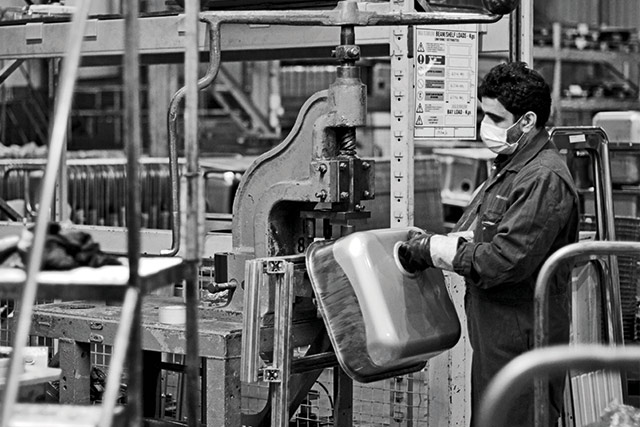
Dominic Worsley, MD, AGA RangemasterFor Worsley, the goal is to put Aga back to being the quintessential British cooker and then sell that story to the world. “It’s beautifully handmade by 40 people in Telford. It’s got so much potential. Over the next three to five years, my objective is to get those volumes back and distribute it globally.”
And he isn’t shy about setting targets. “I’d like us to be producing 60,000 cookers a year,” he says. “And I want three equal business pillars: a strong UK market, a strong rest-of-world export market, and a strong US business.”
The US is the big prize. Range cooking is still mainstream there, and Middleby’s influence gives the brand an open door into that market. “The ambition is for Leamington Spa to be the global centre of premium range cooker manufacturing and Telford to be the global centre of luxury range cooking,” Worsley says.
For all the big talk of global expansion and marketing budgets, there’s a pragmatic, almost old-fashioned note to how Worsley frames his role. “You know you won’t be the last person in charge of this company,” he reflects. “You’ve got to leave it in a better place than you found it. That’s exactly how I feel. These are iconic brands with incredible history. Our job is to make sure they have an equally strong future.”
Plenty of leaders have promised to revitalise sleeping giants before, but not all of them had the factory investment, the retailer loyalty, and the category opportunity lining up at the same time and, while Aga Rangemaster is still a long way from its glory days, under Worsley, it has at least stopped looking inwards and started talking loudly again.
And in a sector as crowded as appliances, that alone might be enough to make retailers pay attention.