
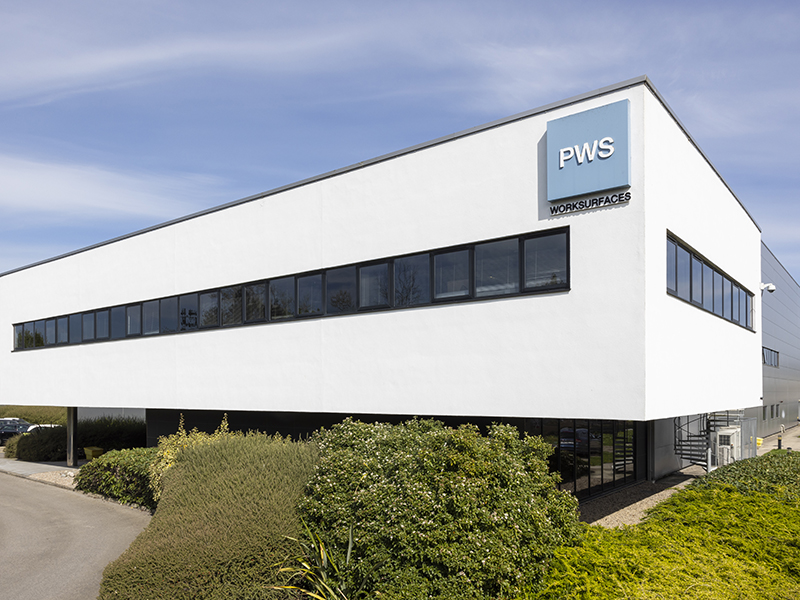
After voicing its support for the scheme earlier this year, PWS has become one of the very first companies to be awarded the new WFF Quality Mark, reinforcing its commitment to safe practices.
First announced back in January, the WFF’s new Quality Mark has been created to help identify surface products produced safely, in an effort to protect the health of fabricators amid rising cases of the lung disease silicosis.
The Federation only awards accrediation to companies who can prove their commitment to safe fabrication processes, with the Trust Mark offering reassurance to retailers and consumers that these companies have committed to meeting the rigorous standards set by the WFF.
PWS says that by achieving Trust Mark status, it has demonstrated its dedication to maintaining strong operational systems, investing in safe working practices, and delivering quality workmanship for our customers and partners. The distributor says it has also worked closely with the WFF to help create the industry benchmark for fabrication standards across the sector as a whole.
“We have always encouraged a culture of responsibility and continuous improvement in the sector, so to be announced as one of the first businesses to be awarded the Quality Mark from the WFF is an honour,” commented Chris Wragg, managing director of the Danesmoor Group, which owns the PWS brand.
“The introduction of this accreditation will transform the industry, ensuring that customers now have full visibility and transparency of leading, well invested fabricators that they can trust to uphold the best safety and working practices for their employees.
“We are delighted to be recognised for our strong internal processes, and robust health and safety measures. This new landmark guidance is a positive step forward for the industry and we fully support measures that raise standards and encourage best practice.”
This news comes just days after the UK’s Health & Safety Executive (HSE) released new guidelines on working with engineered stone products, making it now mandatory to use water suppression techniques in the cutting process, officially banning the use of “dry cutting”.