
Business Advice: Designing for listed buildings
How can you strike a good balance between preserving the past whilst also designing for the present? According to Nick Cryer, it’s all about respecting the historical quirks that make these properties so impressive to begin with.

Words: Nick Cryer
Designing kitchens, bedrooms and bathrooms in listed buildings is a discipline that goes far beyond aesthetics.
For retailers operating in the premium and bespoke market, these projects require a deep understanding of heritage, planning constraints, technical challenges and, above all, respect for the building’s original fabric.
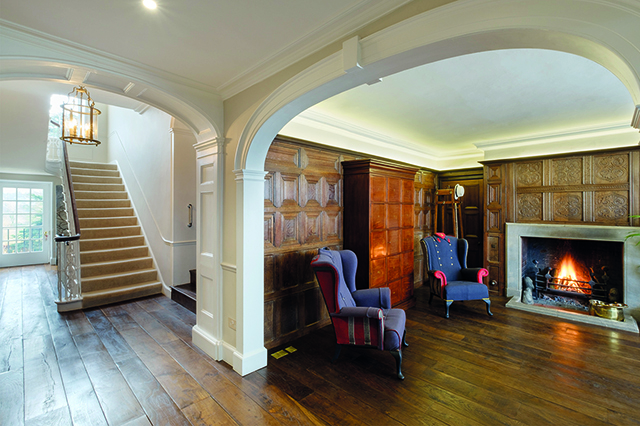
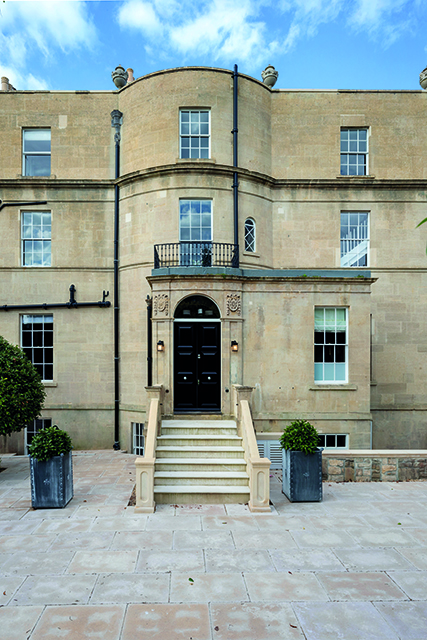
At Berkeley Place, we are specialists in high-end residential renovation, with this balance sitting at the heart of every project. Working across London, Bristol and Bath, the team has delivered over 400 renovations, many within historic listed buildings dating back centuries. One such example is Bloomfield House in Bath, a Grade II listed property reportedly designed in the 1790s and recently transformed by Berkeley Place into luxury self-catered accommodation.
Above all, we like to respect the building’s story. The starting point for any listed building project is a simple but essential principle: we look to preserve first, then intervene. These homes are layered with history, and their quirks are often what make them so valuable.
Rather than stripping away character, retailers should design schemes that work with the building, identifying and retaining original features such as cornicing, stonework, sash windows or historic flooring, ensuring these elements remain central to the overall design. In practice, this means restoring traditional materials, working with architectural irregularities and celebrating details that tell a story rather than concealing them.
For example, at Bloomfield House, the decision to retain and restore blocked-up “false windows” – a legacy of the historic Window Tax – ensured that a small but meaningful piece of British history remained visible, demonstrating how even subtle features can enhance the authenticity of a project.
Hidden problems
With older projects you have to expect the unexpected. One of the defining characteristics of listed building renovation is uncertainty. Beneath surfaces, there are often hidden issues waiting to be uncovered, which can have significant implications for both design and budget.
It is common to encounter concealed damp, decaying timber, outdated services, old piping or structural weaknesses once works begin, meaning flexibility is essential throughout the process. Early stages of a project often reveal conditions that require reassessment of scope, reinforcing the importance of allowing for contingency and maintaining open communication with clients about potential changes in cost and timeline.
Retailers should approach these projects with adaptability, recognising that what is specified at the outset may need refinement as the building reveals its true condition. In fact, you may want to add a contingency budget to the project depending on what you find.
There is also a beauty in the unexpected. On one project, while stripping plaster from a basement, we uncovered handwritten calligraphy on a wall. On closer inspection, it was a record of dates someone had kept a diary of visits to the basement when it was used as an air raid shelter during the Second World War.
Rather than covering this over, we preserved and framed the section behind glass, celebrating a powerful and personal piece of the building’s history.
Rights and responsibilities
A key understanding of planning and consent is a must. Working within listed buildings requires strict adherence to planning regulations. Any work that affects the character of the property will typically require Listed Building Consent, and this often takes precedence over standard planning permission.
While like-for-like repairs can often proceed without formal approval, more significant alterations like an extension, reconfigurations or impactful internal changes require careful assessment and approval.
This process is best supported by collaboration with conservation-accredited architects who can ensure proposals align with heritage requirements. Many people might make the mistake of taking on the challenge of an older historic building without expert advice, but we’d always recommend getting expert advice so you save money in the long run.
In practical terms, one of the most common misconceptions we encounter is that internal works are automatically exempt from consent, but this is rarely the case. Removing walls, altering layouts, chasing out channels for wiring or even upgrading joinery can all affect the historic fabric and may require approval.
Responsibility ultimately sits with the local planning authority, advised by a conservation officer, who will determine what is acceptable. In some cases, particularly with higher-grade buildings, guidance from Historic England may also be relevant. For retailers, this means early conversations with the wider project team are invaluable before designs are fixed and expectations set.
For those designing kitchens and bathrooms in listed buildings, a little clarity on the framework can go a long way. Listed buildings are categorised as Grade I, Grade II* and Grade II, with the majority falling into the latter. While the level of restriction broadly increases with grading, the key point is that any element contributing to the building’s character is protected inside and out.
In day-to-day terms, this means being mindful that replacing original windows, removing historic walls, relocating kitchens or bathrooms, or introducing new ventilation routes may all require careful justification. Even seemingly minor interventions such as drilling through external walls for extraction can become contentious if not properly considered.
Rewarding work
We love to renovate, over replace. A key principle in high-end restoration is the preference for repair over replacement. Original features are not only aesthetically valuable but often outperform modern alternatives when properly restored.
Windows, for instance, can often be repaired and enhanced with secondary glazing, improving thermal and acoustic performance while maintaining their original appearance. This approach preserves authenticity, reduces environmental impact and supports long-term value.
Retailers should prioritise materials and solutions that respect the building’s heritage, recognising that authenticity is a defining feature of luxury in this context. At the Pembroke House project, the team was tasked with restoring damaged Victorian ceiling roses and cornices. The building had previously been used as a language school, and we were proud to return it to its original purpose as a family home, reinstating its period character in the process.
One of the most overlooked aspects of designing kitchens and bathrooms in listed buildings is structural capacity. Historic floors were not designed to support the weight of modern installations, particularly where heavy materials are involved. This is the most common issue we find, we always need to add more support to the floors and the bones of the room to hold a heavy bathtub, for example.
Features such as stone worktops, freestanding baths, extensive tiling or large glazed shower enclosures can introduce significant loads, meaning additional structural support is often required. Considering these factors early in the design process helps avoid costly changes later and ensures both safety and longevity.
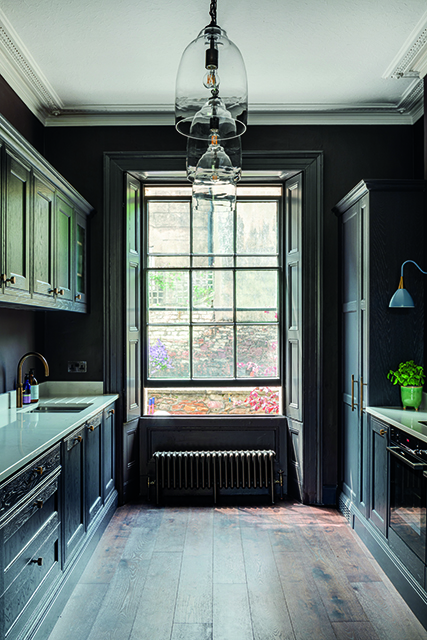
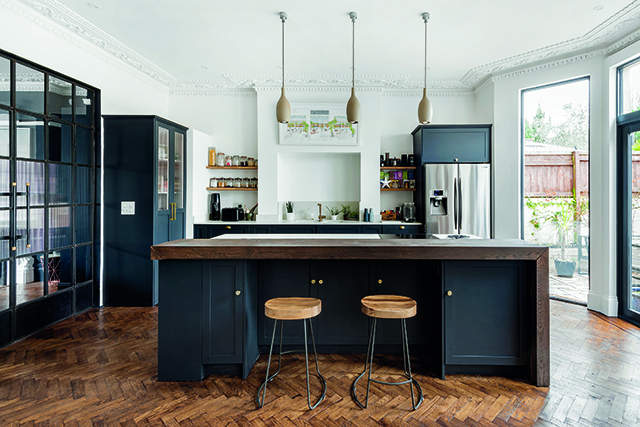
Designing kitchens in listed buildings must be approached with sensitivity. Designers should work with existing room proportions rather than imposing open-plan layouts, using bespoke cabinetry to accommodate uneven walls and integrating appliances in a way that preserves the visual integrity of the space.
Material selection is key, with natural finishes such as timber and stone helping to create a cohesive relationship between old and new, while carefully considered lighting enhances both functionality and atmosphere.
Similarly, plumbing layouts can be particularly challenging, especially when enhancing a property rather than undertaking a full renovation. Sometimes it is more appropriate to embrace the building’s quirks rather than impose a conventional layout.
Features such as a basin within a bedroom or a freestanding bath positioned as a focal point can create characterful and highly individual spaces. When thoughtfully designed, a vanity area can be incorporated seamlessly into a teenager’s bedroom setting while combining practical storage with elegant detailing, while a beautifully finished bath with a tiled surround can become a striking and unexpected design feature. And yes, we have done both.
Ultimately, older projects demand patience, collaboration and a willingness to adapt, but they also offer the opportunity for designers to create truly distinctive and timeless spaces.