
AI was everywhere at this year’s IFA, but the bigger shift was how appliance brands are starting to use it – combining smarter software, sensors and connected ecosystems to make products more responsive to how people actually live.
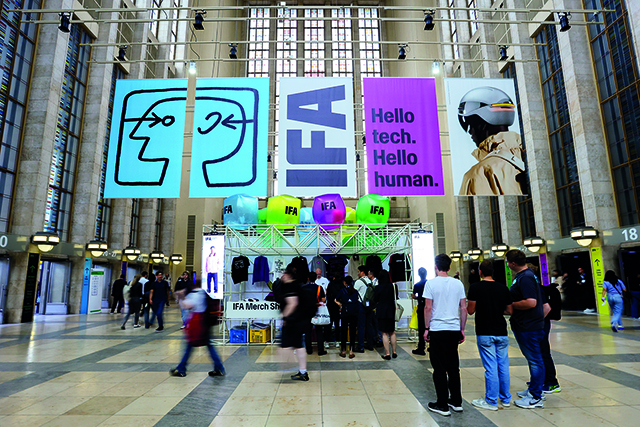
Berlin once again became the meeting point for the global appliance and consumer technology industry as IFA 2026 opened its doors from 4–8 September. More than 2,000 exhibitors and 240,000 visitors attended this year’s show, according to the organisers, making it the biggest edition yet.
For KBB retailers, the show remains a useful early indicator of the technology and product ideas that could eventually make their way into UK showrooms. And if there was one clear message from this year’s event, it was that AI is moving beyond being a feature on an appliance and becoming part of the way appliances operate.
AI was, unsurprisingly, everywhere. But what was more noticeable this year was the way manufacturers were combining it with physical sensors, cameras and increasingly sophisticated software.
Washing machines could identify loads and adjust programmes. Ovens could recognise food and change how it cooks. Refrigeration systems were using cameras and sensors to understand what is being stored. Dishwashers were assessing the contents of the tub and adapting their cycles. Meanwhile, smart-home platforms are increasingly being positioned as the brains connecting all of this together.
There was also a noticeable shift in the interfaces being shown. Large touchscreens, voice control, natural-language interaction and updated apps are becoming more common, while some manufacturers are moving towards systems that require less input from the user rather than simply offering more controls.
And I would say that is an important distinction. The pitch is no longer simply that an appliance is connected to Wi-Fi. The next step is that it can understand what is happening, make a decision and act on it.
There was also plenty of technology that still felt like a concept or an early step towards something bigger. But alongside it were plenty of more practical applications that retailers could imagine explaining to a customer today – food recognition, automatic programme selection, load sensing and energy management.
The challenge now is less about whether appliances can become smarter and more about whether the additional intelligence gives consumers a reason to care.
Innovation Awards
The IFA Innovation Awards returned for a second year, with more than 530 entries judged on technology, functionality, design, innovation and sustainable added value. The three headline prizes went to the Anker RIC Hearing Aids Pro, named Best of IFA for its advanced hearing technology; Insta360 Luna Ultra, which took Best of Tech for its 8K 360-degree camera technology; and LG Electronics, which won Best Brand for its overall performance and continued innovation across multiple categories.
For the KBB industry, two of the 13 category awards are particularly relevant. Best in Home Appliances recognised five products: Dreame X60 Pro Ultra Complete, an advanced robotic floor-cleaning system; Hisense Multi Function II Series, an integrated energy-saving HVAC solution; Haier Multi Care Laundry Tower, a multi-drum laundry system; DJI ROMO P2, a robotic home cleaning system; and Bosch built-in robot vacuum and mop, which integrates automated floor cleaning into fitted furniture.
The Best in Smart Home category also produced five winners: Dreame Matrix10 Ultra, a multifunctional robotic cleaning system; Navimow H510 Pro, an automated robotic lawn mower; Airo Sensereo, a smart indoor air-quality monitoring system; Xiaomi’s winning smart-home entry, which sits within its connected home ecosystem; and Cozyla Routie, an AI-powered bedside companion designed to help children manage routines, sleep and family schedules.
Spotted at IFA…
Haier
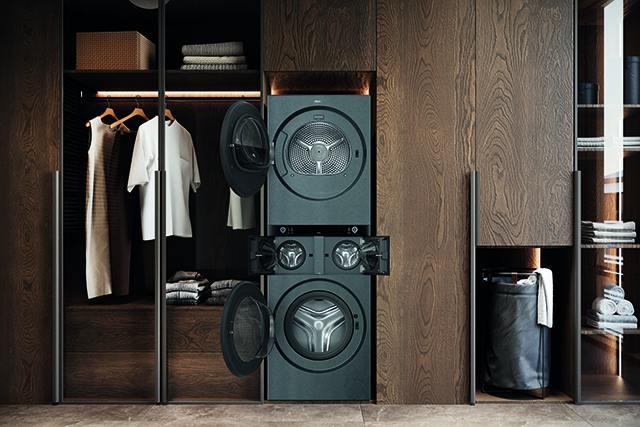
Haier’s stand was built around the idea of the “Home of Intelligent Possibilities”, with its hOn ecosystem providing the link between products. The focus was less on individual connected appliances and more on how information can move between them.
Maestro, Haier’s refrigeration prototype, brought together several of its food-preservation technologies, including AI-powered sensing. Elsewhere, the company demonstrated AI Vision in cooking and laundry, intelligent sensors in dishwashers and its multi-drum laundry concepts.
AEG
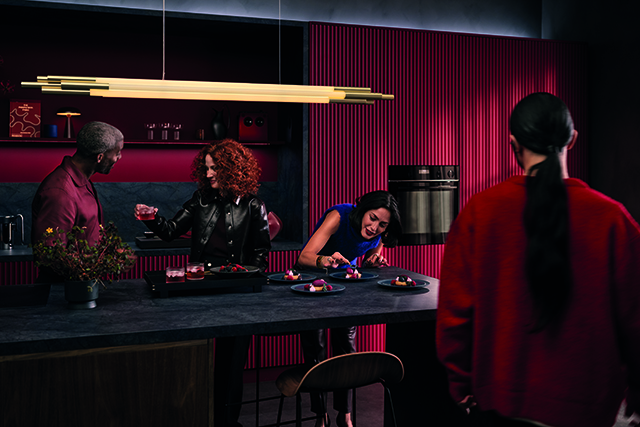
AEG’s focus was firmly on making everyday appliance functions more automatic. The 7000 MealAssist oven with PizzaExpert was one of the main cooking highlights, with PizzaExpert being made available through an over-the-air update for compatible AEG ovens. The brand also showed new Favorit dishwashers, Onyx laundry products and further developments in AI-assisted cooling and washing.
Across the stand there was technology to make specific tasks easier, rather than simply adding another layer of connectivity. The MealAssist oven was a good example, with software updates adding new functionality.
Hisense
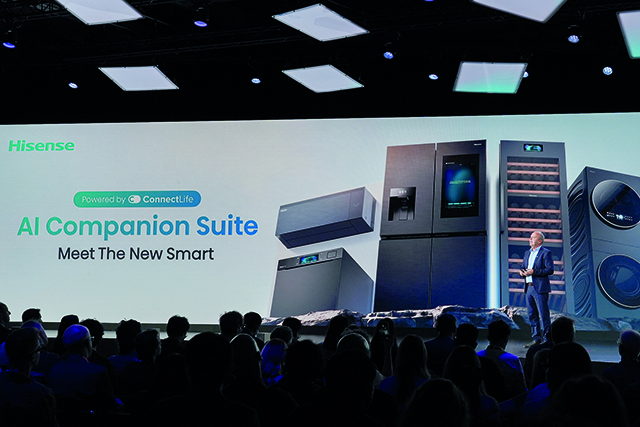
Hisense used IFA to demonstrate its vision for a more integrated smart home, centred around V AIOS and the existing ConnectLife platform. The demonstrations focused on appliances working together rather than operating independently. In the kitchen, the system could suggest recipes, send cooking programmes to compatible ovens and allow users to monitor progress.
In laundry, AI was being used to recognise clothing characteristics and select appropriate wash and dry settings. The wider V AIOS proposition takes that further, with Hisense positioning the system as something that can recognise users, understand context, communicate naturally and coordinate devices and services around the home.
From the show floor…
At IFA 2026, Haier Smart Home UK & Ireland MD Jim McEwan talks about the technology shaping the next generation of appliances, the growing role of AI and connectivity, and how Haier plans to turn its smart home vision into something consumers can actually use.
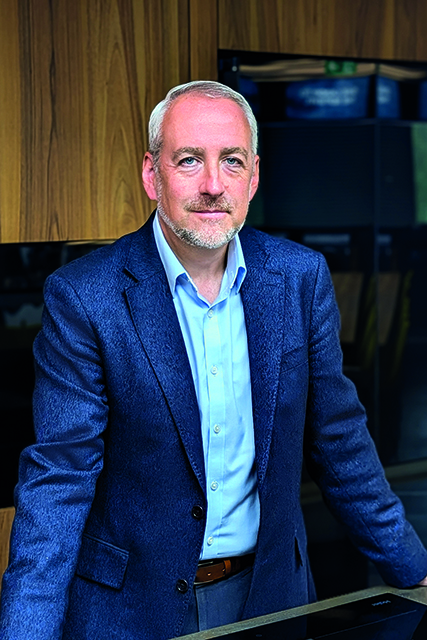
AI has become a buzzword in appliances, but what does it actually mean for the consumer?
The industry has probably been guilty of talking too much about the technology rather than what it actually does for people. For us, it has to start with the consumer problem. AI should make the appliance easier to use, save time or money, or deliver a better result. That’s why things like our Hydro technology came from consumer feedback rather than us simply looking for somewhere to put AI. We genuinely developed it because that’s what consumers told us they needed.
What were the key products or technologies Haier put in the spotlight at IFA this year?
There are a few areas. We’re seeing a lot around AI and personalisation, particularly in refrigeration, cooking and laundry.
The multi-drum laundry products are a good example because they’re genuinely different rather than just adding technology for technology’s sake.
We’re also developing much more around food preservation, cameras and intelligent cooking. The direction is towards products that understand more about what the consumer is doing and can respond accordingly.
If appliances become increasingly autonomous, what does that mean for the role of the retailer and the showroom?
I still think the shop floor is incredibly important. Consumers want to touch and feel products and understand how they work. Independent retailers in particular are experts and can get more value out of these products by explaining the benefits to customers. As appliances become even more sophisticated, the right display and the ability to demonstrate what they can actually do becomes more important.
Haier has invested in the hOn ecosystem and connected appliances, so what’s the end goal?
It’s about having one connected system that can manage the home for you. That could mean appliances, TVs, energy sources, solar panels, batteries or an EV charger all working together. The ambition is for AI to understand when the best time is to run something, based on things such as energy tariffs, so consumers don’t have to think about it. We want the connected journey to become a reality rather than just a collection of individual connected products.
Which innovations at IFA has the potential to make the biggest difference to consumers over the next few years?
Food preservation is probably the one I’d pick. A lot of food gets thrown away because it goes off before people use it, so technology that can keep food fresher for longer could make a real difference to both consumers and the environment.