
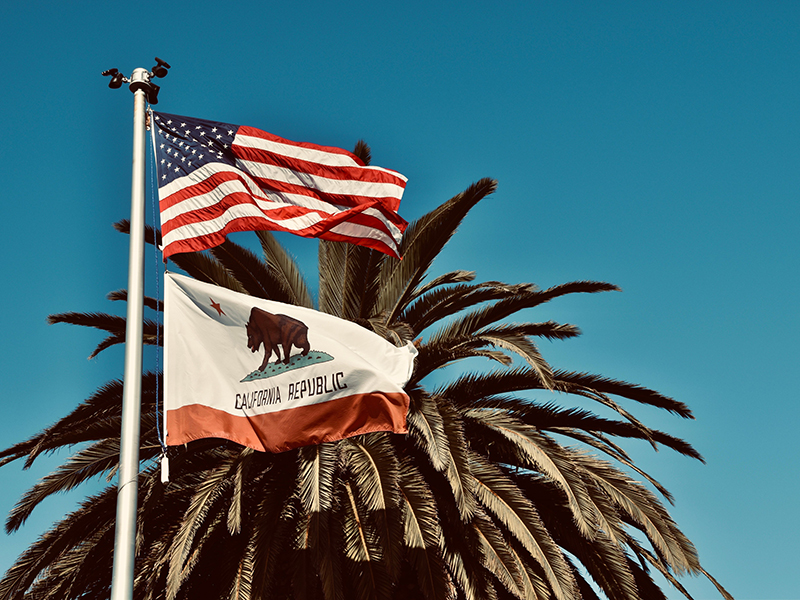
California is on the cusp of becoming the first US state to outlaw high-silica engineered stone, as it contemplates a total ban on surfaces with higher than 1% silica content.
This follows a complete ban on high-silica engineered stone products by Australia in 2024, and a crackdown on unsafe fabrication practices in the UK in May of this year.
California’s Division of Occupational Safety and Health (OSHA) has this month published a draft of a new emergency rule that would forbid fabricating the worktops, with comments on the rule only being accepted until Friday, September 30.
If it is approved and implemented, the major new restrictions would be brought in with only 60 days for California fabricators to prepare for the changes.
In a landmark move, the draft emergency rule states that stone companies would be expressly prohibited from fabricating engineered stone containing more than 1% crystalline silica by weight. More specifically, the restrictions would cover engineered stone products used as countertops, as well as walls, flooring, backsplashes, waterfall countertop edges and panels.
New restrictions would also come into effect that cover employers’ duties regarding health and safety reporting for workers. Stone companies would be required to tell their workers verbally and in writing, that fabricating products over 1% is both banned and dangerous to their health.
OSHA’s draft emergency rule would also require warning signs in English and Spanish to be displayed at workplace entrances, with employers also expected to maintain documentation proving that the materials they work with contain no more than 1% crystalline silica.
The new rule would also include an exception on products over 1% silica content that are already owned by fabricators before the rule comes into effect. This would grant fabricators a grace period of 180 days from the rule’s implementation to stop fabricating the higher silica surfaces.
For several years, the unsafe cutting and polishing of engineered stone has been scrutinised as a cause of silicosis – a serious, irreversible lung disease caused by inhaling the fine crystalline silica dust. The dust scars the lungs over time, making it difficult to breathe and increasing the risk of lung infections, Chronic Obstructive Pulmonary Disease (COPD), and lung cancer.
Officials at the California Department of Public Health have previously said that without some kind of new OSHA regulation, they believe up to 1,000 new cases of the disease silicosis could be diagnosed in the state over the next two years.
California is currently the only US state conducting formal surveillance and tracking of engineered stone silicosis cases among worktop workers, although confirmed cases of the disease have emerged in other states like Colorado, Texas, Washington, Massachusetts, Florida, Illinois, Utah, and New York. If the rule becomes law, it will make California the first US state to formally restrict the fabrication of engineered stone surfaces, with other states potentially expected to follow.
In the UK, the Health and Safety Executive (HSE) also brought in new restrictions on engineered stone fabrication earlier this year. The HSE’s new guidance forbids the act of “dry cutting” engineered stone and making water suppression techniques a legal requirement. However, the UK’s new regulations also stopped short of an outright ban on the product, with the HSE saying its own research suggested the material can still be processed safely so long as strict controls are in place.
Although this has not stopped calls for an Australia-style outright ban on the product from some in the industry and Governent, with Liberal Democrat MP Liz Jarvis saying she was concerned the UK’s latest changes may not address “the crux of the problem”.
Responding to California’s new draft rule, and addressing whether a similar outright ban could come to the UK market, the Worktop Fabricators Federation (WFF) said it still did not believe “a blanket ban” on the product was the way forward.
Speaking exclusively to kbbreview, the WFF said: “We need to place a much stronger focus on reputable fabricators and the standards they operate to. While reducing silica exposure is clearly beneficial, it is equally critical that we understand exactly what particulates are present in these products. Ultimately, worker safety requires complete and transparent product safety information — a marketing claim that a product contains ‘lower’ or ‘no’ silica does not, on its own, address the wider safety issue.”
The WFF continued: “Fabrication businesses must have the appropriate infrastructure, controls and expertise in place to protect their workers. That means the supply chain also has a responsibility to ensure that only appropriately equipped and qualified businesses are handling and fabricating these materials. A blanket ban risks simply moving the problem elsewhere rather than addressing its root causes. The focus should be on robust product information, responsible supply chains and proper workplace controls that genuinely protect workers.”
In response to changing regulations, many stone companies have made a proactive shift in recent years to reduce the amount of crystalline silica content present in their products, with several bringing out low- or no-silica variants. For instance, surface brand Caesarstone UK recently promised that from 2027 all of its products will officially become part of its crystalline silica-free ICON range.