
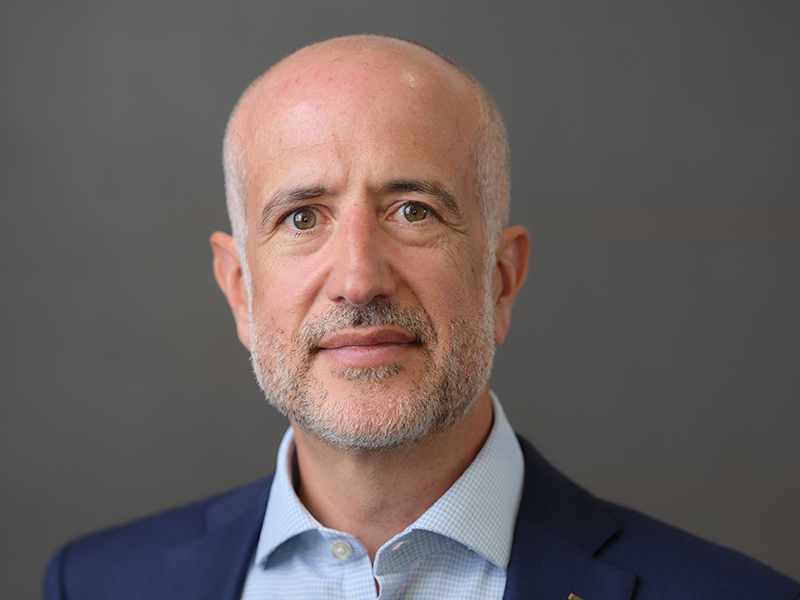
The kbbreview Interview: Paul Crow, Ripples MD
Ripples has significantly grown its showroom network in the last five years or so despite one of the toughest retail markets in memory. Is it because franchising in KBB retail is booming or is it that their own brand of steady-as-she-goes growth is appealing in difficult times?
Franchising in the kitchen retail market has been, to put it mildly, very fashionable in the last few years. In particular, the rise and rise of Kutchenhaus has triggered a renewed interest and established brands like Nolte, Schmidt, Kesseler and even Homebase are now in the franchise mix.
But over in the bathroom market, the field of franchise brands is still pretty much limited to just one – Ripples.
Founded in 1988 by Roger and Sandra Kyme, it began developing its franchise network in the mid-1990s and remains a firm family company. Daughter Nicola Kyme is sales director and is married to managing director Paul Crow. Nicola’s sister Lisa Kyme is actually a franchisee – running the Ripples London showroom since 2000.
But, unlike many of its kitchen counterparts, rapid growth and expansion has never been the Ripples strategy, preferring to grow organically when the right partners come along.
However, there is no question that it too has seen a bump that coincides with the increased overall interest in franchising. Before Covid, the number of franchisees stood at around a dozen or so but now it has virtually doubled that to 26. This makes Crow the managing director of one of the largest branded bathroom showroom networks in the UK – albeit one where each showroom functions as its own independent business.
This, he says, is not down to an active search for franchisees but more an increased momentum of that organic growth. “There’s simply more noise around Ripples.” he says. “In a world where customers are overwhelmed, I think we’re seen as a relatively safe bet…”

How is business for Ripples at the moment?
Honestly, it’s not easy. We’re getting some great figures and it’s easy to talk about record numbers because we’ve had those. There’s lots of good news in our business and we’re getting good growth, but there are fewer people walking into showrooms overall and less money being spent than we would want, particularly compared with rising costs.
We’re having to be patient and work hard. Sometimes we don’t get what we need and sometimes we get more than we expected. It’s extremely unpredictable.
You’ve grown significantly in the past few years. What do you think Ripples is doing differently?
We’re a very flat business. We don’t have a distribution or manufacturing operation supplying franchisees and then expecting them to create sales. We’re trying to work with them in partnership, with everybody contributing to the group.
Fundamentally, it’s a group full of people who are very good at their jobs. They wake up every morning trying to offer the best service they can, sell as much as possible and create a stable environment for their business.
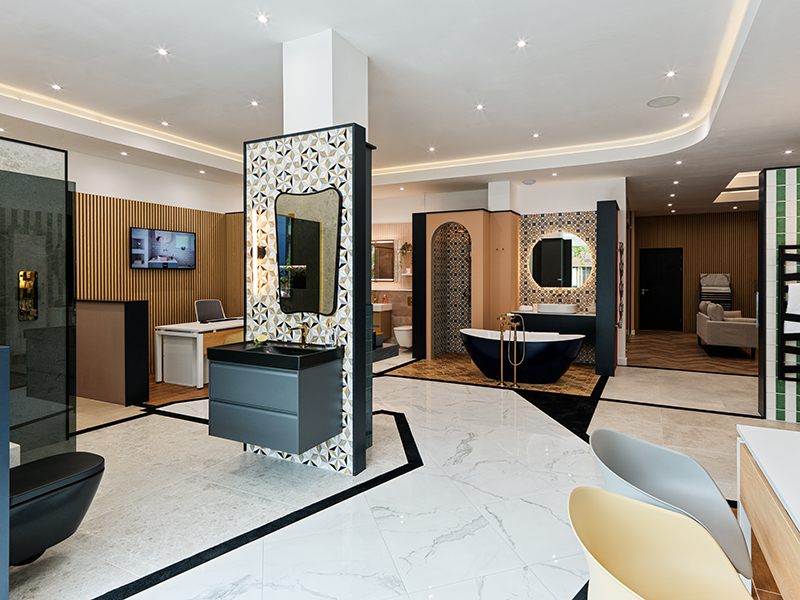
We’ve also got 38 years of history behind us. More people visit our website, we’re advertising more and more people request brochures. There’s simply more noise around Ripples. In a world where customers are overwhelmed, I think we’re seen as a relatively safe bet.
How important has building the Ripples brand become?
A lot of people have had to learn marketing over the past 10 years and have done it really well. We understand the customer much better now. We know they’re confused. They don’t really know what to buy, while we know what they shouldn’t put in their homes.
So we’ve got to communicate why they should talk to us. That’s the main strength of independents – they’re bloody good at what they do, if only customers give them the chance. For us, the difference is the exposure of the Ripples brand. We’re putting messages onto more screens and through more letterboxes. If you keep doing that day in, day out, eventually customers think: “They sound like the sort of company I want to talk to.”
Why has franchising become so popular in the KBB sector?
People understand franchising far more than they used to and there are people proving it works in lots of different sectors. The perception has changed too. It’s no longer seen as something for people who aren’t entrepreneurs because it gives them a ready-made format. I think it’s the opposite. Franchising is an entrepreneurial solution now. People see it as a business investment and choose it because it suits their way of working and their professional standards. It’s not for everybody, but I think it will continue to grow in popularity in both kitchens and bathrooms.
Does that mean you attract people you wouldn’t want as franchisees?
Yes. We meet installers who like the idea of having a showroom because it can provide leads for their installation business. They think they can put somebody in the showroom, train them on bathrooms and let them do the rest. That isn’t of interest to us. The most common inquiry, though, is somebody already working in a showroom who knows bathrooms, loves the industry and would love their own business if only they had a bit more capital. They might be in their thirties and perhaps come to us five or six years too early. That’s frustrating because opening a showroom costs money and they have to be able to put something into it.
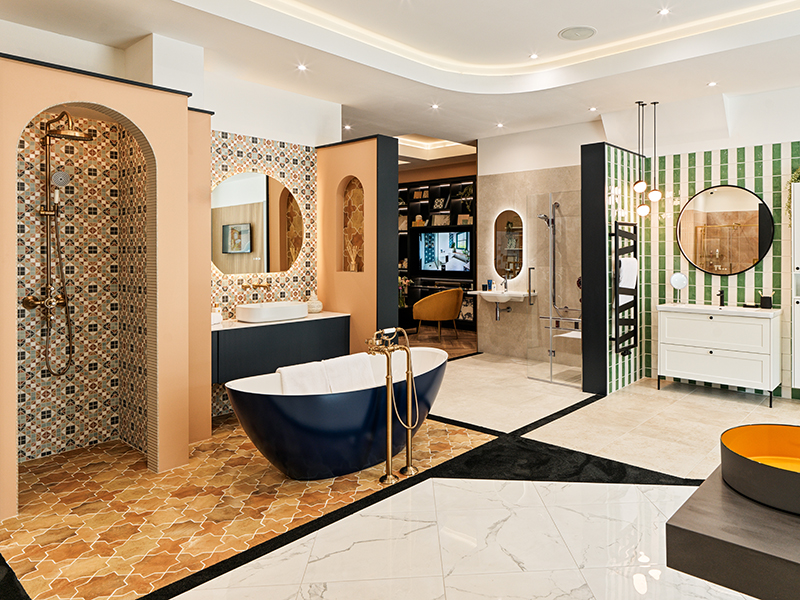
How do you balance growth with protecting the quality of the network?
We’ve actually put the brakes on. We haven’t done any significant franchise marketing for years because we made a conscious decision that we had work to do improving the services we offer existing franchisees.
Nicola and I run the business and if we got to the point where we were making more money and putting more dots on the map but didn’t have a quality life or enjoy visiting the showrooms, that isn’t what we got out of bed to do. We haven’t got this far to blow it out of greed. Somebody more ambitious might say they could take this model to 50 showrooms and I’m sure they could. It won’t be us. If somebody comes along in the right area who we think will contribute to the group, we’ll look at it.
Why is Ripples still effectively the only significant bathroom showroom franchise?
I think others have either decided it isn’t something they want to do or tried it quietly and it hasn’t worked. People looking from the outside probably see the investment, patience and resources required. I’ve met people who say they’re going to franchise their business, turn up at a franchise exhibition, do a pilot and then they’ll be off and running.
We’ve spent tens of thousands at franchise exhibitions, spoken to a thousand people and sometimes got absolutely nothing out of it except dehydration and headaches. It’s really difficult to do.
Do suppliers understand how much the independent retail market has changed?
Not at all, is the truth. That’s unfair on some really good, proactive people whose intent and understanding are absolutely right, but overall I think suppliers are waiting for more customers to walk into their customers so they can get more orders.
They’re doing their best with supply chains, representation and training, but I don’t think they really understand what the end customer is now demanding from the retailer. Relationships are winning now. Independent retailers are increasingly selling what they want to sell and are no longer being dictated to. I don’t think there’s the symmetry between retailer and supplier that there once was. They’re increasingly poles apart and something has to give.
Do retailers also need to better understand the pressures suppliers are under?
Absolutely. Independents are high maintenance. We’re credit risks and expensive to support, while suppliers are trading across many different channels in significant volumes. Both sides need to meet in the middle more. We need to stop trying to get a total win and find more common ground.
When I joined Ripples 28 years ago I was told to treat suppliers like our customers. I thought it was a joke, but I understand it now. You need to say: “This is what we’re trying to achieve. How can you help us? What are you trying to achieve and how can we help you?”. The knowledge and expertise we get from suppliers is hugely valuable. It isn’t simply about getting the best trading terms.
Where do you think the bathroom market will be in the next 24 months?
I feel really optimistic. I think this autumn is going to be really strong and I think next year will be strong. It’s easy to find things happening in the world that could disagree with that, but none of us has suddenly become bad at what we do. Buying a bathroom still requires expertise and it still needs to be installed by somebody you’re comfortable letting into your home. I 100% believe people will say next year is significantly better than this year.
What does the next stage look like for Ripples?
We’re going to embark on more franchise recruitment. We’ve expanded our team, recruited a full-time accountant, a new head of marketing and a marketing executive. We’ve done that to improve the existing network, but we’re now strong enough to take on more opportunities. Those could be people similar to our existing partners in areas where we don’t have a showroom, but we’re also getting inquiries from existing showroom owners asking whether they could transition their business into a Ripples. I think that’s absolutely viable.
I don’t want to put a number on where we could get to. We didn’t expect the business to double five years ago and it has. I don’t think it will double again over the next five years – but if it does, it does.
Listen to the full interview with Paul Crow on a special episode of The kbbreview Podcast. Click the player below to listen, or search ‘kbbreview’ wherever you get your podcasts.