
KBB market and design trends 2026
To kick-start the year on a high note, we dig into the predicted trends for across the KBB industry, and explore some of the key challenges and opportunities retailers are likely to find in 2026.
Words: Francesca Seden
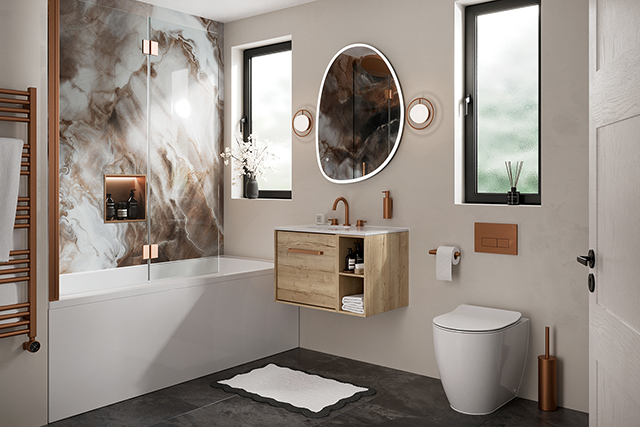
(Featured image credit: Crosswater’s smooth Earthy Dune acrylic wall panel)
Cosy warm tones, nature-inspired neutrals, natural and sustainable materials, and layered textures, are among some of the stand-out broader trends across kitchens, bathrooms and bedrooms for the coming year.
These are predicted to be expressed through soft minimalism and transitional styles like Japandi Nouveau, where traditional design features a contemporary edge.
In the bathroom, or the “spathroom”, there will be a continuing focus on wellness, enhanced with seamless technology, with sustainable luxury as a strong foundation.
Kitchens for 2026 are likely to have a similar vibe – warm neutrals, clean lines with plenty of hidden storage, and subtle multifunctional appliances, packed with lots of sustainable, eco-friendly technology.
In the bedroom, colour trends will largely follow kitchen design, with warm, cosy neutrals replacing grey, although there is also a suggestion of more masculine, darker tones becoming a more prominent theme this year.
This is, of course, just a broad overview of what our experts believe is coming for 2026. But to go into detail, we thought it might be nice to take a slightly different approach this year, and pick out a few favourite ideas which demonstrate the wider trends…
Mix and blend
Connected to the trend of personalisation is the move towards creating interest, depth and warmth through the blending and layering of different tones and textures, using a combination of different natural materials such as wood, stone, glass, and metallic finishes, as well as soft, matte neutrals contrasted with darker, or bolder, tones.
Uform head of category management, Richard Gates, elaborates: “Kitchens are embracing natural tones like rich stains, earthy browns, and soft neutral beiges, complemented by the continued popularity of green hues for a fresh, organic feel. Texture will play a big role too, with fluted glass and reeded wood panels adding depth and character.”
Rachel Tuckey, chief product and marketing officer at Häfele agrees that a layered approach to design will be big in 2026, with “texture becoming just as important as colour”.
She predicts a rise in layered material combinations such as brushed brass with stone, recycled composites paired with warm timber, and metal-effect lacquers alongside raw finishes. The same will apply to colour, she says where homeowners may mix two to five complementary tones and materials.”
Tickled pink
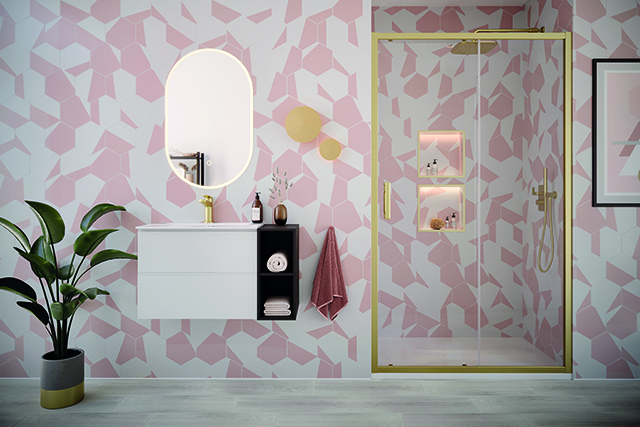
According to the Houzz 2025 emerging trends report, searches for “pink bathrooms” increased by 114% from 2024 to 2025.
A quick Instagram search correlates with Houzz’s finding, showing lots of pretty designs painted in soft, deep rose, light pastel or dark pink, sometimes contrasted with deep, leaf greens and bold botanical prints.
“This rise in pink bathrooms has naturally led to increased demand for warmer metallic finishes, which complement these richer, more personalised palettes,” Flair Showers marketing manager, Gillian Furey says.
Soft, blush pinks are regarded as a warm neutral on which to layer bolder, or contrasting shades and work just as well in the kitchen, with celebrity fans of the playful shade including Emma Willis, who pairs pastel pink with charcoal, and Eva Mendes, who goes for a more terracotta-leaning tone, paired with marble.
The beauty of pink is its versatility, working beautifully with dark shades like navy, and forest greens, but also with neutrals and pastels, such as mint, for a more understated look.
The ‘spathroom’
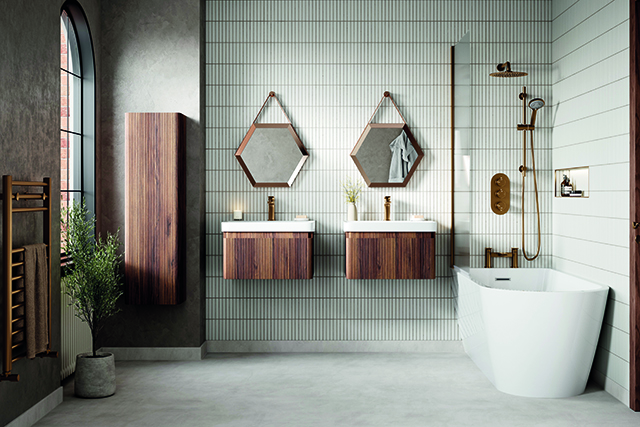
Creating your own personal wellness retreat at home is the ultimate design goal for many homeowners, and there are plenty of products now on the market to authentically create the ultimate relaxation experience.
From a resurgence in popularity of baths offering therapeutic functionality, to saunas, steam showers, and the recently-launched Sunshower, which uses warming infra-red and low-level UV light to both warm and sooth, while promoting vitamin D production in users.
Also utilising infra-red is Kaldewei’s Nuio Duo in the Zen edition, with its Heat Wave technology, as well as soft lighting and music which comes from within the bath’s structure
Aside from the products, the spa bathroom needs to create the right atmosphere, and Merlyn’s Eileen Slattery, talking to Sanctuary Bathrooms for its recent trends article, says the wellness bathroom is a design that integrates “aromatherapy, ambient lighting and natural surfaces and greenery”.
Sustainable luxury
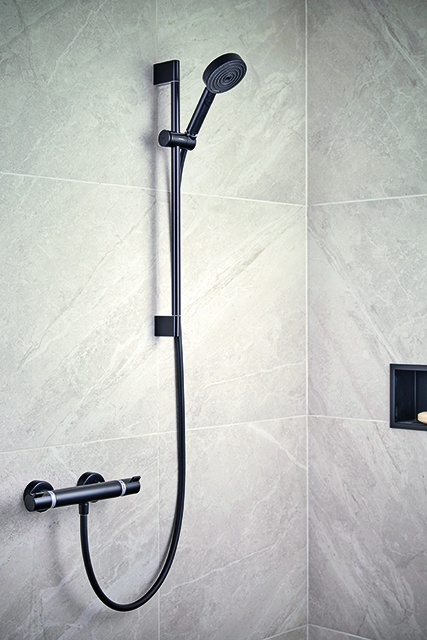
Sustainability and the development of high performing, but water-saving products is at the top the agenda for many bathroom manufacturers.
Hansgrohe is a particularly vocal ambassador for the trend, with head of product marketing, Sarah Evans, noting that a “focus on eco-friendly performance, wellness-inspired aesthetics and individual preferences will underpin technology choice and design moves”.
Hansgrohe’s Pulsify shower range with EcoSmart is one example of Hansgrohe’s ongoing investment in sustainable technology, which promises “an optimal shower experience with high performance and water saving capabilities”, with different spray types that still give a luxurious experience.
Kaldewei is another brand that puts sustainability at the front of its development, and UK country manager Adam Teal says that Kaldewei products will combine three major trends – wellbeing, spa-style luxury and sustainability. Again, the brand’s Nuio Duo bathtub promises all these together in one product – “combining beauty with intelligent technologies to create a space in which relaxation is redefined”.
As well offering a luxurious experience, sustainable luxury focuses on the use of premium products in premium materials so they’re more likely to stand the test of time, and should be easy to maintain and keep clean – because there is nothing luxurious about scrubbing.
Earthy bedrooms
Similarly to kitchens and bathrooms, the vibe is predicted to be equally warm and cosy in the bedroom, which is perhaps to be expected for the place where one lays their head. Neutrals such as cashmere and taupe, as well as earthy, warmer greys, will likely dominate, along with plenty of layering.
Andy, from JM Interior Design, notes that harsh whites are making way for warm, grounding shades that create a cocoon-like atmosphere. “Think rich terracotta, soft olive green, and muted clay. These tones bring calmness while adding depth and personality. Paired with natural fabrics like linen and cotton, they create a layered, lived-in look that still feels refined.”
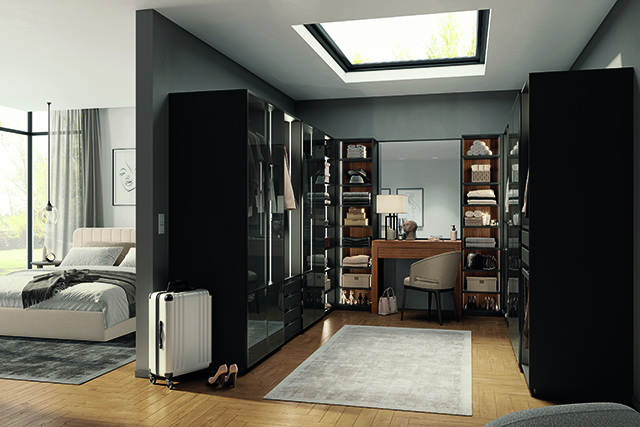
“Walk-in wardrobes are now a key feature of the modern dressing room and in 2026, we predict both the bed and storage zones will be accounted for in equal measure,” Rotpunkt UK’s Matt Philips, adds. “Naturally, bedrooms that provide dedicated areas to sleep, relax, work, and dress will emerge as front runners.”
Interestingly, in terms of colour and design, Philips sees the trend going a slightly different way – adopting a darker, more masculine aesthetic in 2026 with white, black and grey being used to introduce cool metallic door fronts, sophisticated glass cabinets, dark wood accents and tactile fabric backed panels.
“The master bedroom and dressing room are considered the most private spaces in the home and in 2026, the boutique-style wardrobe will become a flagship solution in the bedroom and/or upstairs laundry,” he predicts.
Now it’s personal
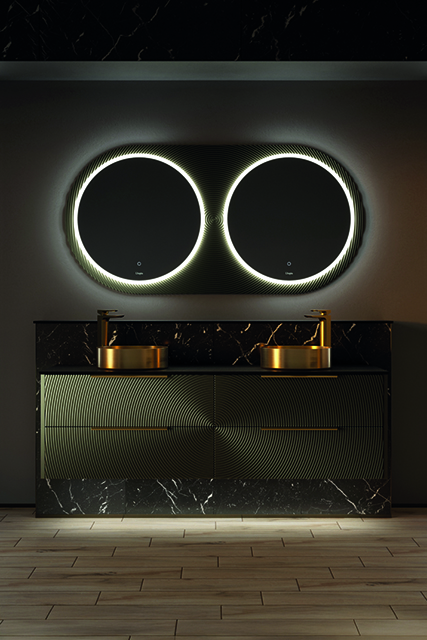
Personalisation and the act of injecting ones’ individuality into a design scheme is another perennial trend that people love, driven by social media, in combination with a housing market that is encouraging more of us to improve, and not move.
The lean towards personalisation is mentioned by many of our contributors who express what it means in a number of ways, including, according to Crosswater’s Jorge Hernandez, the use of “playful nostalgia, such as retro-inspired patterns and bold accents”, as well as open shelving on which to display carefully curated knick-knacks.
According to Lewis Neathey, leader of marketing & product management at Grohe UK, this personalisation involves experimenting with layout, cabinetry finishes, taps, handles and even appliances to create a space that feels both highly practical and distinctly individual.
“Where kitchens were once dominated by safe, neutral palettes, we are now seeing bolder tones being introduced to evoke warmth, comfort and creativity,” he says.
Keuco’s director of international sales, Angela Ortmann-Torbett, meanwhile notes how open and illuminated sections in furniture have become a popular way to personalise the bathroom. Illuminated tiled niches cut into the bathroom wall are a neat way of doing this, but Keuco says its Stageline series is another great way, with its illuminated open storage compartment.
In addition, Utopia’s new modular furniture collection, HeyU promises “limitless opportunities for personalisation”. Once a design style is chosen, there are 14 stunning finishes available, from bold statement hues to soft neutrals.
High-tech multifunction
Thinking about technology, we’re likely to see an increase in smart tech across the bathroom and kitchen, with smart loos, digital and feature-packed showers, spa baths with integrated gadgetry, as well as smart, illuminated mirrors and smart lighting coming to market.
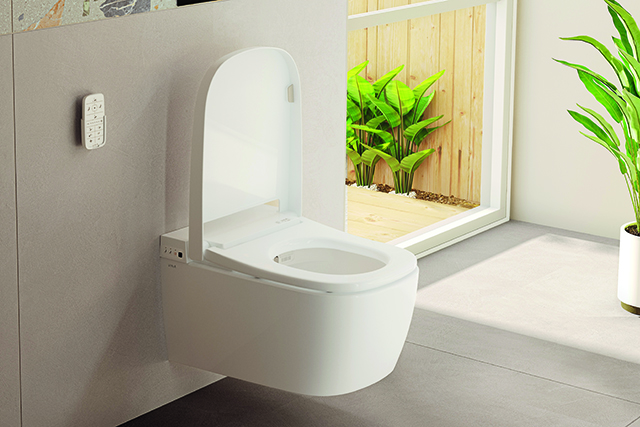
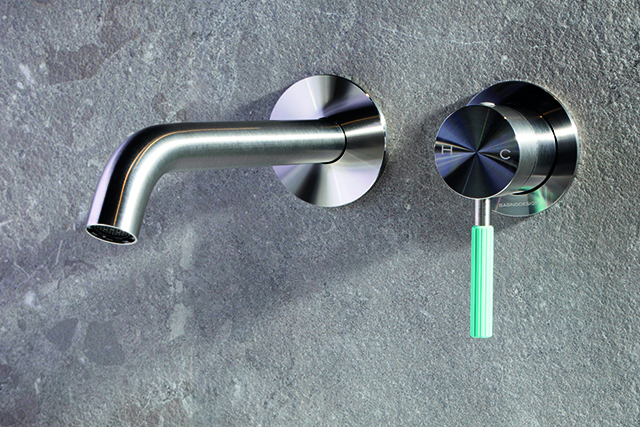
With a word on this, Katy Olsen, brand manager at BagnoDesign, comments: “With showering now widely celebrated for its ability to promote relaxation and wellness as well as rejuvenation, consumers will continue to seek out multifunctional products that offer different spray patterns to suit a variety of requirements.
“At the premium end of the market, we expect consumer demand for showering products that provide a multi-sensory experience to remain high with technology playing an ever-bigger role in 2026 and beyond.”
Where kitchen appliances are concerned, Stuart Dance, MD at InHouse Inspired Room Design, believes that “the next evolution will be AI integration – appliances that learn from usage habits. They can be personalised to individual users and actively help people save time, energy and effort.”
He adds that smart appliances, such as ovens that automatically adjust temperatures and cooking times based on recipes, and fridges that track inventory and manage shopping lists are becoming increasingly sought after. “They’re expected in the premium market but are also starting to filter down to more accessible price points, no longer confined to the top end of the market,” Dance adds.
Tom Hopper, kitchens category lead at Miele GB, also notes the growth of AI, including AI-powered assistance, voice control functionality and connected smart systems. These features are becoming integral to modern living, with kitchen appliances being no exception.
Hopper explains: “As well as offering everyday convenience, these smart features can also make a kitchen more accessible, ideal for multi-generational households, which is a burgeoning trend for homes across the UK.”
Japandi Nouveau
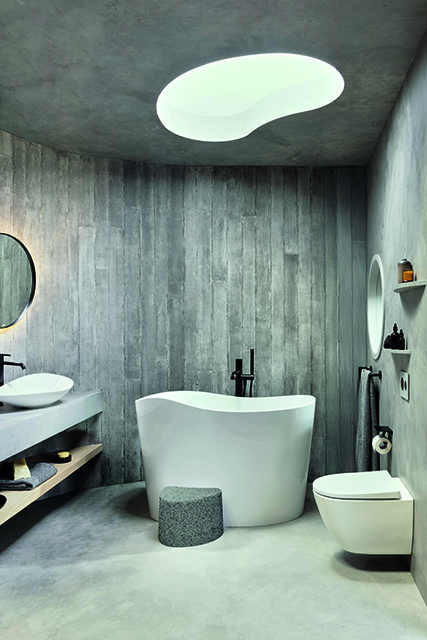
This is a trend that has been popular for a good few years and shows little sign of slowing, given that it was named by a number of our contributors. In bathrooms and kitchens, it is defined by nature-inspired materials and calm neutrals.
Light woods, brushed finishes and smooth, stone-like surfaces all contribute to a “serene, spa-like aesthetic that feels both contemporary and timeless”, Crosswater’s Jorge Hernandez says.
Roca’s marketing brand manager, Natalie Bird, is another to mention the Japanese influence, but without the Scandi, in the form of Ofuro-inspired deep bathtubs, designed for deep, immersive soaking in a compact footprint. “It’s about slowing down, not showing off. Function meets philosophy.”
The Japandi trend isn’t limited to bathrooms, either and also gets a mention from Josie Medved, design manager at Symphony. She defines the style as refined with elegant lines, natural materials and muted tones, which are both warm and minimal, designed for multifunctional living.
The ‘no kitchen, kitchen’
Quite opposite from showing it all off, clever storage will always be an important consideration for hiding the things one doesn’t want people to see. It should be highly functional, accessible and practical.
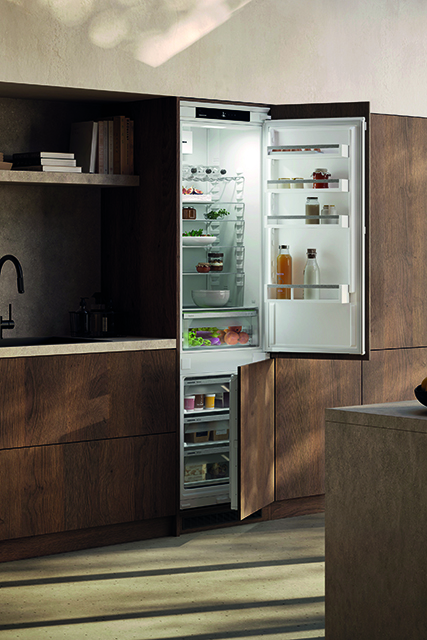
A mix of wall cabinetry and tall, floor-standing units are a good idea to not overwhelm the space, with interior lighting and pull-out wirework, to make items as accessible as possible. Plinth storage under cabinets is another great way of making use of otherwise useless space.
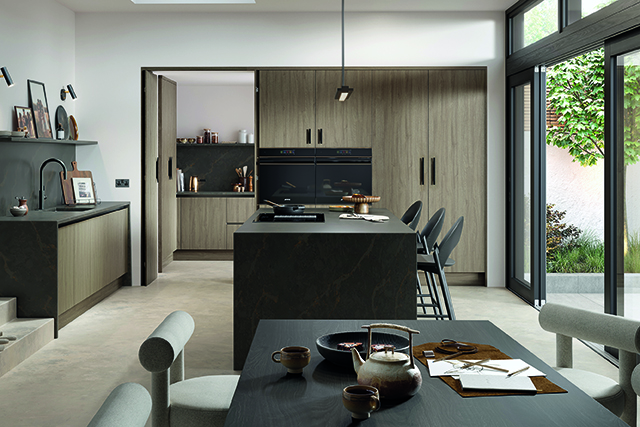
For those who have the space, a room like a pantry/larder or utility hidden behind pocket doors, offers the “perfect, space-maximising solutions consumers are seeking today,” Symphony’s Medved says. “At first glance, they look like elegant cabinetry, but they reveal a hidden room – whether a pantry, utility, laundry, or even a home office.
With rising interest in ancillary spaces and “invisible kitchens”, these doors offer a quick, cost-effective way to add functionality while seamlessly blending with the kitchen design. They’re versatile across ranges and finishes and transform kitchens from standard to standout.”
Concealed appliances are also an important part of the storage story – part of an emerging trend for the ‘no kitchen, kitchen’. While these are simply often hidden behind cupboard doors, others, such as Novy, are taking the trend to the next level with its Undercover invisible induction hob, seamlessly integrated within a 20mm thick Dekton worktop.
Discrete controls and centrepoints on the surface are the only visible aspects of the hob until a pan is placed upon it, without the need for surface protectors. A stylish remote control features timers, programming functions and residual heat indicators.
Looking down the road…
Looking ahead to the challenges KBB businesses are likely to face in the following year, we discussed how current issues such as materials shortages and supply chain problems might impact on business.
All agreed that this is likely to be an ongoing issue and many stressed the importance of keeping in as much stock as possible, in order to maintain that supply line and deliver a reliable service to customers.
This issue is less of a worry for UK-based manufacturers who might only have to rely on third-party sources for components, although those components are still important.
Thinking about the housing market and recent Budget announcement by the government, our contributors mostly agreed, optimistically, that retailers could continue to benefit from homeowners investing in their homes, rather than plumping for more cost-effective options for a quick turnover. So, the premium end of the market should remain insulated from any turmoil.
Finally, one of the biggest issues that continues to concern the industry is finding good tradespeople, particularly installers, to deliver jobs in a timely manner. On this point, Franke managing director, Craig McIntryre, comments: “Attracting and retaining skilled installers and designers remains vital for the industry going forward and organisations such as the KBSA and BIFIS are doing very valuable work here.
This is an immensely interesting and rewarding industry to work in and we need to keep attracting new talent to ensure dynamism and legacy. Education and training are so important to ensure that the next generation of KBB professionals can deliver on the increasingly technical, design-led nature of modern homes.”