
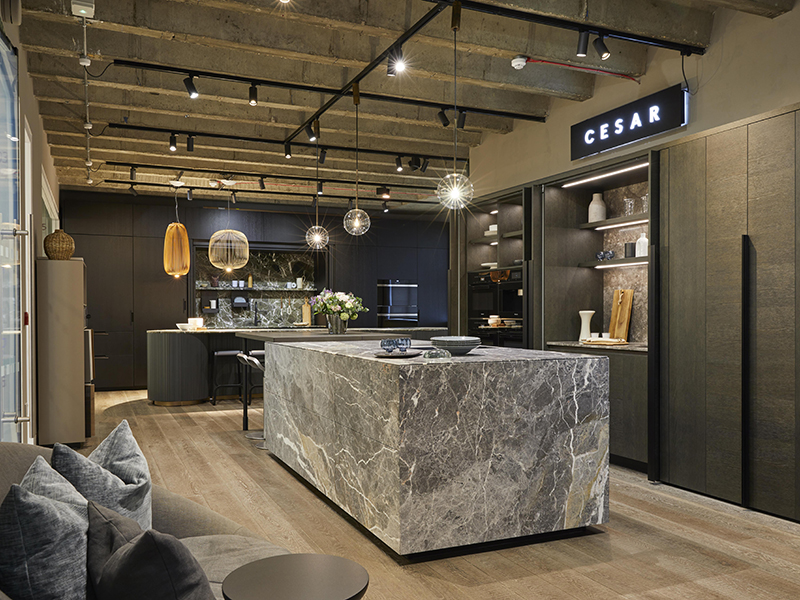
Retailer profile: Cesar by Espresso
At Cesar by Espresso in Chelsea, the focus is firmly on retail execution as the showroom adapts its offering to meet a more considered and complex London market.
With more than 30 years in the design industry, Andrew Hamilton Barr, director at Espresso Design, brings a breadth of commercial and creative experience to the business.
His early career saw him managing import/export operations in Africa, building partnerships in emerging markets, before moving into interior design across the UK and South Africa.
This background led to the launch of the St John’s Hill showroom of Espresso Design in 2006. That blend of commercial acumen and design credibility then saw the opening of the Chelsea showroom, Cesar by Espresso, a retail partnership with Italian kitchen company Cesar.
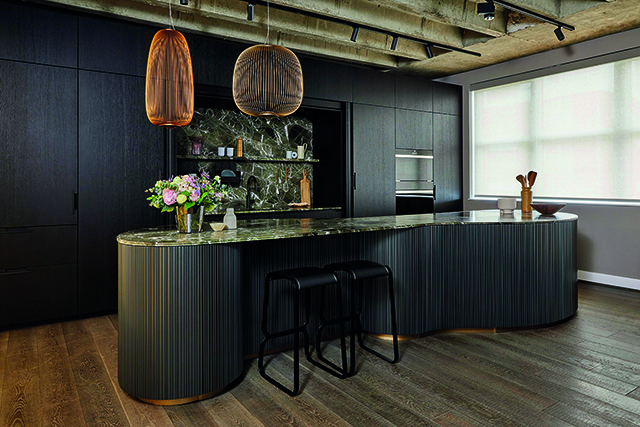
For Cesar by Espresso, the past year has been less about dramatic change and more about recalibration. The fundamentals of the business remain intact, but the way customers engage – and ultimately buy – has shifted.
Andrew Hamilton Barr, director at Cesar by Espresso, points to a more cautious, considered client base, particularly in London. “There were a lot of concerns, particularly in London,” he says, referencing the Covid years when projects slowed and decisions were delayed. Rising costs and economic uncertainty is still present today and has had an inevitable impact, with some clients sitting “on the fence” before committing.
But now, rather than a drop-off in demand, what Espresso is seeing is a change in mindset. Clients are still investing, but with greater scrutiny and clearer expectations around value.
That shift is neatly captured by Cesar’s creative director Cinzia Cumini, who says: “Business today happens in a more complex context: people are torn between traveling and investing in a home where they truly feel good, so they’re more conscious about how they spend.”
For a retailer, that tension plays out in the showroom. Conversations are longer, decisions more deliberate and the role of the designer more critical. Clients want reassurance – not just in the product, but in the process.
“There’s always been a level of demand,” says Hamilton Barr. “Our job is to offer better service and better products.” In practice, that means guiding clients through a more layered decision-making journey, balancing aspiration with practicality.
It also places greater emphasis on trust. In a competitive market with relatively low barriers to entry, Hamilton Barr is clear that not everyone can deliver at the same level. “Not a lot of companies can do that really well in difficult circumstances,” he says – a reminder that strong retail execution remains a key differentiator.
Expanding design
If the customer is changing, so too is the way Espresso presents the Cesar offer in-store. Historically, the brand has been closely associated with a conceptual approach – something that still underpins the range.
But now the goal is expanding that approach. That expansion is less about adding volume and more about broadening the design language available to retailers and their clients.
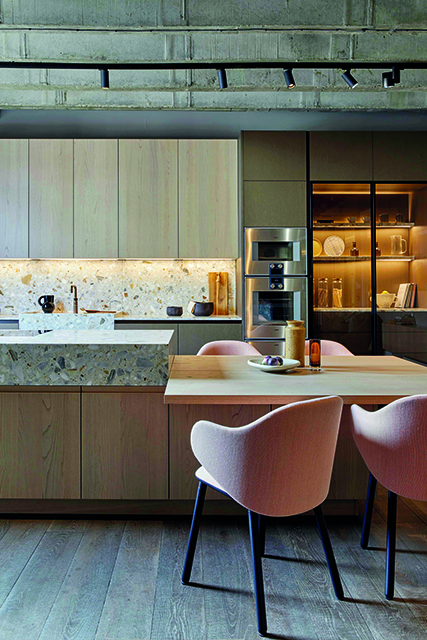
In a retail context, that translates into greater flexibility on the showroom floor. Espresso is able to demonstrate a wider range of looks and configurations, helping clients visualise more personalised outcomes.
One of the key differentiators here is form. “The market really appreciates the brand,” Hamilton Barr notes, particularly its ability to offer something visually distinct. Cumini highlights this further: “around half of our models are curved, which gives us a distinctive language.”
This opens up new design conversations for Espresso. Curved elements, softer geometries and more architectural compositions allow the retailer’s designers to move beyond purely functional layouts and create spaces that feel more integrated with the home.
Collections such as Maxima play a central role in that story. “Maxima is one of the company’s most important flagship collections, renewed every year with new developments, and the current direction is to make it stronger and more architectural in its design language.
From a retail perspective, that ongoing development is critical. It gives the showroom a reason to re-engage clients, refresh displays and demonstrate progression – all key to maintaining interest in a slower market.
The partnership of Espresso and Cesar is about aligning product, design and service more closely than ever. We’re still in a climate where clients are weighing up every decision, so the retailer’s role is not just to sell a kitchen, but to justify the investment.
As Hamilton Barr suggests, the opportunity is still there – but it belongs to those who can deliver consistently. “The underlying demand is still there; the real opportunity now is to stand out by offering a better product and a better level of service than most competitors can deliver in these difficult conditions.”
For independent retailers, that message will feel familiar: in a tougher market, the basics matter more than ever, but so does the ability
to evolve.