
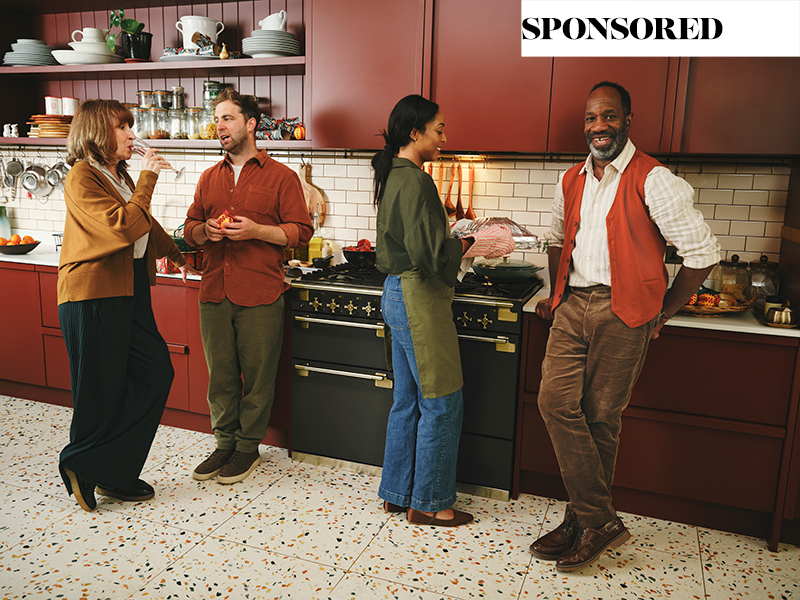
How Rangemaster made its appliance a TV star
Rangemaster’s award-winning ‘Part of the Family’ campaign broke almost every convention of appliance advertising. Instead of selling features, it instead sold the concept of family life, proving that emotional storytelling can still be a powerful driver of commercial success.
This article is sponsored content
When Rangemaster made its premiere on television screens last year, it did so with a campaign that immediately caught people’s attention.
Rather than opening with gleaming product shots or a list of technical features, viewers were instead introduced to a family gathered around what at first seemed to be a new baby. Proud grandparents looked on, relatives smiled knowingly and the new parents basked in the attention. Only in the closing seconds did the joke reveal itself: the object of everyone’s affection was not a newborn baby at all, but a brand-new Rangemaster range cooker.
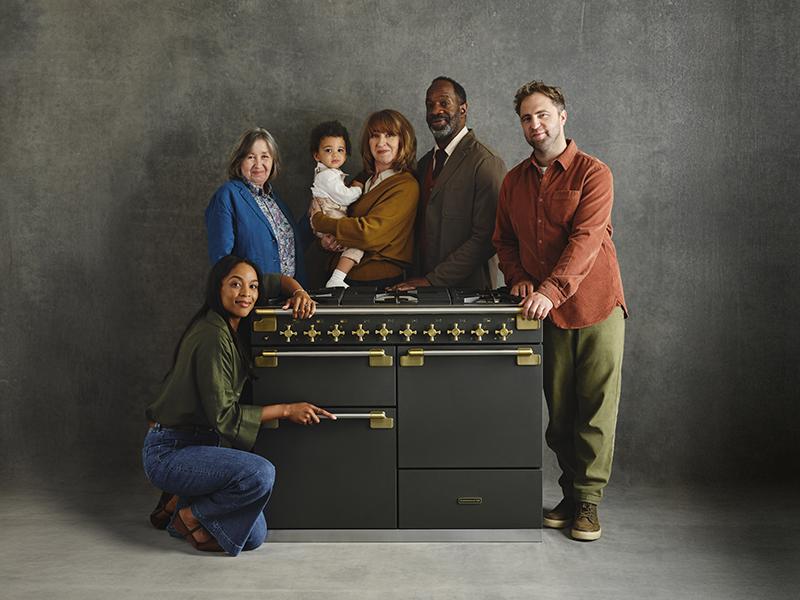
The advert, created by London agency Mr President, has since delivered a double-digit increase in sales volume and also won a Marketing Society Global Award. But according to strategy lead Naomi Dunne and executive creative director Jon Gledstone, the success wasn’t built around a clever punchline at all. It came from understanding the role a range cooker plays in people’s lives and building a story around that idea instead.
“When we had our initial conversations with the team at AGA Rangemaster, it became very obvious very quickly from the data that the brand had gone through quite a significant period of under-investment in brand storytelling,” explains Dunne.
“Functionally-led storytelling is everyone’s heartland. That’s what the category has been doing for years. The team already knew that if we wanted to turn this brand around and drive significant levels of growth, we had to look at things differently.
“Our brief was to help drive a real commercial turnaround, make the brand famous again, restore it to the aspirational status it deserves and inject fresh energy into it. We wanted people not to be buying a cooker simply because they needed one, but actively seeking out a Rangemaster. The brief was all about using brand fame as an engine for commercial growth.”
Statement piece
Rather than beginning with specifications or performance, the agency looked at what makes a range cooker different from most other appliances. Unlike a built-in oven, it isn’t designed to disappear into the kitchen. It is often the visual centrepiece of the room and, for many homeowners, the appliance around which the whole kitchen is planned.
“The elephant in the room was literally the elephant in the room,” says Gledstone. “This is a big cooker. You can’t hide it away behind cabinetry, so we realised we shouldn’t try to overcome that fact, we should embrace it. It’s such a significant part of the kitchen that people build their kitchen around it.
“It wasn’t about talking about how it cooked or the knobs or the robustness. It was about embracing the fact that this is part of the family home. It’s there while families are growing, when people are hosting more, when the grandchildren start coming round. There’s an emotional life stage attached to buying one of these products and that’s really where the story started to unlock.”
Research showed that many Rangemaster customers are buying at a point in life when they’re moving into larger homes, entertaining more often and creating spaces centred around family and friends. That became the foundation for the campaign’s platform.
“I think one of the reasons you can end up with a sea of sameness in the category is that brands align themselves against household income or socio-demographics,” says Dunne. “We deliberately moved away from that. We know from research that people tend to buy a Rangemaster when they’re stepping into a bigger social era of their life. They’re hosting more, and they’ve got children, grandchildren and friends coming round. We wanted to align ourselves with that life stage rather than a specific demographic.”
Once that thinking had been established, the challenge became making the family feel believable. Every character was given a backstory before casting began, allowing actors to create relationships that felt authentic rather than scripted.
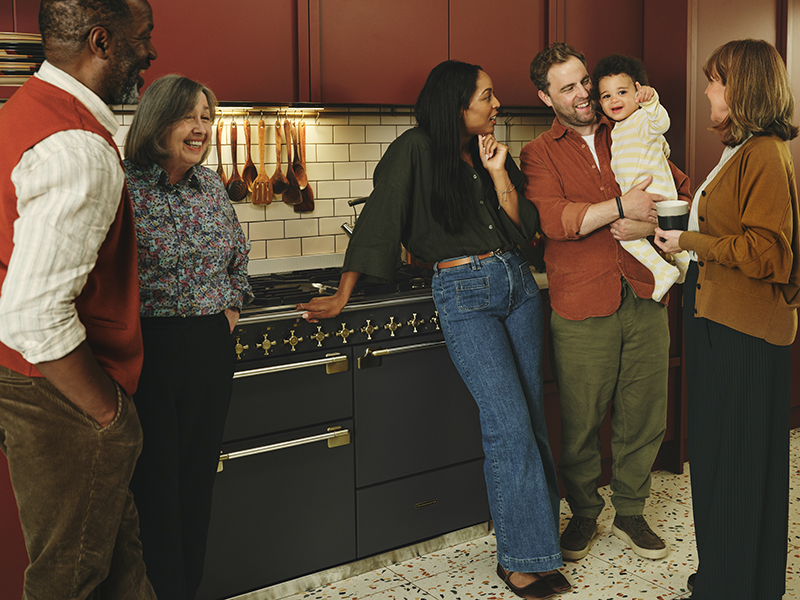
“As the script develops, you start bringing out these characters,” says Gledstone. “You start imagining their relationships and what their history might be. Then the director develops that further, so when the actors come in they’ve already got a backstory themselves.
“You then put everybody together and ask, ‘Does this feel right? Does this feel authentic?’. Yes, it’s important that it feels representative and diverse, but more importantly it has to feel believable. We always had an ambition that the advert would feel more like a trailer for a British television series. Rangemaster is such a British brand that we wanted the storytelling to feel distinctly British too.”
And that realism extends throughout the advert, from subtle family rivalries to the affectionate humour of grandparents who appear just as interested in the new range cooker as the new baby.
“The little competition between the two mothers-in-law, the grandparents looking at the range cooker before remembering there’s a baby there as well – families are full of those little idiosyncrasies,” says Gledstone. “We wanted to try and celebrate that because that’s what family life is really like.”
For Dunne, that was always the point. “Kitchens aren’t just about making food, are they? They’re where homework gets done, where late-night chats happen and where families actually live. By leaning into that slice of life, we deliberately built a narrative that Rangemaster is a constant witness to all of that. It’s part of the family.”
Product pride
The finished advert also asks viewers to wait before they see the product itself. Throughout most of the film the camera stays focused on the family, allowing curiosity to build before the Rangemaster is finally revealed.
“We wanted the product to be the hero,” says Gledstone. “But to do that, you have to hold back on showing it. Most advertising would show it straight away because it’s a beautiful-looking thing. We wanted it to become the punchline.
“Even little details mattered. We never actually say the word ‘Rangemaster’ in the advert. From a client’s point of view that’s quite brave because instinctively you think people need to hear the name. But there’s actually more confidence in simply seeing it. Advertising often broadcasts at people and tells them what to think. We wanted people to feel it for themselves.”
Like many major campaigns, the concept was tested with consumers before filming. There had been concerns that audiences might focus only on the humour, but the research suggested they connected with the emotional idea behind it.
“There was a worry that consumers would just find it funny,” Gledstone says. “But when we tested it they absolutely got it. Yes, they found the reveal funny, but much more importantly they understood this was about people being genuinely proud of their new cooker. That emotional resonance was much more powerful than the gag itself.”
The campaign also scored 4.6 out of five stars with System1’s advertising effectiveness testing before going on to deliver its reported commercial success and Marketing Society Global Award.
“We judge success by commercial impact, not just by how lovely the creative is,” says Dunne. “The campaign drove a significant increase in sales volume and then it was recognised beyond the category by the Marketing Society Global Awards, judged on both the performance data and the story behind the work. To have all of that validated was incredibly rewarding.”
Perhaps the clearest indication that advert struck a chord is that it quickly became more than just a television campaign. The idea has since been carried through showroom displays, customer communications, trade exhibitions and internal engagement across the business.
“It’s brilliant when people pick up the idea and run with it,” says Gledstone. “We don’t like delivering just a TV advert. We want to create an idea that works beyond one execution. When you see people using it for product launches, social media, customer experience and across the wider business, you know you’ve created something with real legs.”
To find out more about Rangemaster and its products, visit www.rangemaster.co.uk

This article is sponsored content